

Summary Points
-
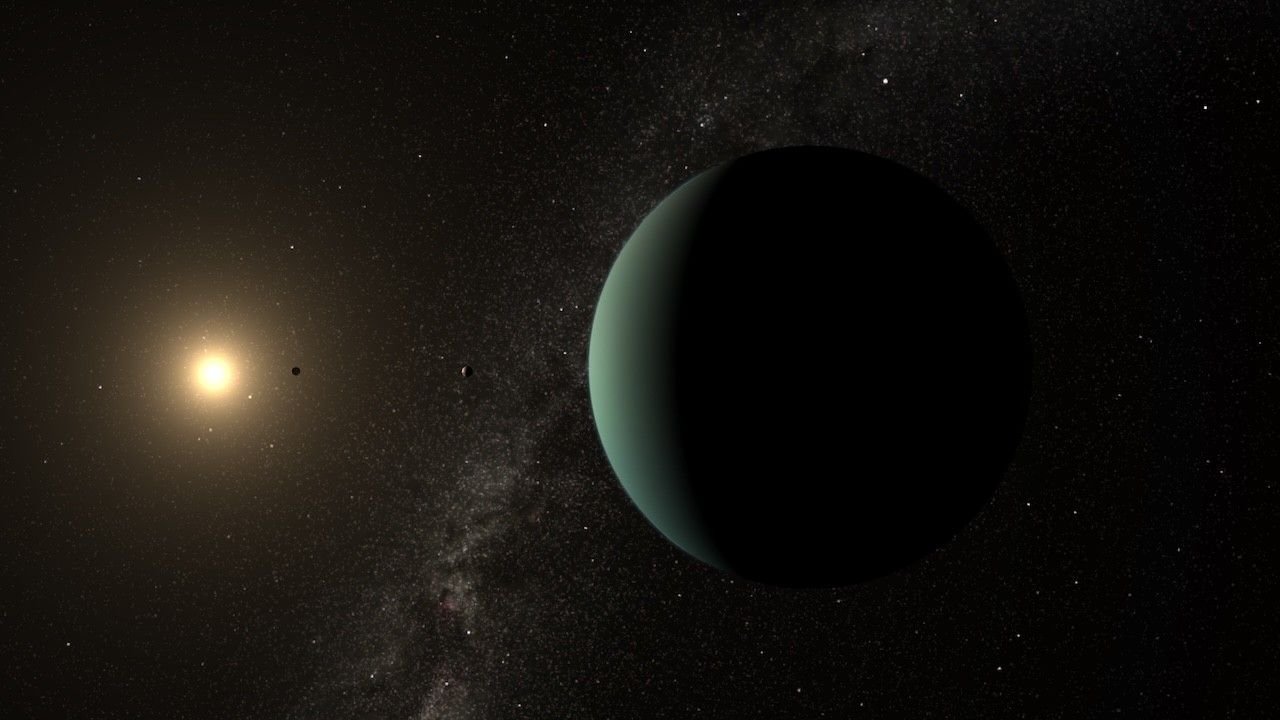
A newly confirmed “super-Earth,” orbiting the Sun-like star HD 20794 just 20 light-years away, experiences extreme temperature swings, transitioning between scorching heat and deep freeze due to its highly eccentric 647-day orbit.
-
This planet spends a portion of its year in the habitable zone where conditions could allow liquid water, but its orbit brings it too close to the star for overheating and too far for freezing, resembling extremes faced over billions of years.
-
The international team, led by Nicola Nari and utilizing over 20 years of data from advanced ground-based instruments like HARPS and ESPRESSO, confirmed the planet’s existence by meticulously analyzing spectral shifts caused by its gravitational pull on HD 20794.
- With its proximity and unique characteristics, this super-Earth is a prime target for future telescopes, like NASA’s Habitable Worlds Observatory, aimed at detecting potential signs of life in its atmosphere.
Discovery Alert: ‘Super-Earth’ Swings from Super-Heated to Super-Chill
Astronomers have made an exciting discovery about a new “super-Earth” that orbits a nearby star. This planet could potentially support life, but it experiences extreme temperature fluctuations.
The super-Earth circles the star HD 20794, located just 20 light-years from Earth. Its orbit lasts 647 days, which is similar to Mars. However, this planet’s path is highly eccentric, forming an elongated loop. Consequently, it swings close to its star, facing intense heat, and then drifts far away, leading to a deep freeze. This cycle of extremes happens roughly every 300 days, suggesting that this climate pattern has persisted for billions of years.
During part of its orbit, the planet lies within the “habitable zone” where conditions might allow for liquid water. But because of its peculiar orbit, it shifts into regions where temperatures either soar or plunge. At its closest approach to the star, it mirrors Venus’s distance from the Sun. At its farthest, it nearly doubles the distance from Earth to the Sun. Scientists believe this super-Earth could be rocky, potentially weighing six times as much as our planet.
A dedicated international team of researchers led by Nicola Nari examined over 20 years of data to confirm the orbits and masses of the three known planets around HD 20794. They used advanced instruments, HARPS and ESPRESSO, located in Chile. These tools detect tiny changes in a star’s light spectrum caused by the gravitational pull of orbiting planets. This method requires precise analysis, as similar shifts can occur due to other factors, such as solar flares. The confirmation of HD 20794’s calm nature was crucial in ruling out these false signals.
The discovery of this super-Earth presents an exceptional opportunity for future space missions. NASA’s Habitable Worlds Observatory aims to explore atmospheres of similar planets for potential signs of life. The super-Earth’s proximity, low surface activity, and dramatic temperature changes make it a key target for this mission. As technology advances, scientists hope to analyze the gases present in its atmosphere, providing clues about habitability.
This research not only furthers our understanding of distant worlds but also enhances our technological capabilities. As we develop more sensitive instruments for space observation, the potential to uncover extraterrestrial life becomes increasingly attainable. Our quest for knowledge continues, shining a light on the possibilities within our universe.
Continue Your Tech Journey
Learn how the Internet of Things (IoT) is transforming everyday life.
Access comprehensive resources on technology by visiting Wikipedia.
SciV1
