

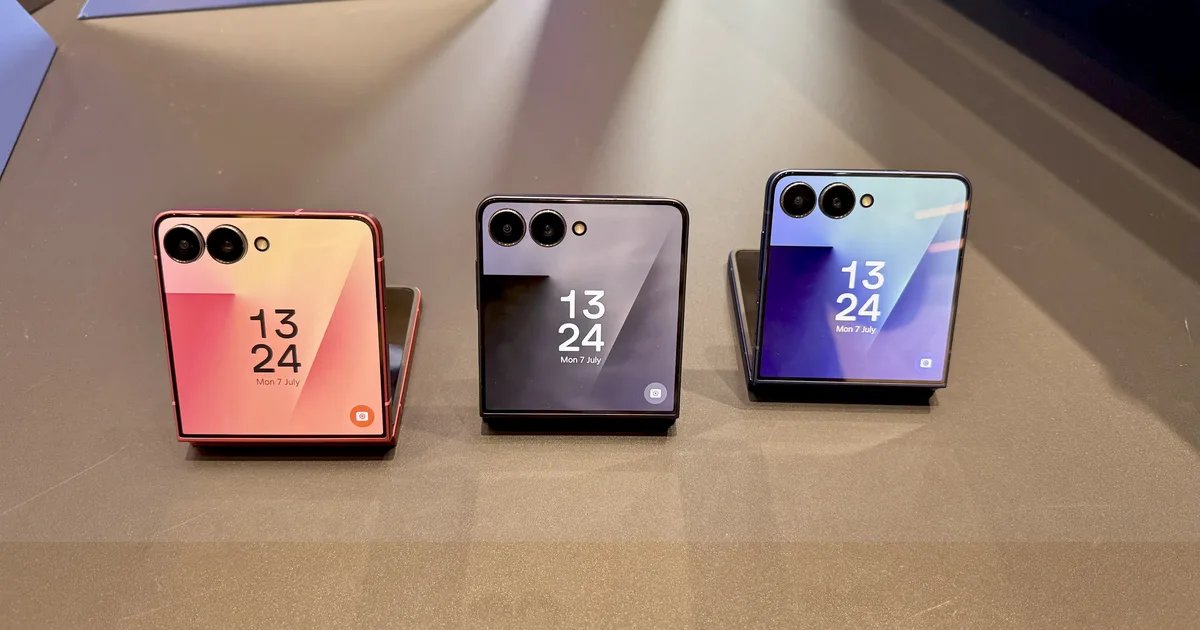
Fast Facts
-
Camera Setup Stays the Same: The Galaxy Z Flip 8 will feature the same camera configuration as the Flip 7, with a 50MP primary camera, 12MP ultrawide, and 10MP selfie camera, disappointing those hoping for upgrades.
-
Historical Consistency: This marks the third consecutive version (Flip 6, Flip 7, and now Flip 8) to maintain the same camera setup, suggesting limited innovation in this area.
-
Price and Specs: The Flip 8 is expected to debut at the same price points ($1,099.99 for 256GB and $1,219.99 for 512GB) while likely retaining most of the Flip 7’s specifications, including display and battery.
-
Potential Chip Upgrade: The Flip 8 may feature the new Samsung Exynos 2600 chipset, utilizing 2nm fabrication technology, indicating a focus on performance improvement rather than camera advancements.
Staying the Course with Camera Technology
Samsung’s Galaxy Z Flip 8 may disappoint those eager for significant camera upgrades. Reports suggest it will retain the same camera setup as the Galaxy Z Flip 7, which includes a 50MP primary camera and a 12MP ultrawide lens. This consistency might seem smart, as it’s a strong configuration. However, the lack of innovation could deter potential buyers seeking improved photography features. If you’re considering upgrading from the Flip 6 or Flip 7, the cameras likely won’t sway your decision. After all, if it ain’t broke, why fix it?
Nevertheless, there’s faint hope for minor adjustments. Samsung could tweak the camera sensor, enhancing picture quality via larger apertures. This approach mirrors the company’s strategy with the Galaxy S26 Ultra. Still, without concrete details, speculation remains just that. A stagnant camera system may not keep pace with competitors offering fresh upgrades, especially as consumer expectations evolve.
The Price of Progress
Moreover, Samsung’s decision to maintain the same retail price of $1,099.99 for the base model reflects a broader trend in the industry. Rising production costs hinder bold innovations. By holding back on non-essential upgrades, Samsung likely aims to balance profitability with customer satisfaction. However, this cautious strategy may hinder widespread adoption, particularly among tech enthusiasts eager for the latest features.
The potential introduction of the Exynos 2600 chipset could present the Flip 8 as faster and more efficient. Such advancements might appeal to tech-savvy consumers who prioritize performance. Yet, if core specifications remain unchanged, Samsung risks losing market interest. The challenge for the company lies in finding the right balance between cost-effectiveness and consumer desire for innovation in foldable devices.
Continue Your Tech Journey
Learn how the Internet of Things (IoT) is transforming everyday life.
Stay inspired by the vast knowledge available on Wikipedia.
TechV1
