

Top Highlights
-
Safety First: The X-59 quiet supersonic aircraft’s flight tests in 2026 will include a chase pilot in a separate aircraft to monitor safety, communicate with air traffic, and reduce the test pilot’s workload.
-
Proximity Matters: The chase aircraft typically flies 500 to 1,000 feet away from the X-59, allowing for close monitoring without compromising safety, but can get closer if necessary for specific observations.
-
Data Collection: The chase aircraft captures high-definition photos and video of the X-59’s flights and will eventually carry sensors to measure shock waves, aiding in the development of quieter supersonic travel.
-
Tailored Approach: NASA’s chase fleet includes both F/A-18 Hornets for low-speed tasks and F-15 Eagles for supersonic tests, allowing flexibility based on specific mission requirements.
NASA Chase Aircraft Ensures X-59’s Flight Safety
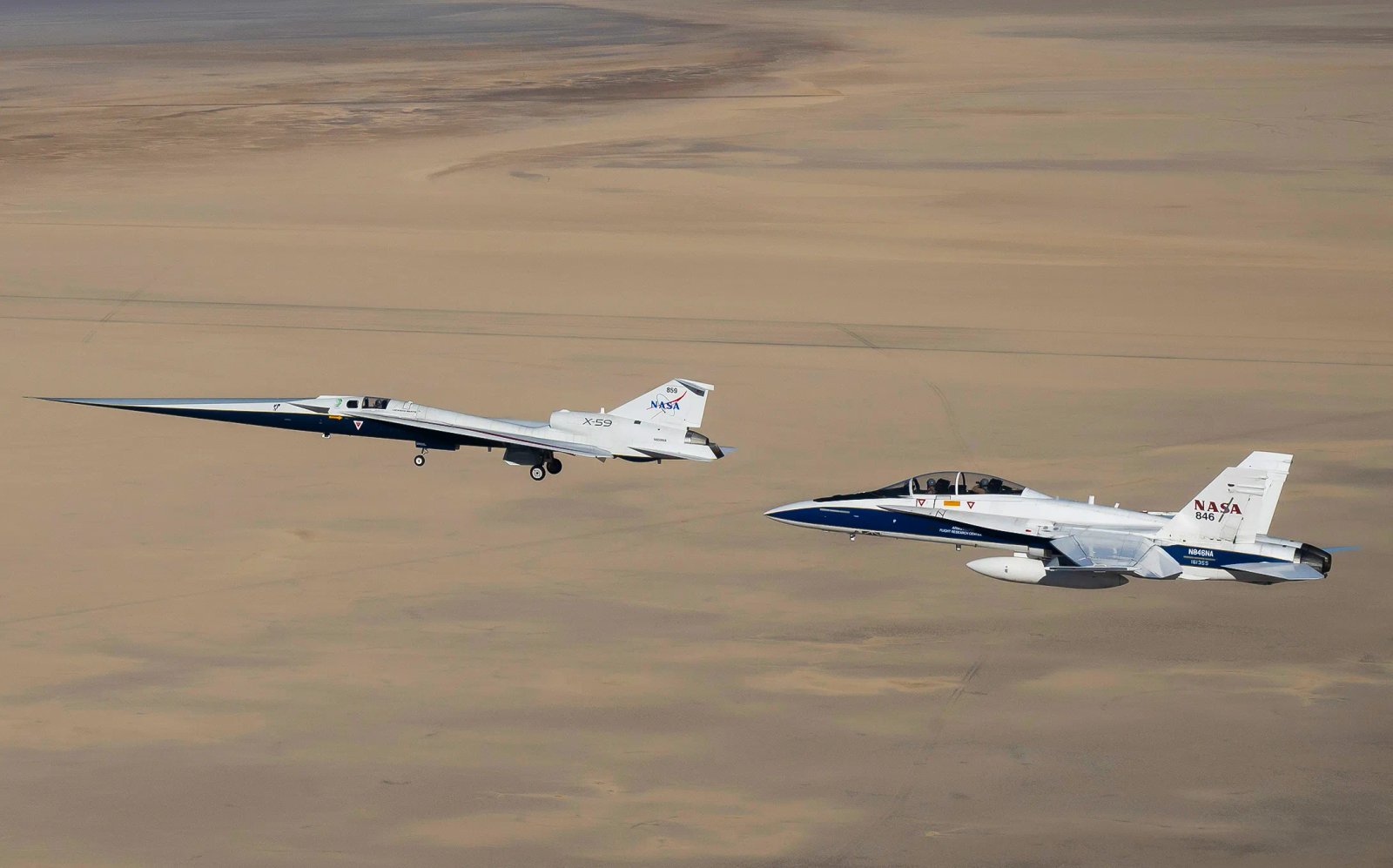
NASA’s X-59 quiet supersonic research aircraft is making strides in flight tests over California’s high desert in 2026. Each test flight features a chase pilot observing the X-59, ensuring safety and smoother operations.
This chase pilot, stationed in a separate aircraft, plays a crucial role. He monitors local weather conditions and maintains communication with air traffic control. These responsibilities help lessen the test pilot’s workload, allowing him to focus on the mission.
For instance, during the X-59’s inaugural flight on October 28, the chase aircraft flew within a wingspan of the experimental craft. This proximity allowed the teams to compare instruments accurately. Typically, chase pilots stay about 500 to 1,000 feet away, well within a safe distance.
In addition to safety, chase pilots also gather vital data. They capture images and videos during flights, offering unique views of the X-59 in action. During the first flight, a trained photographer onboard documented the event, enhancing the testing process with visual evidence.
Moreover, the chase aircraft will soon be equipped with sensors to measure the X-59’s supersonic shock waves. This innovation aims to produce a quieter sonic “thump” rather than a disruptive sonic boom which could enable future supersonic commercial flights over land.
Chase aircraft have been a staple in flight testing for decades. NASA uses both F/A-18 Hornets and F-15 Eagles for these missions, each offering distinct advantages. The F/A-18 is favored for lower-speed agility and in-flight photography, while the F-15 excels at supersonic speeds and data collection.
By ensuring safety and collecting data, chase aircraft support groundbreaking advancements in aerospace technology. This collaboration may lead to a new era of commercial air travel, enhancing the quality of life for travelers worldwide.
Expand Your Tech Knowledge
Stay informed on the revolutionary breakthroughs in Quantum Computing research.
Stay inspired by the vast knowledge available on Wikipedia.
SciV1
