

Quick Takeaways
-
Balancing Act of Cell Crowding: Cells thrive on a “Goldilocks” principle of crowding; too little leads to inactivity, while too much causes immobility, both of which jeopardize vital biochemical processes.
-
Universal Density Findings: Research revealed that across diverse species, cell nuclei maintain a consistent density (80% of the cytoplasm), suggesting a conserved regulatory mechanism applicable to all eukaryotic cells.
-
GEMs as Proxies: Genetically engineered multimeric nanoparticles (GEMs) mirror the size of cellular components, enabling precise tracking of molecular movement and insights into how nutrient levels influence cellular crowding.
-
mTORC1’s Role: The nutrient-sensing mTORC1 pathway is fundamental for regulating ribosome production and influencing cell growth, highlighting the intricate relationship between nutrient availability and cellular dynamics.
The Biophysical World Inside a Jam-Packed Cell
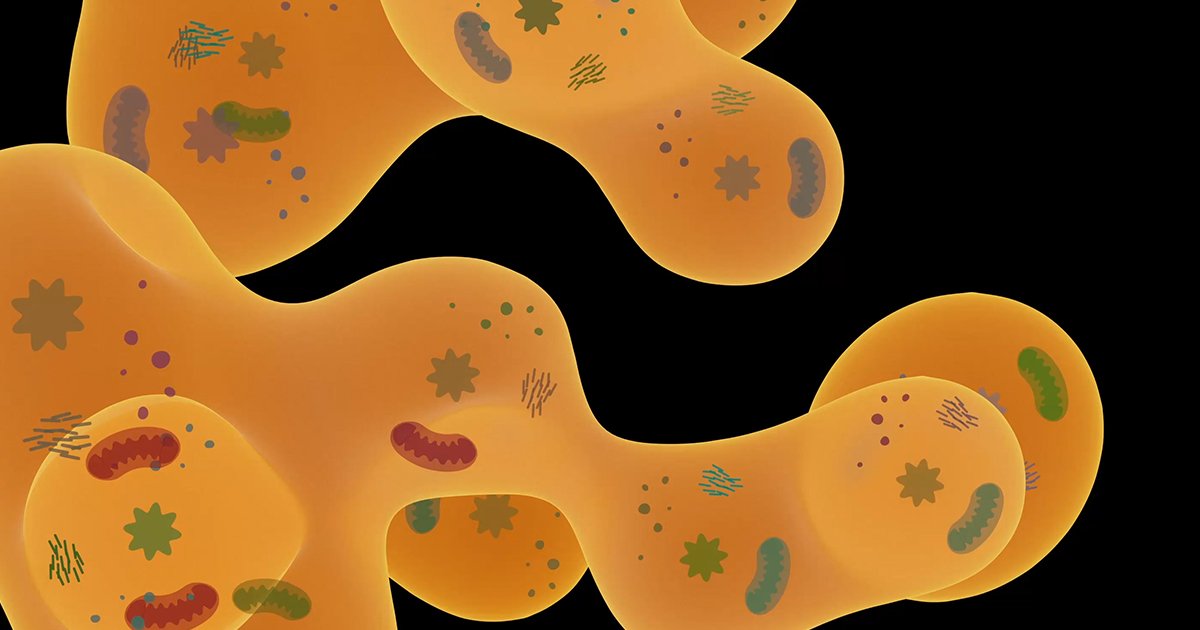
Cells are bustling with activity. However, the crowded environment inside a cell raises intriguing questions about how molecules interact within such limited space. Researchers, including Liam Holt from New York University Langone Health, liken this crowded environment to a jam-packed nightclub. Just as people find it easier to interact closely when the space is filled, molecules within a cell also benefit from certain levels of crowding.
Understanding this “crowding” presents challenges. Physical definitions vary, complicating studies on how cells maintain their dense environments. Simone Reber, a biochemist at the Max Planck Institute for Infection Biology, focuses on density—the mass of a cell’s contents over its volume. Her team’s findings show that cells from various species, including humans and fruit flies, have a consistent density ratio. Notably, the nucleus maintains about 80% of the density of the cytoplasm across species. This raises the idea that cells actively manage their properties.
Historically, scientists grew cells outside their natural environments to study them. Early research revealed that cells flourish when their cytoplasm has an optimal level of crowding. Too little crowding can lead to inefficient biochemical reactions, while too much can cause cellular processes to freeze. This delicate balance keeps cells functioning effectively.
Cells continuously use energy to maintain fluidity in the cytoplasm. This process encourages molecular collisions, crucial for life-sustaining reactions like metabolism and growth. Research indicates that evolution has optimized this balance, maintaining crowding levels where large molecules occupy 30% to 40% of the cytoplasmic volume.
To investigate crowding, scientists needed tracer molecules resembling the size of cellular components. Holt’s innovative approach utilized genetically encoded multimeric nanoparticles (GEMs). These nanoparticles, about 40 nanometers wide, can be tracked as they move through a cell. By observing their behavior in different nutritional conditions, researchers gained insights into how crowding changes within cells.
Holt noted the role of mTORC1, the primary nutrient sensor in eukaryotic cells. It regulates growth by influencing ribosome production. When mTORC1 activity decreased, ribosomes reduced, allowing GEMs to flow more smoothly through the cytoplasm. This discovery highlights the intricate relationship between nutrient levels, molecular crowding, and cellular function.
As science pushes forward, these findings could impact technology development in fields like biotechnology and medicine. Understanding how cells manage their internal environments may lead to innovations in drug delivery systems or treatments for diseases that stem from cellular dysfunction. The future of biophysics inside cells looks promising, filled with opportunities to unravel the complexities that define life itself.
Stay Ahead with the Latest Tech Trends
Dive deeper into the world of Cryptocurrency and its impact on global finance.
Access comprehensive resources on technology by visiting Wikipedia.
QuantumV1
