

Top Highlights
-
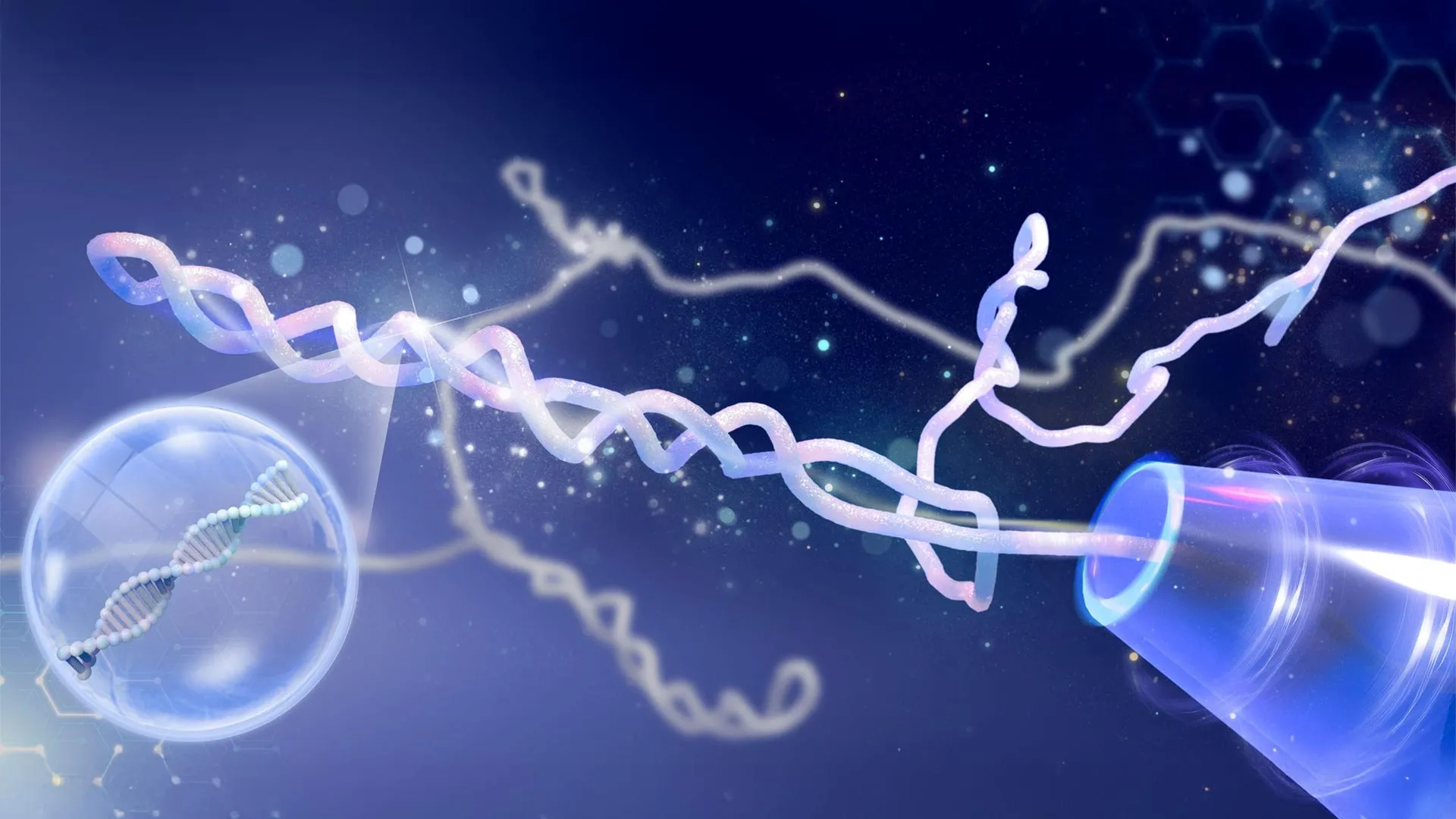
Breakthrough Discovery: Researchers at the University of Cambridge identified that DNA frequently twists into structures called plectonemes during nanopore translocation, challenging the long-held belief that irregular signals were due to knots.
-
Electrical Signal Differentiation: This distinction between plectonemes and knots is crucial as they affect electrical signals in different ways; plectonemes create long-lasting signatures, while knots produce transient ones.
-
Mechanism Insight: The study reveals that the twisting occurs due to electroosmotic flow, which applies torque to DNA, causing plectoneme formation—a finding confirmed through experiments with “nicked” DNA strands.
-
Implications for Biology and Technology: This understanding enhances genomic and biosensing technologies, offering new pathways for detecting DNA damage and improving models of cellular DNA behavior, emphasizing the potential of nanopores as advanced biopolymer manipulation tools.
Unraveling the Mysteries of DNA
For decades, scientists struggled to understand the complex behavior of DNA as it passes through nanoscale pores. Initially, researchers believed that this movement caused the strands to knot, resulting in complex electrical signals. This assumption provided a simple analogy; just like a shoelace tangles when pulled through a narrow hole, DNA seemed to behave similarly. However, this long-held belief misrepresented the underlying biology. Recent research from the University of Cambridge challenges this perspective.
Rather than forming knots, DNA tends to twist around itself, creating structures called plectonemes. These twisted formations have a unique impact on electrical signals, distinguishing their characteristics from those of knots. This shift in our understanding opens new avenues for genomic and biosensing technologies.
The Path Forward: Implications for Science and Technology
The discovery of plectonemes highlights a crucial aspect of DNA behavior that can enhance diagnostic tools and biosensing technologies. By identifying how DNA twists, researchers can unlock more detailed insights into genetic materials. This understanding could enable the development of more sensitive tools for detecting early signs of DNA damage associated with diseases.
Furthermore, recognizing the differences between knots and plectonemes could enrich our models of cellular behavior. As DNA moves and interacts in living cells, the presence and role of these structures become increasingly significant. Ultimately, this research emphasizes the importance of nanotechnology in both biological understanding and the development of innovative biosensors. By refining our comprehension of DNA, scientists pave the way for advancements that could profoundly impact health and technology in the years to come.
Expand Your Tech Knowledge
Dive deeper into the world of Cryptocurrency and its impact on global finance.
Discover archived knowledge and digital history on the Internet Archive.
TechV1
