

Fast Facts
-
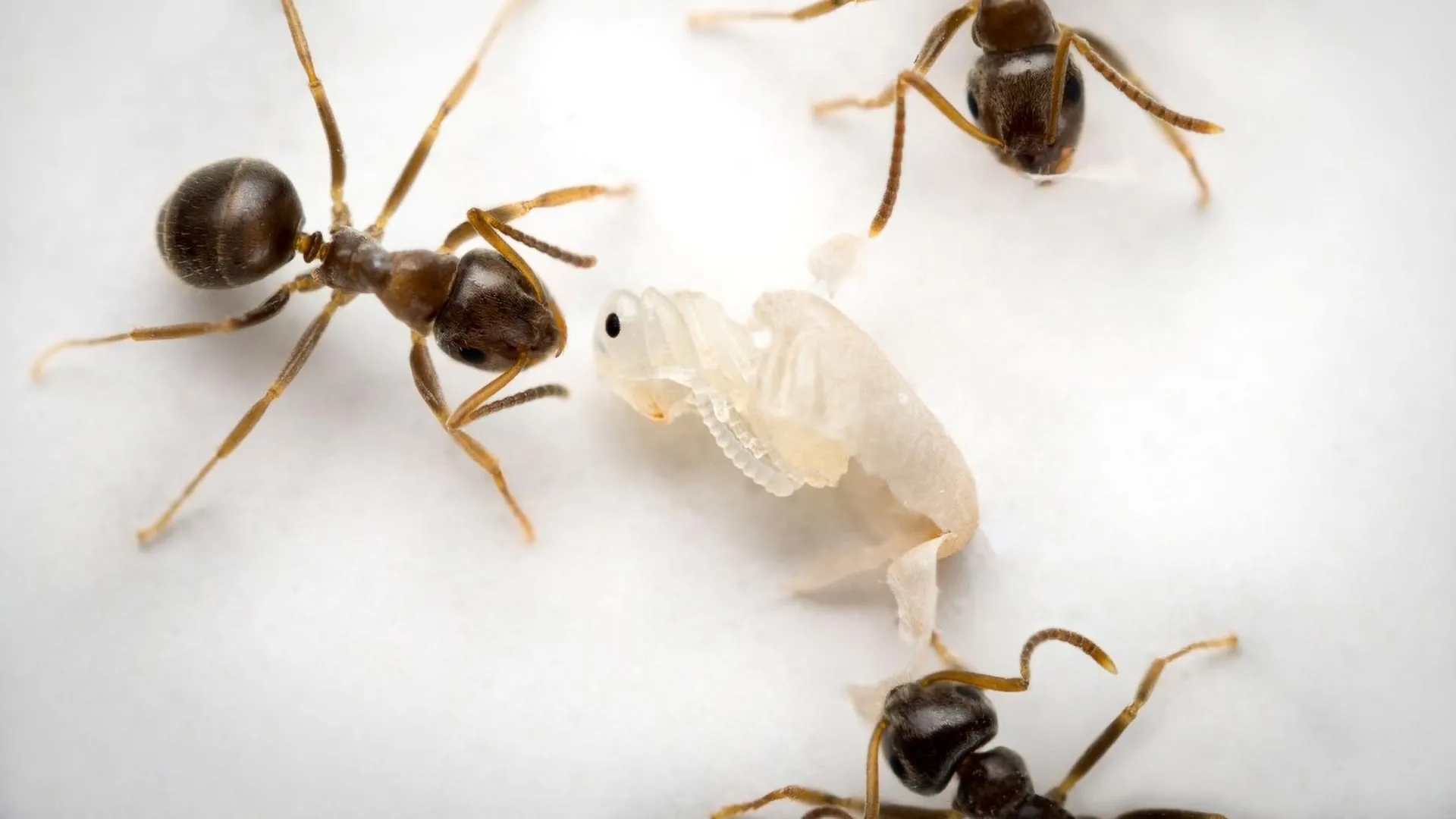
Altruistic Signaling: Terminally ill ant pupae emit a distinctive odor, alerting nestmates to their infection, allowing for the swift elimination of threats to the colony’s health.
-
Cooperative Behavior: This behavior mirrors cellular responses in bodies, showcasing extreme cooperation in ant colonies, where individual sacrifice ultimately benefits collective survival and gene propagation.
-
Targeted Response: Worker ants can precisely identify and respond to infected pupae through chemical cues, effectively functioning as a “superorganism” that combats disease while ensuring the health of the colony.
-
Selective Warning: Only worker pupae, incapable of self-defense, emit warning signals when infections become uncontrollable, preventing unnecessary removal of potentially recoverable individuals, demonstrating effective coordination within the colony.
Cooperative Signals in Ant Societies
Ant colonies function as tightly-knit “superorganisms.” Within these communities, thousands of individual ants contribute to their collective health and survival. When faced with a fatal infection, ant pupae exhibit a remarkable behavior: they release a distinctive odor, akin to the distress signals emitted by infected human cells. This scent serves as an alert, prompting worker ants to identify and eliminate the sick brood before the infection spreads. Instead of hiding their illness, terminally ill ants in the colony actively help protect their nestmates. By sacrificing themselves, they ensure the survival of genetically related individuals, thus passing on their lineage.
Understanding this behavior sheds light on the intricate cooperation seen in nature. Just as human cells work together for the greater good, ant colonies exhibit extreme forms of altruism. Worker ants, upon detecting the alarming scent, spring into action. They swiftly open the affected pupa’s cocoon and apply a natural antimicrobial agent, formic acid, to combat the pathogens inside. While this process results in the unfortunate death of the pupa, it significantly boosts the colony’s chances of remaining healthy. Instead of allowing a sick individual to become a widespread threat, sick ants facilitate a collective response that safeguards the nest.
The Necessity of Precise Communication
The sophistication of this warning system raises important questions. Why develop such a mechanism if sick individuals can simply leave the colony? While adult ants can leave to die outside, pupae depend on the help of others. They lack the mobility to remove themselves from danger. Thus, they signal through chemical cues, reminiscent of how infected cells summon immune responders. This precise communication allows healthy ants to discern between terminally ill brood and those capable of recovery.
Remarkably, not all pupae emit this alarm scent. Only those unable to fight the infection signal for help, minimizing unnecessary casualties. The efficiency hinges on a unique chemical shift that occurs in infected pupae. This ensures that the alert remains sensitive but specific, allowing worker ants to respond accurately without triggering responses to healthy individuals. By honing this intricate form of communication, ant colonies exemplify the potential of cooperation in creating resilient societies, echoing lessons that can resonate within human frameworks. Understanding these mechanisms not only deepens our appreciation of nature but also informs our approach to collective health challenges in human populations.
Stay Ahead with the Latest Tech Trends
Dive deeper into the world of Cryptocurrency and its impact on global finance.
Stay inspired by the vast knowledge available on Wikipedia.
TechV1
