

Summary Points
-
Mission Overview: NASA’s Artemis II mission in 2026 will study astronaut health and behavior during deep space travel, involving a team of four astronauts who will gather data through saliva samples and wearable monitoring devices.
-
Key Studies: Research will focus on immune responses to spaceflight (Immune Biomarkers), crew performance and dynamics (ARCHeR), and standardized health measures, aiming to enhance astronaut safety and mission success on future Mars missions.
-
Radiation Monitoring: Advanced radiation sensors and CubeSats will characterize space radiation, informing safety measures for crew and equipment while studying its biological effects with organ-on-a-chip devices from astronaut cells.
-
Impact on Future Exploration: Insights gained from the Artemis II mission will help ensure the health and effectiveness of astronauts on extended missions beyond low Earth orbit, ultimately facilitating safe human exploration of Mars.
Artemis II Crew to Advance Human Spaceflight Research
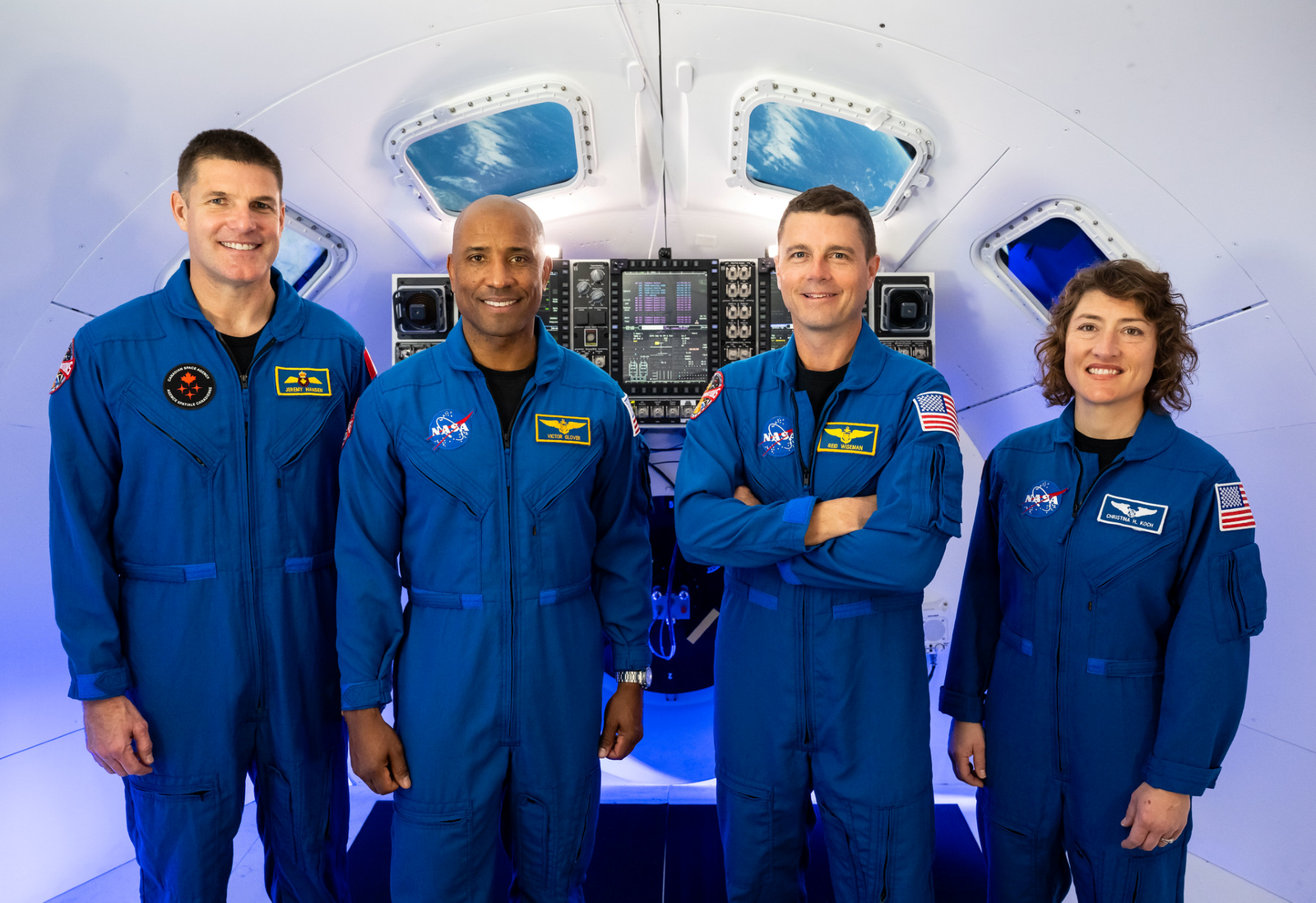
NASA’s Artemis II mission will launch in 2026, embarking on an ambitious 10-day journey around the Moon. This mission aims to deepen our understanding of how space travel affects the human body and mind. The crew includes NASA astronauts Reid Wiseman, Victor Glover, and Christina Koch, along with Canadian astronaut Jeremy Hansen.
To gather valuable data, the crew will perform various health studies. They will collect saliva samples, wear wrist monitors to track movement and sleep, and conduct assessments before, during, and after their mission. “The findings will inform future missions to Mars,” said an aerospace engineer at NASA.
One key study, titled Immune Biomarkers, will investigate how spaceflight influences the immune system. Another study, ARCHeR (Artemis Research for Crew Health and Readiness), will track how well astronauts perform as individuals and as a team. The space inside the Orion spacecraft is limited, roughly the size of a studio apartment, complicating tasks like exercising and storing samples.
Historically, space travel has shown to weaken astronauts’ immune systems. This mission seeks to combat those challenges. Crew members will use a new method for saliva storage. Instead of refrigeration, they will use dry storage techniques to analyze the saliva for changes over time.
Real-time health and behavior data will be vital for crew safety throughout the mission. Psychological assessments and movement tests will also shed light on how astronauts cope in confined spaces. “This research could redefine mission parameters and improve teamwork among astronauts,” stated a NASA psychologist involved in the project.
Additionally, Artemis II will characterize the radiation environment in deep space. CubeSats will monitor radiation levels during the mission. The crew will also carry dosimeters to track their exposure, ensuring their safety under various conditions.
The mission’s insights will extend beyond the Moon, impacting future endeavors on Mars. As NASA researches the effects of deep space travel, technology development will also advance. Innovations may lead to better radiation shielding methods and improved healthcare techniques for astronauts.
Together, these findings will enhance our understanding of human health in space. They will pave the way for safer, longer missions as humanity ventures farther into the cosmos. The Artemis II mission stands as a pivotal step toward the future of space exploration, promising benefits for both astronauts and future technology.
Discover More Technology Insights
Dive deeper into the world of Cryptocurrency and its impact on global finance.
Discover archived knowledge and digital history on the Internet Archive.
SciV1
