

Top Highlights
-
Artemis II Mission Preparations: NASA’s Johnson Space Center is finalizing the Orion spacecraft for the crewed Artemis II mission, set to launch in early 2026 with astronauts from NASA and the Canadian Space Agency.
-
International Space Station Milestones: In 2025, NASA marked 25 years of continuous human presence aboard the International Space Station, a hub for scientific research and international collaboration, hosting over 4,000 experiments from more than 5,000 researchers.
-
New Astronaut Candidates and Missions: NASA introduced 10 new astronaut candidates who will undergo rigorous training for future missions to the Moon and Mars, joining a growing pool of expertise for human space exploration.
-
Progress on Lunar and Planetary Initiatives: Key advancements include successful lunar missions, a new power system for the Gateway lunar space station, and ongoing development of NASA’s Near-Earth Object Surveyor to enhance planetary defense capabilities.
NASA Johnson’s 2025 Milestones Highlight Advances in Space Exploration
NASA Johnson Space Center in Houston closed 2025 with remarkable achievements in human spaceflight, research, and exploration. Notably, teams prepared for the Artemis II mission—a 10-day journey around the Moon slated for early 2026.
As the crewed mission approaches, engineers focus on ensuring the Orion spacecraft is ready for flight. It will carry four astronauts, including NASA’s Reid Wiseman and Christina Koch. Recently, NASA completed stacking the Orion spacecraft on the SLS rocket at Kennedy Space Center. This milestone coincided with successful testing of critical communications systems between the rocket and Orion.
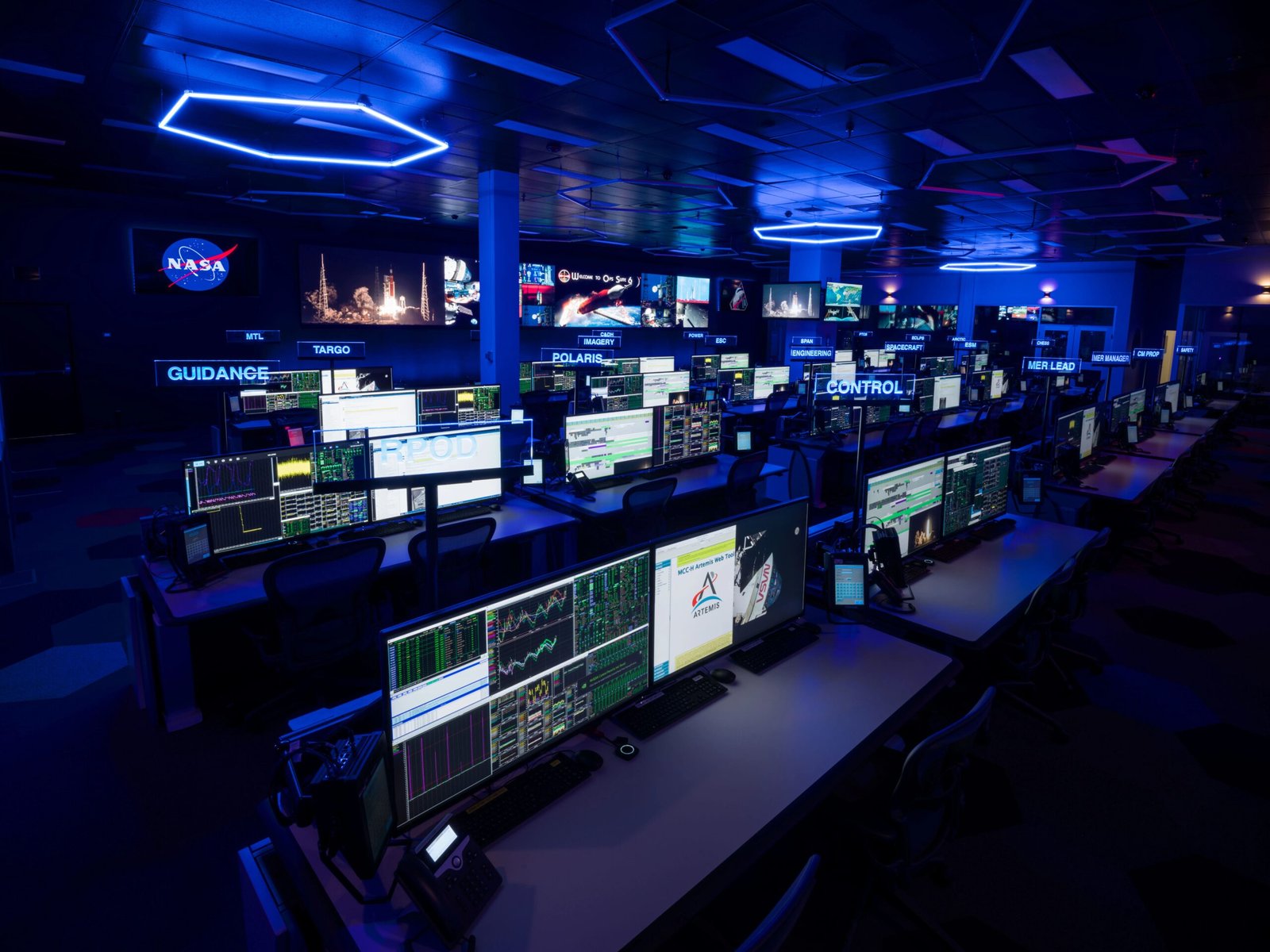
In Houston, teams unveiled the Orion Mission Evaluation Room at NASA’s Mission Control. This new facility will enhance monitoring and assessment of spacecraft systems, fostering a closer look at flight operations beyond low Earth orbit.
These developments reflect teamwork among various Johnson teams, including Flight Operations and Systems Engineering. Their efforts signify steady progress for Artemis II and demonstrate NASA’s commitment to advancing human spaceflight.
Additionally, the Gateway Program marked a key milestone this fall, achieving initial power for humanity’s first lunar space station. This collaborative effort emphasizes the importance of international partnerships in exploration.
In September, NASA introduced ten new astronaut candidates, selected from over 8,000 applicants. After nearly two years of training, these candidates will play vital roles in missions to the Moon, Mars, and beyond.
On November 2, NASA celebrated 25 years of continuous human presence aboard the International Space Station (ISS). What began as a few modules has evolved into a cornerstone of scientific discovery and international cooperation. The ISS has hosted over 4,000 experiments and welcomed more than 290 individuals from 26 countries. Its ongoing research contributes not only to our understanding of human health but also to innovative technology development.
2025 also saw astronauts engage in successful spacewalks, completing critical maintenance aboard the ISS. These activities reflect the dedication of various teams working toward technological advancements in space exploration.
Meanwhile, Firefly Aerospace launched its Blue Ghost Mission 1, sending NASA science instruments to the Moon. Simultaneously, Intuitive Machines achieved a historic landing near the lunar South Pole. These missions help address key challenges like lunar dust and resource use, highlighting the importance of collaboration in NASA’s Competitive Lunar Payload Services initiative.
NASA’s Near-Earth Object Surveyor completed thermal vacuum testing, marking an essential step in planetary defense. This upcoming space-based telescope aims to detect asteroids that could pose risks to Earth.
At the Houston Auto Show, NASA showcased its Artemis exhibit, allowing visitors to explore lunar technologies. This outreach underscores NASA’s commitment to engaging the public in the future of human space exploration.
Furthermore, the Artemis program’s development includes advancements in lunar rover concepts. Contractors reached significant design review milestones, paving the way for vehicles that will help astronauts traverse the lunar surface more efficiently.
In a collaborative effort with Axiom Space, NASA tested the Axiom Extravehicular Mobility Unit, ensuring the lunar suits are ready for future missions. This preparation is vital for NASA’s Artemis training and continues to redefine spacesuit functionality in extreme environments.
NASA’s OSIRIS-REx team received accolades for their work preserving asteroid samples from Bennu, showcasing the agency’s commitment to scientific excellence. This endeavor emphasizes the importance of understanding our solar system’s origins.
Overall, Johnson Space Center’s accomplishments in 2025 reflect significant advancements that will enhance technology development and our understanding of the cosmos. These milestones signify not only progress in space exploration but also improvements in quality of life through scientific discovery and international collaboration. The future of space is bright, with NASA at the forefront, ready to tackle the next giant leaps for humanity.
Continue Your Tech Journey
Dive deeper into the world of Cryptocurrency and its impact on global finance.
Access comprehensive resources on technology by visiting Wikipedia.
SciV1
