

Essential Insights
-
Human Drive for Exploration: Space exploration embodies humanity’s innate curiosity, pushing the boundaries of knowledge and understanding, which is critical as we prepare for future missions to the Moon and Mars.
-
Advancements in Life Support: Research aboard the International Space Station (ISS) has led to innovative life support systems, achieving 98% water recovery and enabling scalable food production, essential for sustained deep-space missions.
-
Technological Innovations: The ISS has been pivotal in developing 3D printing capabilities, allowing astronauts to create tools on-demand and recycle materials, which is crucial for long-duration missions where resupply from Earth is limited.
-
Data Collection and Preparation: Through Earth observations and advanced imaging techniques, data collected by astronauts on the ISS is enhancing our understanding of cosmic destinations, facilitating safer explorations and habitat construction on the Moon and Mars.
International Space Station: Launching NASA and Humanity into Deep Space
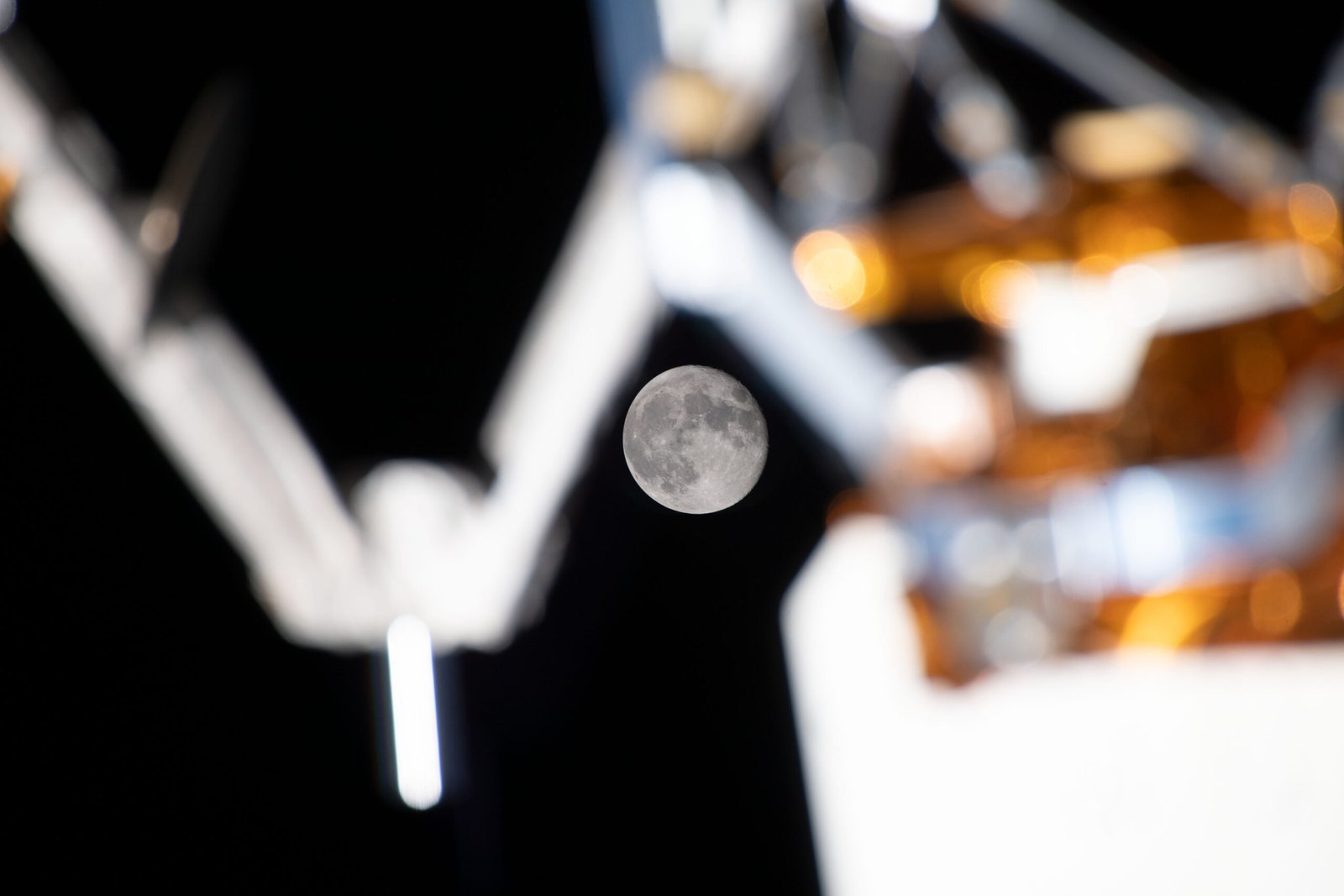
Curiosity and the desire to explore define human nature. Space exploration embodies this drive, pushing us to seek new horizons and understand our universe. The International Space Station (ISS) plays a vital role in this journey, offering a platform for groundbreaking research and technology development.
In November 2025, NASA and its partners will mark more than 25 years of continuous human presence aboard the ISS. This achievement reflects humanity’s commitment to expanding knowledge. As we prepare for the Artemis missions to the Moon and aim for Mars, the ISS continues to enable research that is impossible on Earth.
Space presents unique challenges. For instance, without Earth’s gravity, astronauts had to master basic tasks like drinking and sleeping. Initial research laid the groundwork for addressing these challenges. Today, scientists innovate in areas such as life support systems and advanced physics. Their work has improved products we use daily, impacting life on Earth.
Moreover, the human body encounters significant obstacles in space. Researchers study fluid shifts that affect vision, brain function, and cardiovascular health. By tackling these issues, we enhance astronauts’ chances of thriving on long missions. Current experiments simulate moon landings, clarifying how gravity affects decision-making and piloting.
As we journey farther from Earth, robust technologies and self-sustaining ecosystems become crucial. The ISS acts as a testing ground for refining these systems. For example, researchers have developed life support technologies that recover 98% of water—an essential capability for missions beyond low Earth orbit. Food sustainability also poses a challenge. Scientists have grown over 50 plant species aboard the ISS, exploring methods like hydroponics and aeroponics for crop growth.
Additionally, advancements in 3D printing aboard the ISS empower astronauts to create tools and parts on-demand. This innovation reduces reliance on supplies from Earth, streamlining deep space missions. In 2024, the European Space Agency 3D printed the first metal part in space, marking a significant step forward for space manufacturing.
Data collection is vital for exploration. Astronauts document Earth’s surface, and techniques from the ISS are adapting for Artemis II, where astronauts will capture images of the Moon’s far side. This research enhances our understanding of lunar environments, preparing us for future missions.
When landing on the Moon or Mars, astronauts need shelter from radiation and debris. Scientists are testing lightweight inflatable habitats and 3D printing processes using lunar regolith, the dust found on these celestial bodies. Robotics in space also holds promise. Experiments on the ISS demonstrate how robots can assist astronauts by performing routine tasks and enhancing safety.
Moreover, advancements in DNA sequencing aboard the ISS represent a leap for biological research in space. This capability allows researchers to monitor crew health while also enabling the search for extraterrestrial life.
Effective communication remains essential. The ISS has enabled demonstrations of laser communications, increasing data transmission speeds. This technology will maintain connections with astronauts exploring deep space.
Overall, the ISS serves as a launchpad for technologies used in missions like Artemis I. Research conducted on the station validated radiation protection methods for the Orion spacecraft and calibrated navigation systems. In the near future, Artemis II will build on this knowledge, enhancing our understanding of human health in space.
The International Space Station plays an indispensable role in humanity’s quest for knowledge. As we approach new frontiers, its contributions continue to shape our journey into deep space, improving the quality of life on Earth and beyond.
Expand Your Tech Knowledge
Stay informed on the revolutionary breakthroughs in Quantum Computing research.
Explore past and present digital transformations on the Internet Archive.
SciV1
