

Quick Takeaways
-
Mars Organic Compounds: A new analysis reveals that the organic material found in a rock sample by NASA’s Curiosity rover cannot be entirely explained by non-biological processes, suggesting potential links to past life.
-
Hydrocarbon Discovery: Curiosity detected trace amounts of decane, undecane, and dodecane in ancient mudstone, indicating the possible preservation of fatty acid fragments from a time when liquid water may have existed on Mars.
-
Meteorite Hypothesis Insufficient: Investigations into non-biological sources, including meteorites, failed to fully account for the organic compounds’ abundance, supporting the idea that biological processes may have contributed.
-
Need for Further Research: The study calls for more experiments to determine the degradation rates of organic molecules in Martian conditions, highlighting that the chemical history of Mars may be more complex than previously assumed.
The Mystery of Organic Compounds on Mars
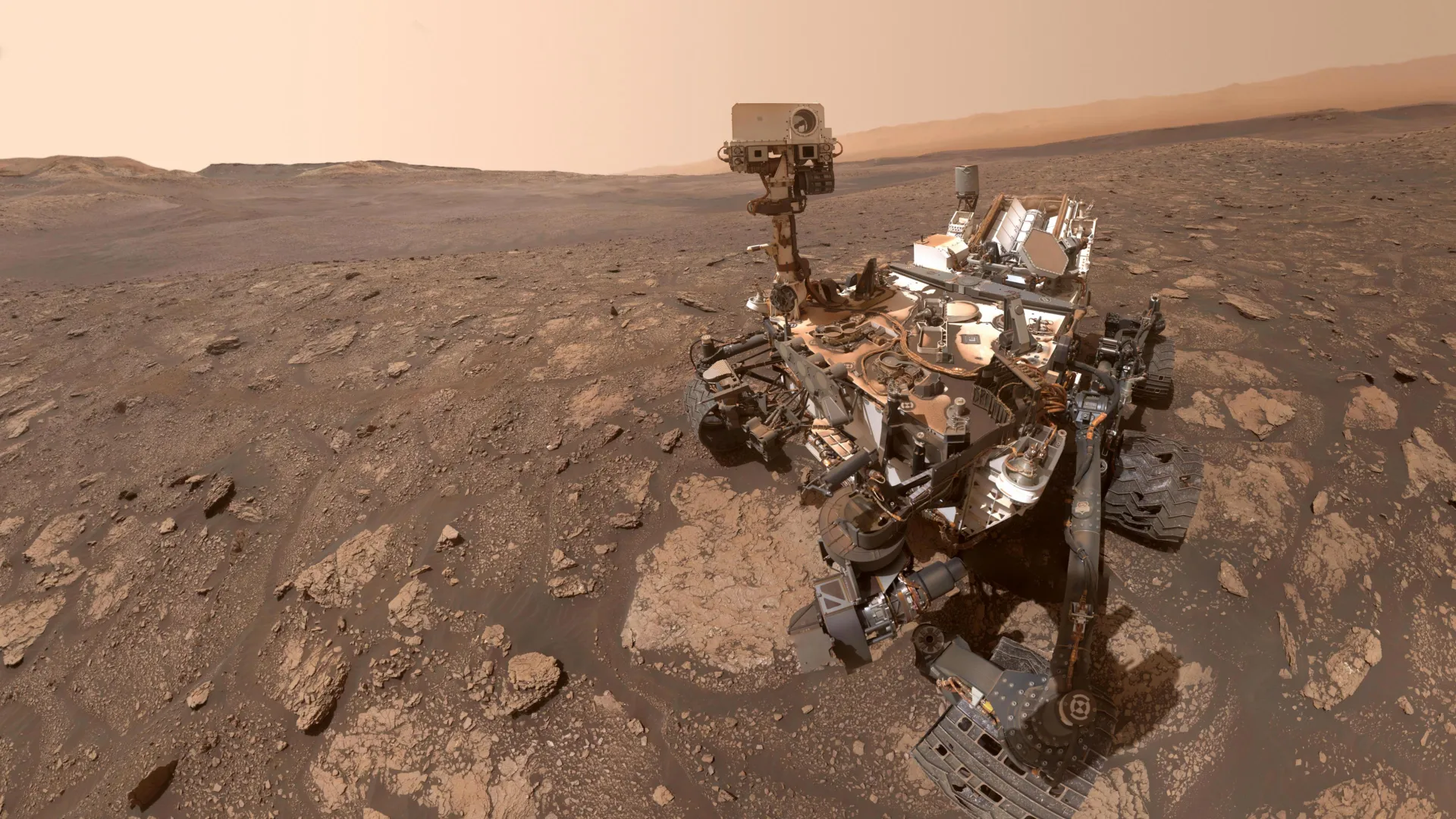
NASA’s recent findings challenge our understanding of organic compounds found on Mars. For years, scientists theorized about the potential for life beyond Earth. Organic compounds, which are essential for life as we know it, sparked excitement among researchers. Curiosity, the rover exploring Gale Crater, has been analyzing Martian rocks since 2012. Recently, it detected significant amounts of hydrocarbons like decane and undecane in ancient mudstone. While these molecules can form through both biological and non-biological processes, the origins of these compounds remain uncertain.
Research has indicated that known non-biological processes alone cannot explain the rich organic material in the samples. Some scientists considered whether meteorites could have delivered these compounds to Mars. While meteorites do contain carbon-based molecules, the research concluded that they cannot fully account for the abundance seen in Curiosity’s findings. Thus, it raises the question of whether some of these compounds originated from living organisms, although this does not confirm life on Mars.
Decoding the Martian Chemical Landscape
To further investigate, scientists combined laboratory experiments and computer simulations, effectively retracing the history of the organic compounds. Mars’s harsh environment poses challenges; its thin atmosphere allows constant cosmic radiation, degrading molecules over time. By simulating the degradation process, the scientists estimated that the original quantity of organic compounds was likely much greater than what current non-biological theories suggest.
Despite the intriguing possibilities, further research is imperative. Scientists need to conduct experiments that replicate Martian conditions, focusing on how quickly organic molecules decompose. Only then can they clarify the role of life or purely chemical reactions in forming these compounds. The complexity of Martian rocks offers a captivating narrative, suggesting that our search for answers about life beyond Earth is only beginning. As curiosity drives our exploration, these findings inspire us to delve deeper into the mysteries of the universe.
Continue Your Tech Journey
Explore the future of technology with our detailed insights on Artificial Intelligence.
Access comprehensive resources on technology by visiting Wikipedia.
TechV1
