

Fast Facts
-
Successful First Flight: NASA completed the inaugural flight test of its 40-inch Crossflow Attenuated Natural Laminar Flow (CATNLF) wing model on January 29, using an F-15B jet to assess its aerodynamic performance.
-
Drag Reduction and Fuel Efficiency: The CATNLF technology aims to enhance laminar airflow over swept-back wings, potentially lowering drag and reducing fuel costs for future commercial aircraft.
-
Comprehensive Testing Planned: This flight is the first of up to 15 planned tests to verify the wing’s performance across various conditions, including speed and altitude.
-
Positive Initial Results: Early data from the flight showed airflow closely matched computer model predictions, indicating promising potential for improving aerodynamics in large aircraft components.
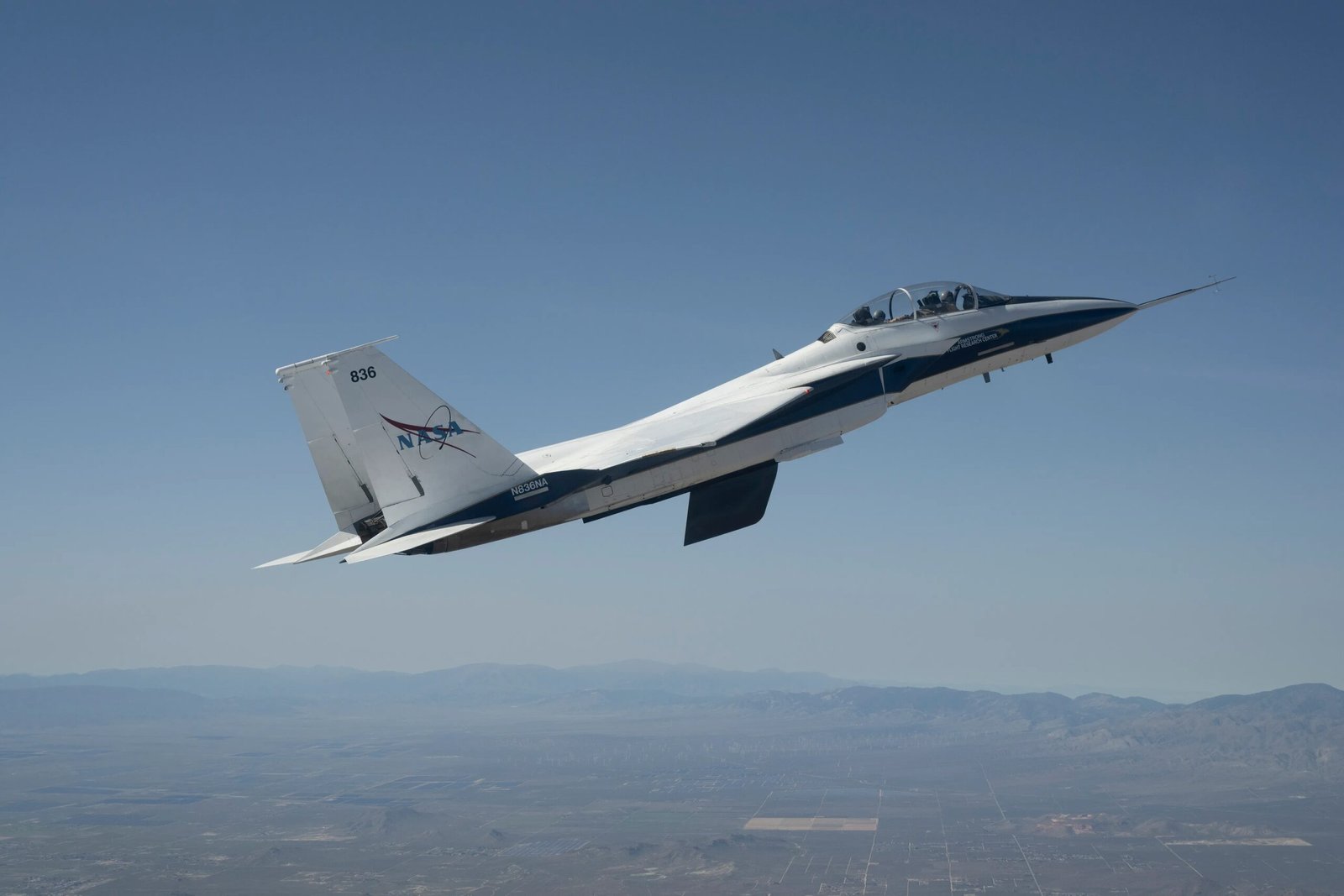
NASA has marked a significant milestone by completing the first flight test of a scale-model wing designed to enhance laminar flow. This advancement promises to reduce drag and lower fuel costs in future commercial aircraft. The test occurred on January 29 at NASA’s Armstrong Flight Research Center in Edwards, California, utilizing an F-15B research jet.
The wing model, called the Crossflow Attenuated Natural Laminar Flow (CATNLF), measured 40 inches and was positioned vertically underneath the aircraft like a fin. The flight lasted about 75 minutes, allowing engineers to assess the aircraft’s maneuverability with the new wing attached.
Witnessing the CATNLF in flight was a rewarding experience for the team. “Finally seeing that F-15 take off made all that hard work worth it,” one researcher commented. This technology aims to optimize the smooth flow of air over wing surfaces, a critical factor in reducing turbulence and drag.
Next, NASA plans up to 15 additional flights. These tests will examine various speeds, altitudes, and conditions, helping researchers evaluate the wing’s performance. During the initial flight, the team conducted several maneuvers to ensure the wing’s safe operation. They flew at altitudes ranging from 20,000 to nearly 34,000 feet, gathering essential aerodynamic data.
Engineers employed various tools, including an infrared camera, to measure laminar flow during the flight. This data will verify key design elements and assess how well the model maintains smooth airflow.
Early results showed promising correlations with computer model predictions. This initial flight builds on extensive prior work, including computer simulations and wind tunnel tests. Future flights will continue collecting data to further validate the potential of CATNLF for next-generation aircraft design.
This research represents a collaborative effort under NASA’s Flight Demonstrations and Capabilities project. With support from other programs, CATNLF technology aims to revolutionize air travel by making it more efficient. The outcomes of these tests could significantly enhance the aviation industry, benefiting airlines and passengers alike.
Expand Your Tech Knowledge
Learn how the Internet of Things (IoT) is transforming everyday life.
Explore past and present digital transformations on the Internet Archive.
SciV1
