

Quick Takeaways
-
Evolution of Mobile Brands: After 14 years at CNET, the journey has revealed the dominance of established brands like Apple and Samsung alongside the rise and fall of companies like BlackBerry, HTC, and LG in an ever-changing mobile landscape.
-
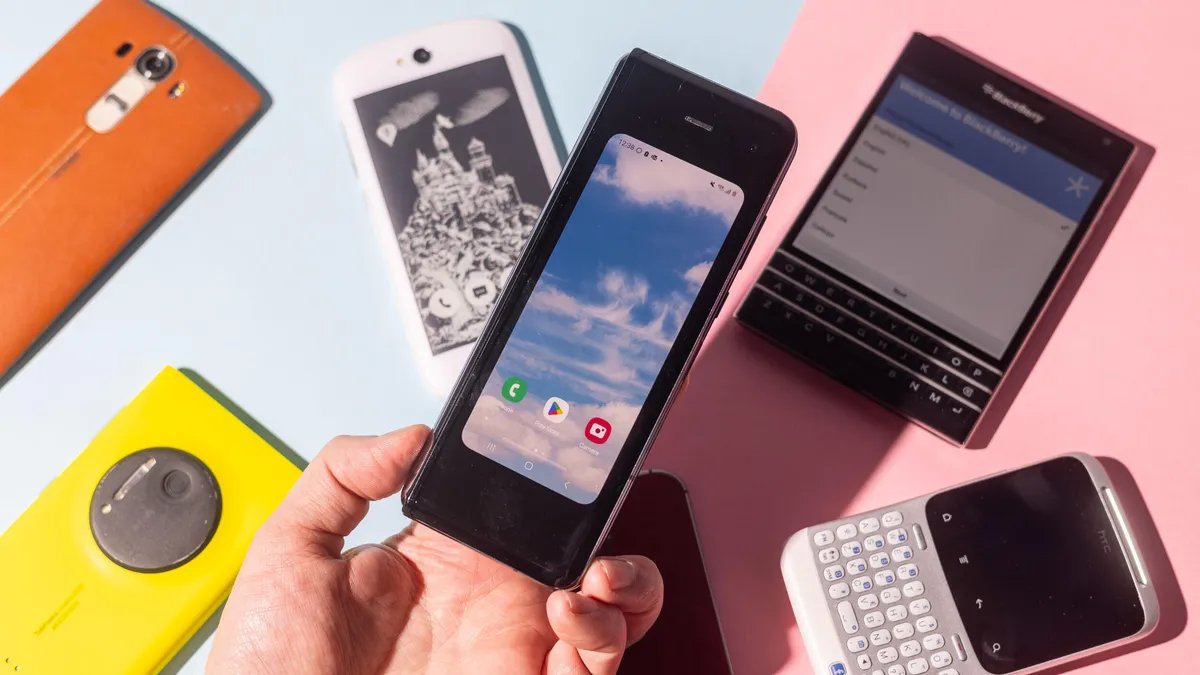
Unique Innovations: Highlights include the BlackBerry Passport’s square design aimed at business users, the YotaPhone’s dual display for e-ink reading, and the HTC ChaCha’s dedicated Facebook button, showing attempts to differentiate in a crowded market.
-
Niche Failures: The Sirin Labs Finney targeted crypto users with a secure wallet, while the Planet Computers Gemini PDA combined phone features with a clamshell laptop design, both ultimately failing due to limited appeal and practicality.
-
Memorable Oddities: Phones like LG’s G4 wrapped in real leather and the Motorola Moto X’s customization options illustrate the creative yet impractical approaches some brands took, with the original Samsung Galaxy Fold sparking the foldable device revolution despite its quirks.
The Quirky Phones That Left Their Mark
Over the past 14 years, I’ve come across numerous strange mobile devices. Some phones attempted to break the mold. BlackBerry’s Passport stood out with its square design. While its keyboard had charm, the shape proved awkward for everyday use. This device showcased BlackBerry’s decline, illustrating that innovation alone doesn’t guarantee success.
Next, consider the YotaPhone 2, with its unusual rear E Ink display. Although it aimed to save battery life when reading, users found practicality lacking. The HTC ChaCha featured a dedicated Facebook button which seemed brilliant at the time. Yet, social media-specific phones quickly faded from the spotlight. These examples highlight how companies can innovate but struggle to find lasting appeal.
Innovative Yet Unpractical Designs
Additionally, the Sirin Labs Finney targeted crypto enthusiasts with a pop-up screen for secure transactions. Unfortunately, its complexity and expense limited its market penetration. The Planet Computers Gemini PDA merged phone and laptop features. It attracted productivity-focused users but had size limitations making portability challenging.
Similarly, the LG G5 introduced modular technology. Although it aimed to enhance user customization, it required inconvenient battery removal for module swapping. The larger Samsung Galaxy Note redefined phone dimensions but initially faced skepticism. Its success paved the way for bigger devices, altering industry standards.
Lastly, Nokia’s Lumia 1020 remains memorable for its groundbreaking camera. Its stylish design captured photographers’ attention. In contrast, the original Galaxy Fold wowed with foldable technology but tackled usability issues. Each of these quirky phones reflects an era of experimentation that continues to shape today’s mobile landscape.
Continue Your Tech Journey
Explore the future of technology with our detailed insights on Artificial Intelligence.
Explore groundbreaking research and scientific advancements at the National Science Foundation (NSF).
IoTV1
