

Summary Points
-
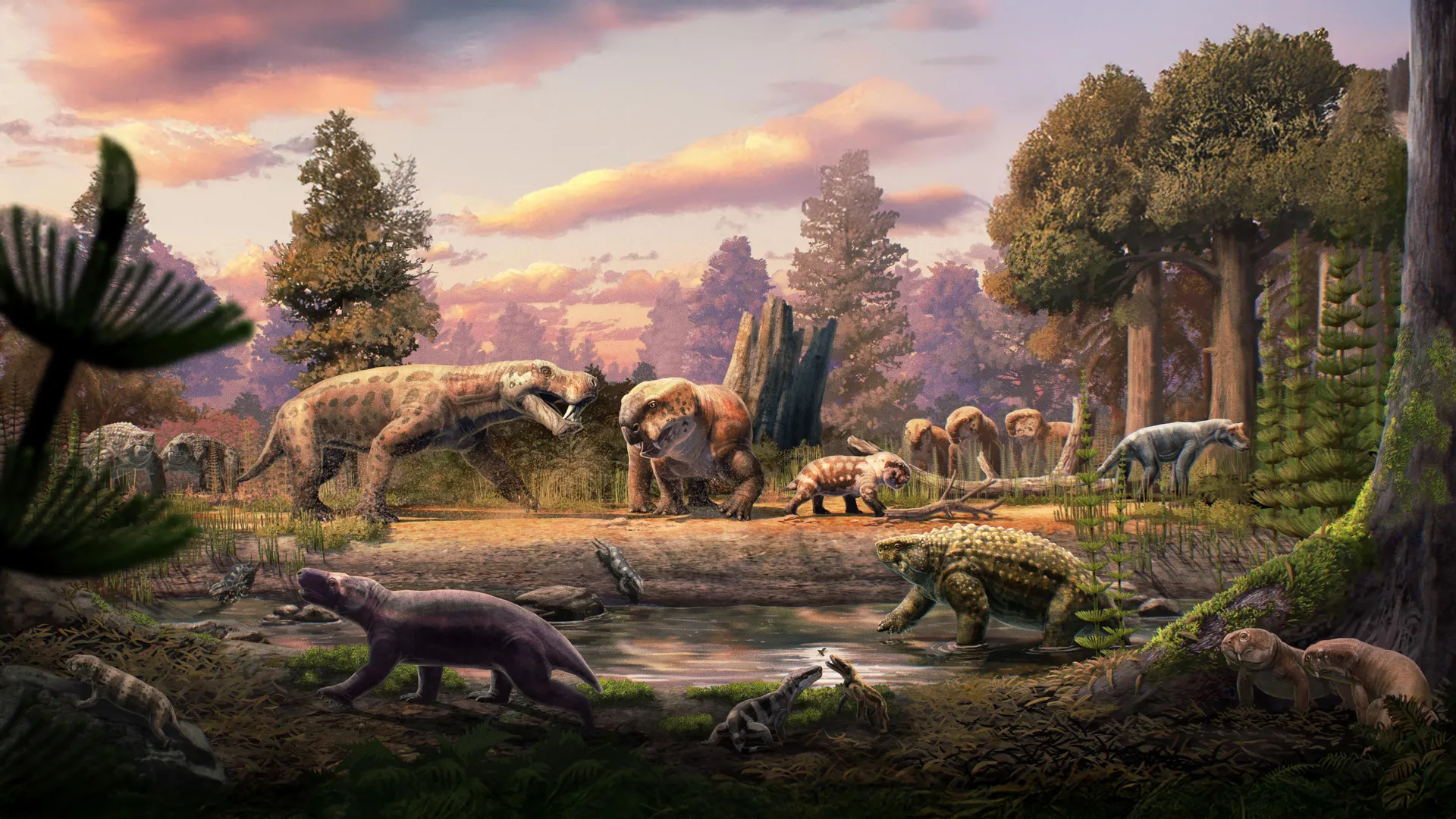
Long-term Research: An international team of paleontologists, led by the University of Washington and the Field Museum, has spent over 15 years excavating fossils in Tanzania and Zambia to enhance understanding of the Permian period, which ended with Earth’s largest mass extinction.
-
Key Discoveries: Recent findings include new species of dicynodonts, gorgonopsians, and temnospondyls, shedding light on the diverse fauna of southern Pangea just before the “Great Dying” that obliterated approximately 70% of terrestrial species.
-
Unprecedented Insights: The fossils from the Ruhuhu, Luangwa, and Mid-Zambezi basins offer exceptional condition and quantity, enabling detailed comparisons with previous records from the Karoo Basin in South Africa and enhancing knowledge of surviving species post-extinction.
-
Collaborative Effort: The extensive research, involving multiple universities and institutions worldwide, emphasizes a global effort to understand the environmental shifts and evolutionary trajectories during a critical point in Earth’s history.
Unearthing the Past
The recent discoveries in Africa significantly enhance our understanding of the Permian period, a crucial chapter in Earth’s history. An international team of paleontologists has dedicated over 15 years to uncovering fossils in southern Tanzania and Zambia. These fossils offer stunning insights into the diverse life forms that thrived on the supercontinent of Pangea just before the Great Dying. This mass extinction event, which occurred approximately 252 million years ago, claimed about 70% of terrestrial species and disrupted entire ecosystems.
Excavations in the Ruhuhu, Luangwa, and Mid-Zambezi basins have yielded remarkable finds, including saber-toothed predators and giant amphibians. Researchers have focused on the analysis of fossils from both recent digs and older specimens stored in museums. Notably, the high quality of the fossils collected allows scientists to make detailed comparisons to previously studied records from South Africa. These findings present new opportunities to explore which species survived the cataclysm and why.
Lessons for Today
The implications of these discoveries extend beyond mere historical interest. Understanding the dynamics of past ecosystems can inform our approaches to current biodiversity challenges. Evolutionary responses to mass extinction events shed light on resilience in the face of environmental change. By examining who thrived and who faltered, scientists can draw parallels to modern-day species facing extinction risks.
Furthermore, the collaborative nature of this research demonstrates the value of international partnerships in science. The work relies on expertise from multiple institutions across the globe, emphasizing that advancing knowledge often involves a diverse range of perspectives. As we pieced together the intricate puzzle of Earth’s history, we gain not only insight into ancient life but also a clearer understanding of our planet’s future.
Expand Your Tech Knowledge
Learn how the Internet of Things (IoT) is transforming everyday life.
Stay inspired by the vast knowledge available on Wikipedia.
TechV1
