

Fast Facts
-
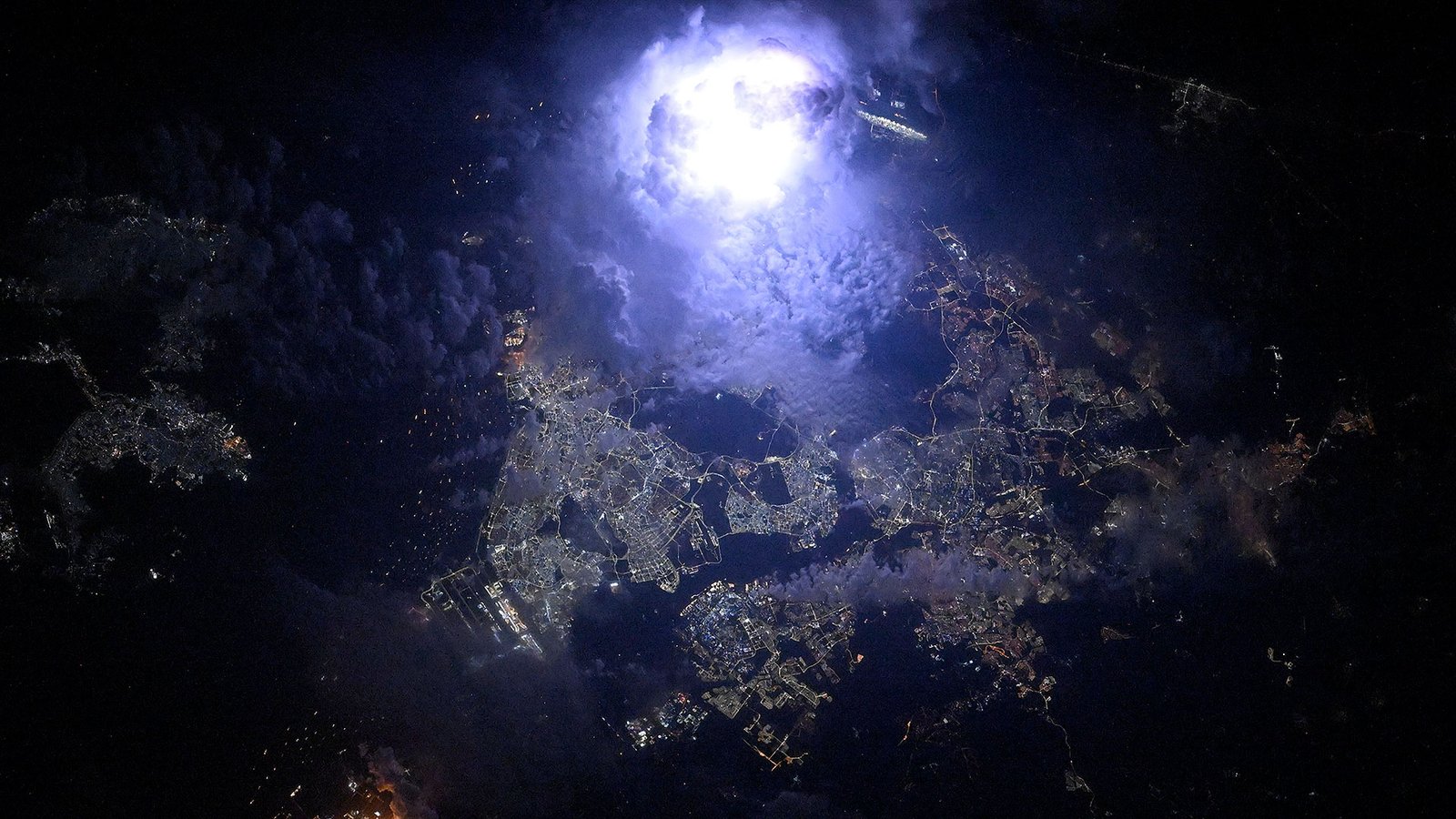
Scientific Observations: Astronaut Anne McClain captured a unique aurora displaying light pink hues, prompting insights into atmospheric science and the factors influencing aurora color generation.
-
Research Activities: Expedition 73 crew conducted crucial experiments, including tracking equipment with RFID tags, assessing physiological data with a Canadian-built vest, and testing liquid surface tension for protein studies.
-
Station Maintenance: The crew prioritized upkeep by inspecting module windows, cleaning hatches, and preparing for future missions, while also seeking additional storage space within the Zvezda module.
- Upcoming Crew Delay: Axiom Space’s Ax-4 mission remains delayed due to a leak repair, with a revised launch date anticipated, while seven astronauts currently reside aboard the International Space Station.
Pink Auroras Light Up the ISS Sky, NASA Astronaut Reveals
From June 16 to 20, 2025, the International Space Station (ISS) crew focused on both research and maintenance. Among the highlights, astronaut Anne McClain discovered that auroras can appear pink, sparking interest in their coloring.
McClain shared her findings through social media. Initially, she thought her camera settings were incorrect because the aurora appeared white. However, closer observation revealed a light pink hue. This discovery led her to explore the science behind auroras.
Auroras form when solar particles collide with Earth’s atmosphere. Various factors, such as altitude and atmospheric density, influence their color. McClain explained that the most common color, green, occurs when particles hit oxygen molecules at altitudes between 60-150 miles. In rarer cases, higher altitude collisions can produce red hues. Surprisingly, McClain’s pink aurora resulted from specific conditions in the atmosphere.
Meanwhile, the crew engaged in several experiments. Jonny Kim installed tracking tags for better logistics management aboard the ISS. This technology could revolutionize how astronauts locate equipment quickly. Additionally, Kim tested a Canadian-built vest that monitors physiological data, enhancing health assessment in space.
Furthermore, Nichole Ayers continued an experiment observing liquid behavior in a controlled environment, contributing to our understanding of material science in microgravity.
The crew also prioritized station maintenance. McClain systematically inspected windows, ensuring they remain clear for observations. Commander Takuya Onishi focused on cleaning seals and handles, a crucial task for station integrity.
As the week progressed, Ayers participated in a podcast, sharing her awe of Earth from space. "Seeing the planet from above changes your perspective," she noted. It emphasizes the fragility of our environment and fuels a desire to protect it.
Unfortunately, the anticipated arrival of Axiom Space’s fourth visiting crew faced delays. NASA is currently assessing a minor leak repair before facilitating their launch.
As of June 20, the ISS hosts seven crew members from various space agencies. Their continued efforts mark over 24 years of steady human presence in space—a testament to international cooperation in scientific advancement and exploration.
Stay Ahead with the Latest Tech Trends
Dive deeper into the world of Cryptocurrency and its impact on global finance.
Stay inspired by the vast knowledge available on Wikipedia.
SciV1
