

Summary Points
-
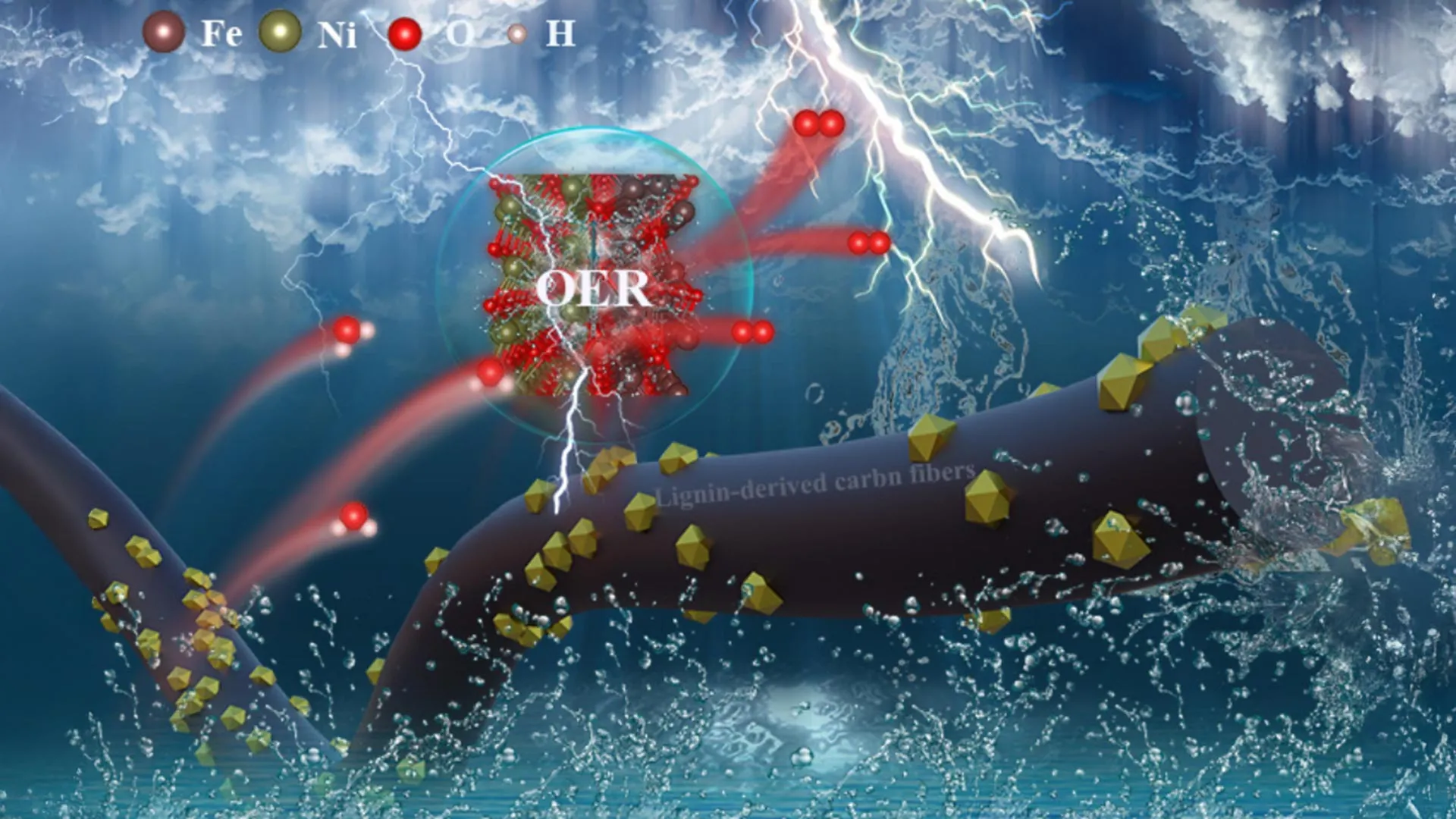
Innovative Catalyst Development: Researchers created a renewable catalyst using nickel and iron oxide nanoparticles embedded in carbon fibers made from lignin, enhancing efficiency and durability in clean hydrogen production through water electrolysis.
-
Promising Performance Metrics: The catalyst exhibits a low overpotential of 250 mV at 10 mA cm² and maintains stability for over 50 hours at high current density, presenting a cost-effective alternative to precious metal catalysts.
-
Sustainable Production Pathway: Utilizing lignin, a widely produced byproduct from paper and biorefinery industries, the study demonstrates an environmentally friendly method for large-scale hydrogen generation.
-
Scalability and Versatility: The design is scalable and adaptable for various metal combinations, highlighting the potential for new, biomass-derived electrocatalysts that align with sustainable energy goals.
Harnessing Lignin for Sustainable Energy
Researchers have found a groundbreaking way to utilize paper mill waste, specifically lignin, for clean hydrogen production. Traditionally, lignin—a major byproduct of the paper industry—garners minimal energy and often ends up being burned. However, scientists have engineered a catalyst from lignin that significantly enhances the process of water electrolysis, a key step in producing hydrogen. By embedding nickel oxide and iron oxide nanoparticles into carbon fibers derived from lignin, the new catalyst delivers both efficiency and durability. This development provides a cost-effective alternative to more expensive precious metal catalysts typically used in this field.
Moreover, the catalyst exhibits impressive stability and performance under demanding conditions. As a result, it lowers the overpotential during the crucial oxygen evolution reaction, making large-scale hydrogen production more feasible. This approach not only utilizes waste material but also opens the door to a more sustainable energy future. Therefore, harnessing lignin could transform the energy landscape, promising both environmental benefits and economic viability.
Pathway to Widespread Adoption
This innovation highlights a vital trend in the energy sector: the increasing reliance on renewable materials for innovative solutions. The new catalyst’s scalable design leverages lignin, which is abundant and produced worldwide. As industries move toward greener practices, adopting this technology could significantly reduce costs and enhance energy sustainability on a global scale.
While challenges exist in widespread adoption, the momentum is palpable. The research indicates that the catalytic design could adapt to various metals and reactions, showcasing potential for future advancements. By prioritizing sustainable materials and innovative engineering, this approach aligns with ongoing efforts to create cleaner energy technologies. Embracing solutions like these can guide us toward a more sustainable and economically viable future, ensuring that the human journey aligns with our planet’s health.
Continue Your Tech Journey
Explore the future of technology with our detailed insights on Artificial Intelligence.
Explore past and present digital transformations on the Internet Archive.
TechV1
