

Quick Takeaways
-
Crewed Mission: NASA’s Artemis II mission, featuring astronauts Christina Koch, Jeremy Hansen, Reid Wiseman, and Victor Glover, is set for the first crewed flight of the Space Launch System and Orion spacecraft.
-
Lunar Flyby: The mission will orbit the Moon to test Orion’s systems before a splashdown off the California coast.
-
Innovative Era: Artemis represents a Golden Age of exploration, setting the stage for future U.S. crewed lunar missions.
-
Mars Preparation: The mission aims to prepare for sending the first astronauts to Mars, advancing human space exploration.
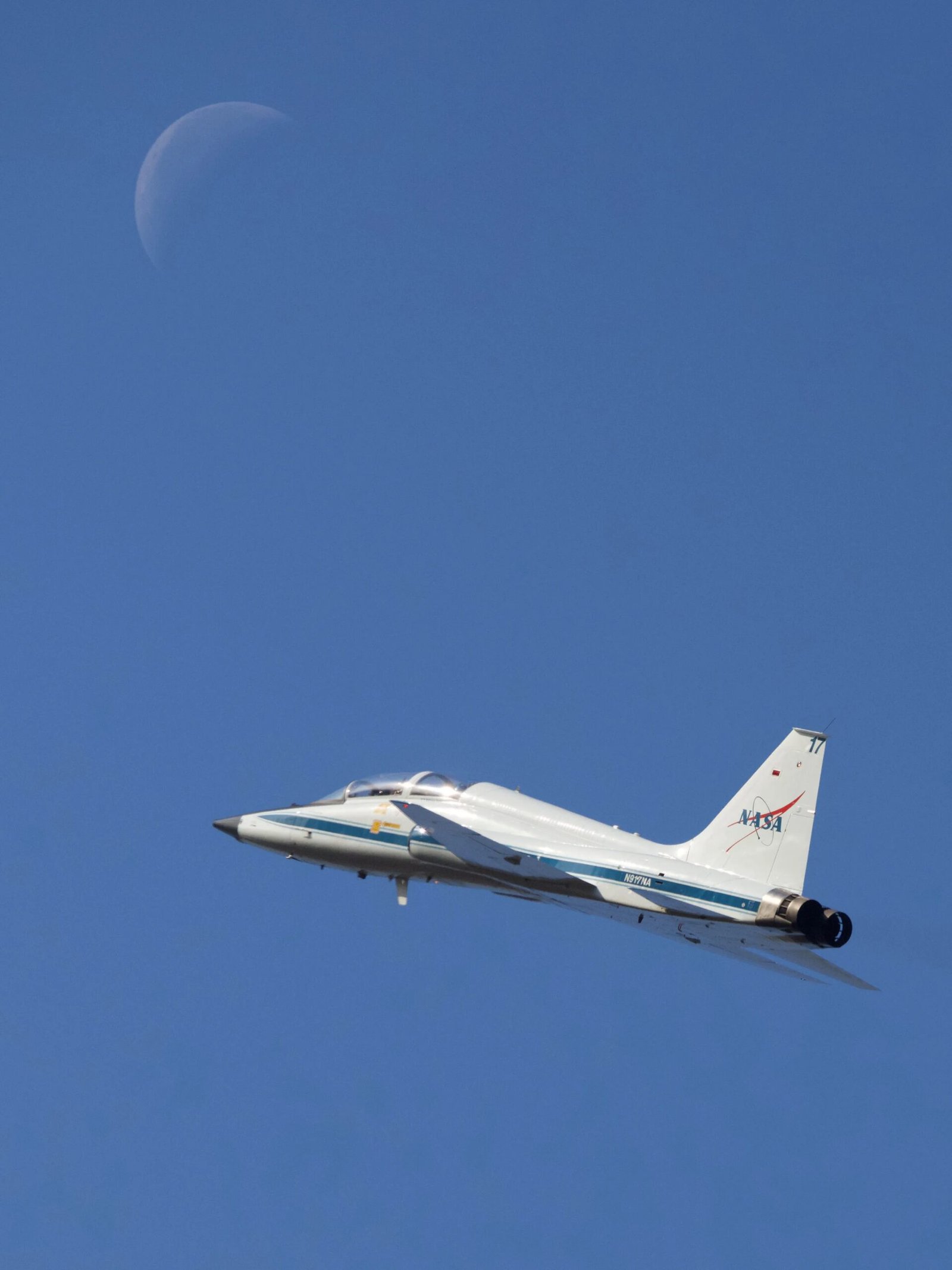
NASA astronauts are ramping up their training for the Artemis II mission. Recently, Christina Koch and Jeremy Hansen took off on a T-38 training flight from Ellington Field. Above them hung a waning crescent Moon, serving as a reminder of their upcoming journey.
Koch and Hansen, along with Reid Wiseman and Victor Glover, will be part of the first crewed flight of the Space Launch System rocket and Orion spacecraft. This mission will fly around the Moon and back, testing Orion’s systems and capabilities. Upon their return, the crew will splash down off the California coast.
Artemis II marks a crucial step in space exploration. The program is not just about reaching the Moon; it aims to prepare for future human missions to Mars. This ambitious goal requires significant advancements in technology.
Moreover, Artemis programs foster innovation in various fields. Engineers and scientists are developing cutting-edge systems and materials. These improvements could enhance everyday life on Earth, from advanced robotics to enhanced telecommunications.
As astronauts prepare for their mission, they inspire the next generation of explorers. Their commitment to pushing boundaries showcases human ingenuity. With each step taken, Artemis paves the way for a brighter future in space exploration and beyond.
Discover More Technology Insights
Learn how the Internet of Things (IoT) is transforming everyday life.
Access comprehensive resources on technology by visiting Wikipedia.
SciV1
