

Fast Facts
-
Revolutionary Cold-Weather Performance: Researchers have developed a “liquid-solid” battery that retains over 85% capacity at -34°C, outperforming traditional lithium-ion batteries in freezing conditions.
-
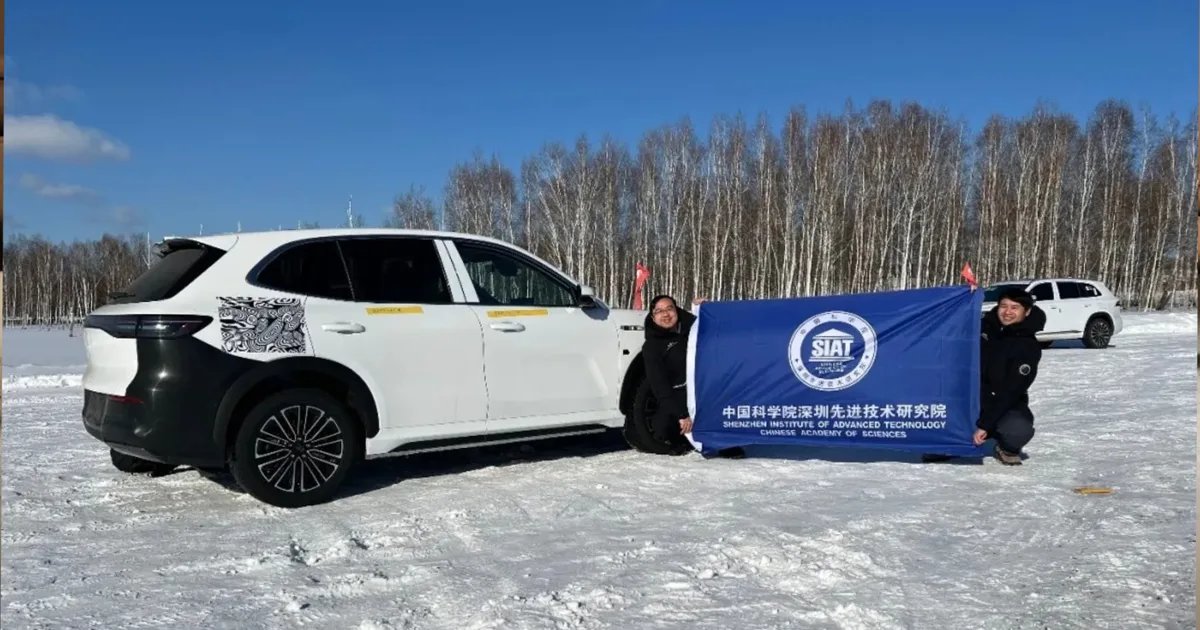
Aluminum-Anode Breakthrough: An aluminum-based lithium-ion battery tested in Geely’s EX5 EV achieved over 92% discharge efficiency at -25°C and can recharge to 90% in about 20 minutes, demonstrating substantial cold-weather capabilities.
-
Addressing Lithium-Ion Limitations: Traditional lithium-ion batteries suffer in low temperatures, reducing range and charging speed; the new designs aim to alleviate winter range anxiety and improve charging efficiency.
-
Competitive Battery Innovation: As major Chinese manufacturers like BYD and CATL strive for ultra-fast charging, this new technology could enhance the viability of EVs in cold climates, marking a significant advancement in battery tech.
Cold Weather Challenges for EVs
Electric vehicles (EVs) struggle in cold climates. Traditional lithium-ion batteries can lose range and slow charging speeds when temperatures drop. For many drivers, this leads to winter range anxiety. Even with advanced battery systems, performance falters below freezing. However, researchers from China’s Dalian Institute of Chemical Physics have introduced a potential solution. Their new aluminum-based battery technology could change the game by retaining over 85% of its capacity at extremely low temperatures. This innovation shows promise. Early tests indicate its effectiveness in powering industrial drones, suggesting real-world applications are on the horizon.
A Path Forward for EV Adoption
The implications are significant. If this aluminum-based battery becomes commercially available, it could alleviate cold-weather concerns for EV drivers. Additionally, a wide-temperature lithium-ion battery developed by the Chinese Academy of Sciences achieved over 92% discharge efficiency at -25°C and charged quickly under extreme conditions. This performance could encourage more drivers to embrace EVs, even in the harshest climates. As battery technology continues to advance, automakers will likely find ways to bridge the gap between electric vehicles and traditional internal combustion engines. Ultimately, innovations like these can shape a more sustainable future for transportation, contributing to humanity’s overall journey toward cleaner energy solutions.
Discover More Technology Insights
Stay informed on the revolutionary breakthroughs in Quantum Computing research.
Discover archived knowledge and digital history on the Internet Archive.
TechV1
