

Fast Facts
-
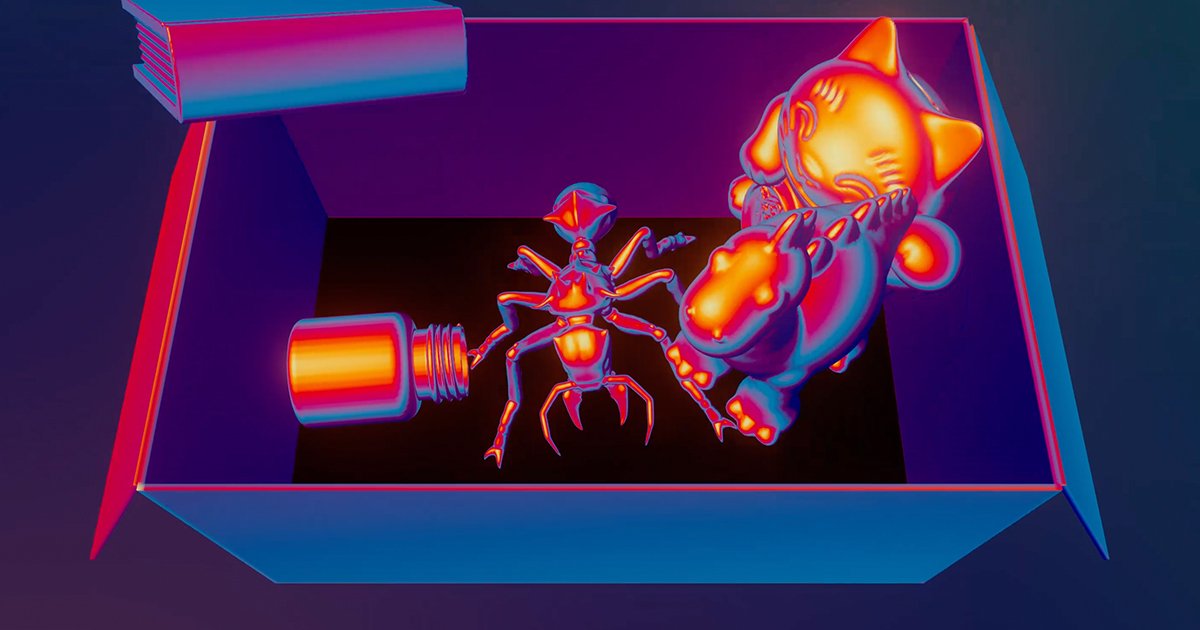
Zero-Point Energy (ZPE): Even when a box is emptied of all matter and gases, it contains residual energy known as zero-point energy, crucial in quantum mechanics, stemming from fields and discrete objects like atoms.
-
Fundamental Limitations: Attempts to eliminate energy in a system are constrained by the Heisenberg uncertainty principle, preventing us from knowing an object’s exact position and velocity simultaneously.
-
Historical Significance: First proposed by Max Planck in 1911 and later explored by Einstein, ZPE explains various phenomena, including molecular vibrations at low temperatures and the Casimir effect, illustrating the intriguing interplay between vacuum energy and physics.
-
Gravitational Mystique: Despite the immense potential energy inferred from zero-point energy, its gravitational effects remain unexplained, posing ongoing challenges in understanding how such energy does not lead to significant cosmic explosions.
Quantum Mechanics: The Power of Nothingness
In the complex world of quantum mechanics, the concept of nothingness is anything but empty. When scientists think they’ve created a vacuum, they discover a phenomenon called zero-point energy, or ground-state energy. This energy remains, regardless of attempts to remove all matter from a space.
Zero-point energy exists in two forms. One form relates to fields, like the electromagnetic field, while the other is linked to individual atoms and molecules. Even as temperatures approach absolute zero, atoms retain energy. Therefore, experts argue that a box you try to empty is not truly void. It still vibrates with invisible energy.
Understanding zero-point energy opens up intriguing discussions. For instance, Max Planck introduced the idea in 1911, but Albert Einstein later advanced it. Researchers have since used zero-point energy to explain various phenomena, from the vibrations of molecules to the behavior of helium at extreme temperatures.
A recent experiment in 2025 at the European X-Ray Free-Electron Laser Facility showed that even a chilled molecule, iodopyridine, continued to vibrate. Researchers initially focused on breaking atomic bonds but found an unexpected correlation among the atoms’ movements. “It’s basically something that we found,” said Rebecca Boll, pointing to zero-point energy’s subtle influence.
One famous demonstration of zero-point energy is the Casimir effect. In 1948, Hendrick Casimir proposed that two uncharged plates would influence the electromagnetic field between them. Observations in 1997 confirmed this prediction. The energy difference between the space inside and outside the plates causes an attractive force, pulling them closer together.
Scientists view fields as collections of oscillators, each housing its own zero-point energy. Although this presents a theoretical puzzle, physicists have developed methods to work with these infinities, focusing on energy differences rather than the values themselves.
Yet, gravity complicates matters. Wolfgang Pauli recognized that zero-point energy could generate substantial gravitational fields. Yet, why this energy remains subdued puzzles researchers. “All forms of energy gravitate,” Sean Carroll notes, emphasizing that vacuum energy cannot be overlooked.
The implications of these discoveries extend to technology development. Understanding zero-point energy could lead to advancements in energy efficiency, quantum computing, and even potential breakthroughs in energy generation. The vacuum of space might harbor untapped resources, waiting for innovators to harness them.
Zero-point energy turns the idea of nothingness on its head. It embodies potential waiting to be realized, suggesting that empty space is alive with possibilities. Quantum mechanics continues to inspire scientists and technologists alike, offering a glimpse into the extraordinary future ahead.
Expand Your Tech Knowledge
Learn how the Internet of Things (IoT) is transforming everyday life.
Access comprehensive resources on technology by visiting Wikipedia.
QuantumV1
