

Quick Takeaways
-
Global IoT Connectivity: Deutsche Telekom is the first mobile network operator to enable multi-orbit roaming for IoT devices, allowing data transmission via both terrestrial and satellite networks.
-
Innovative Partnerships: The solution integrates Deutsche Telekom’s IoT network with satellite services from partners like Skylo, Sateliot, and OQ Technology, enhancing connectivity across geostationary (GEO) and low earth orbit (LEO) satellites.
-
Early Adopter Program Initiatives: A new Multi-Orbit Early Adopter Program aims to prototype IoT solutions, uniting 15 companies and 5 research institutions to explore terrestrial and satellite connectivity synergy.
-
Enhanced Use Cases: Successful applications include remote asset management in critical infrastructure, maritime tracking ensuring compliance with EU regulations, and autonomous AI-vision sensors for real-time monitoring in remote regions.
Deutsche Telekom Sets a New Standard in IoT Connectivity
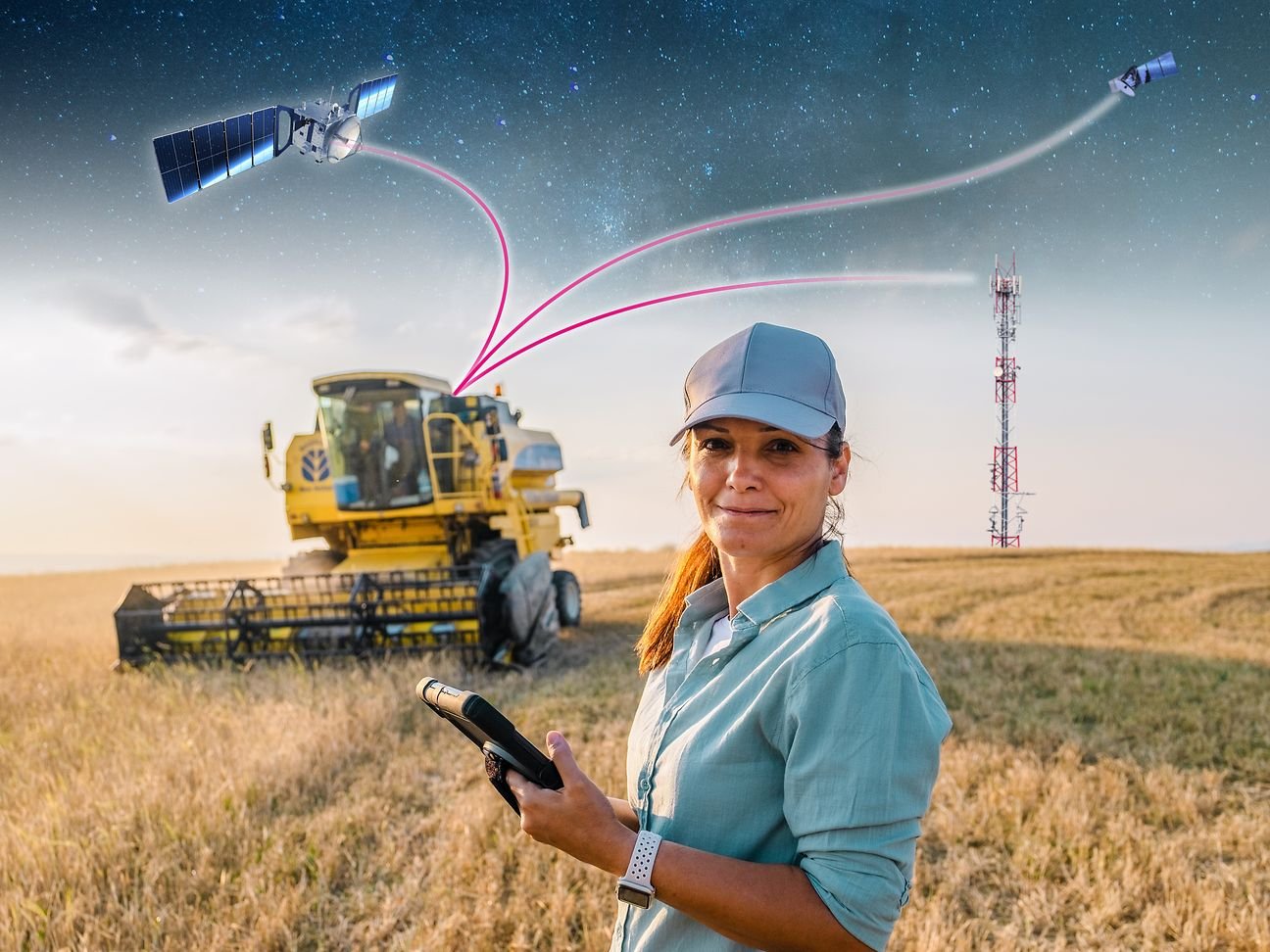
Deutsche Telekom has taken a significant leap in global connectivity. It now offers multi-orbit roaming for the Internet of Things (IoT). This innovative solution allows IoT devices to transmit data worldwide. Depending on the situation, devices can choose between terrestrial mobile networks or satellite connections. Recently, Deutsche Telekom demonstrated this capability with a commercial NB-IoT device. This device operates across geostationary (GEO) and low Earth orbit (LEO) satellites, as well as terrestrial networks.
The multi-orbit solution partners with several satellite service providers, including Skylo, Sateliot, and OQ Technology. This collaboration positions Deutsche Telekom as a leader in IoT connectivity across multiple satellite orbits. Jens Olejak, where he emphasizes the company’s role in technical and commercial advancements. Furthermore, in 2026, Deutsche Telekom will introduce Iridium’s NTN Direct for IoT applications, boosting its non-terrestrial roaming footprint.
Benefits for Critical Infrastructure and Maritime Tracking
The multi-orbit roaming initiative presents multiple benefits. For instance, it enhances critical infrastructure management. The Spanish company Datakorum utilizes this technology to monitor and manage assets globally. Their system offers real-time monitoring of essential parameters in water, energy, and gas sectors. It even allows operators to control equipment remotely, which improves response times.
In the maritime sector, the Slovenian company EMA delivers hybrid tracking solutions for ships. Their service ensures that vessels can report status effectively, complying with new EU regulations. This capability is vital for both large fleets and smaller vessels, proving to be a cost-effective solution for ship operators. Lastly, MountAIn’s autonomous AI-vision-sensor brings vital real-time data processing to remote regions. By leveraging satellite connectivity, it enriches safety applications against risks to critical infrastructure.
Deutsche Telekom’s advancements represent an exciting shift in IoT capabilities. This multi-orbit approach not only enhances connectivity but also supports resilience and operational efficiency across various sectors.
Stay Ahead with the Latest Tech Trends
Explore the future of technology with our detailed insights on Artificial Intelligence.
Access comprehensive resources on space and science by visiting NASA.
IoTV1
