

Top Highlights
-
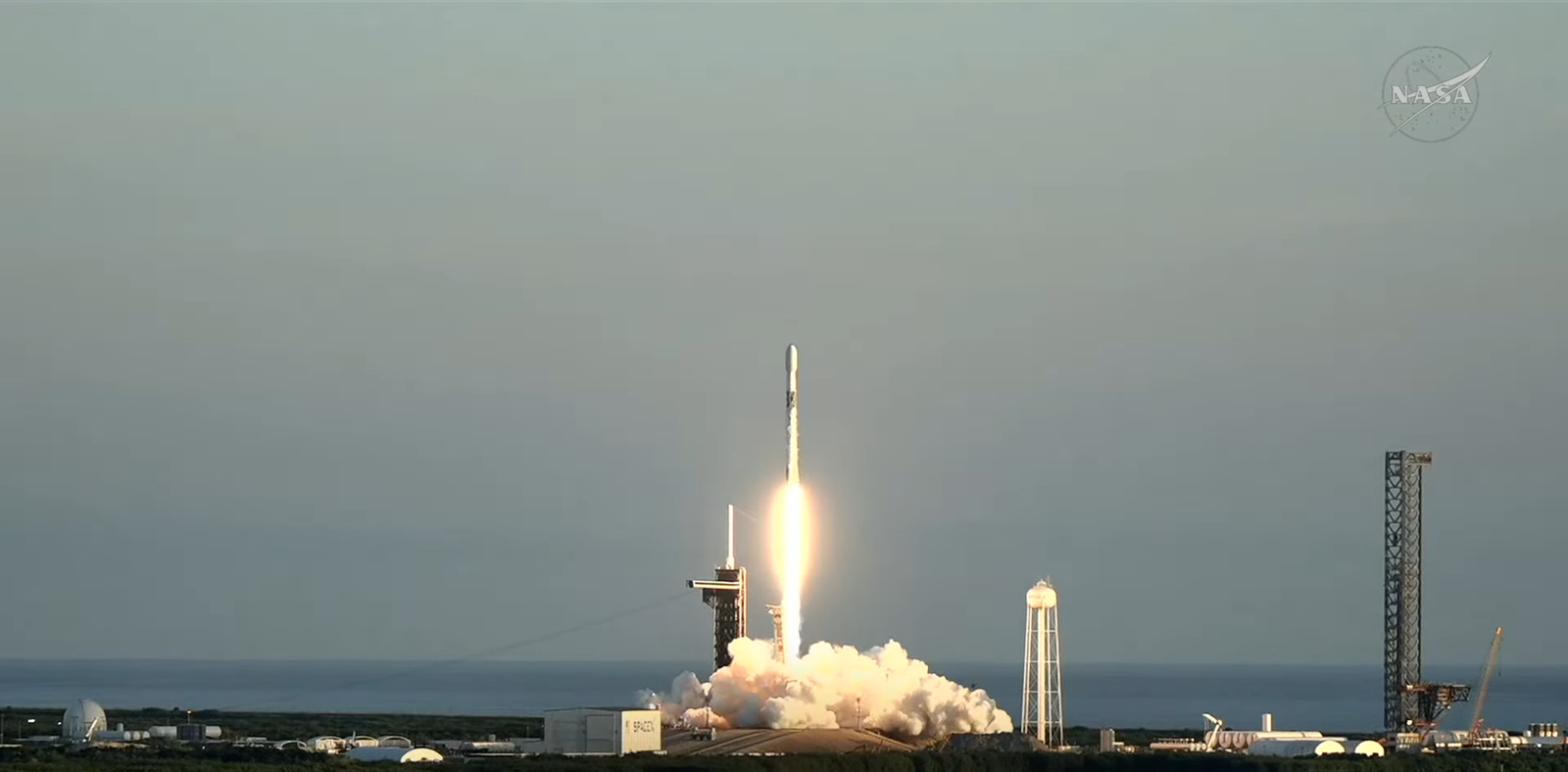
Launch Success: NASA and NOAA successfully launched three missions on a SpaceX Falcon 9 rocket to investigate solar influences throughout the solar system, enhancing preparedness for space weather.
-
Mission Objectives: The missions aim to protect technology and astronauts from space weather effects, crucial for future lunar and Mars missions, with real-time monitoring and actionable insights.
-
Scientific Contributions: Each mission will study different aspects of solar activity and its impact on Earth, including understanding the heliosphere’s boundaries and how the exosphere reacts to solar storms.
-
Continuous Monitoring: The SWFO-L1 mission will operate as a full-time space weather observatory, providing faster and more accurate forecasts, critical for safeguarding infrastructure and ensuring national security.
NASA and NOAA Launch Three Spacecraft to Map Solar Influence
NASA and the National Oceanic and Atmospheric Administration (NOAA) successfully launched three spacecraft on Wednesday to investigate the Sun’s impact across the solar system. The Falcon 9 rocket, operated by SpaceX, lifted off at 7:30 a.m. EDT from NASA’s Kennedy Space Center in Florida.
This launch marks a significant step in enhancing the United States’ preparedness for space weather events. Acting NASA Administrator Sean Duffy stated, “This information will be crucial as we prepare for future missions to the Moon and Mars.” The three missions aim to safeguard both ground-based technology and astronauts venturing into space.
First, the Interstellar Mapping and Acceleration Probe (IMAP) will trace the boundaries of the heliosphere, which shields our solar system from harmful cosmic rays. This mission will provide insights into solar wind particles and their interaction with interstellar space.
Next, the Carruthers Geocorona Observatory focuses on observing changes in the exosphere, Earth’s outermost atmospheric layer. Understanding these changes will improve predictions of space weather’s impact on Earth, benefiting everything from power grids to GPS systems.
Lastly, NOAA’s Space Weather Follow-On L1 (SWFO-L1) will operate as a continuous space weather observatory. This satellite will deliver real-time data on solar activity and conditions close to Earth, allowing for faster and more accurate space weather forecasts.
“SWFO-L1 will help protect vital infrastructure and national security,” said Richard Ullman from NOAA. By providing early alerts, operators can take preventive measures against potential disruptions.
In the hours following the launch, the spacecraft successfully deployed and confirmed their operational status. They are now en route to Lagrange Point 1, located about 1.6 million kilometers from Earth. Expected to arrive in January, they will soon begin their critical missions.
These initiatives reflect a strong commitment to understanding and mitigating space weather’s effects. As humanity aims to explore further into space, these missions will be essential for ensuring safe and efficient operations both on Earth and beyond.
Continue Your Tech Journey
Explore the future of technology with our detailed insights on Artificial Intelligence.
Discover archived knowledge and digital history on the Internet Archive.
SciV1
