

Quick Takeaways
-
Life-Changing Whim: Lazarus Kgasi, initially seeking a job to support his family, became a fossil digger in South Africa’s Cradle of Humankind, sparking his journey into paleontology.
-
Breaking Barriers: Despite working in a field dominated by white researchers, Kgasi overcame systemic barriers, proving that Black contributions to science were vital and often overlooked.
-
Significant Discoveries: Kgasi unearthed important fossils, including a giant prehistoric cat, challenging existing knowledge and earning respect in the paleontological community.
-
Empowering Future Generations: As a mentor, Kgasi inspires young Black South Africans in paleontology, emphasizing the importance of representation and accessible science in their native language.
Black Fossil Digger Shines in Paleontology
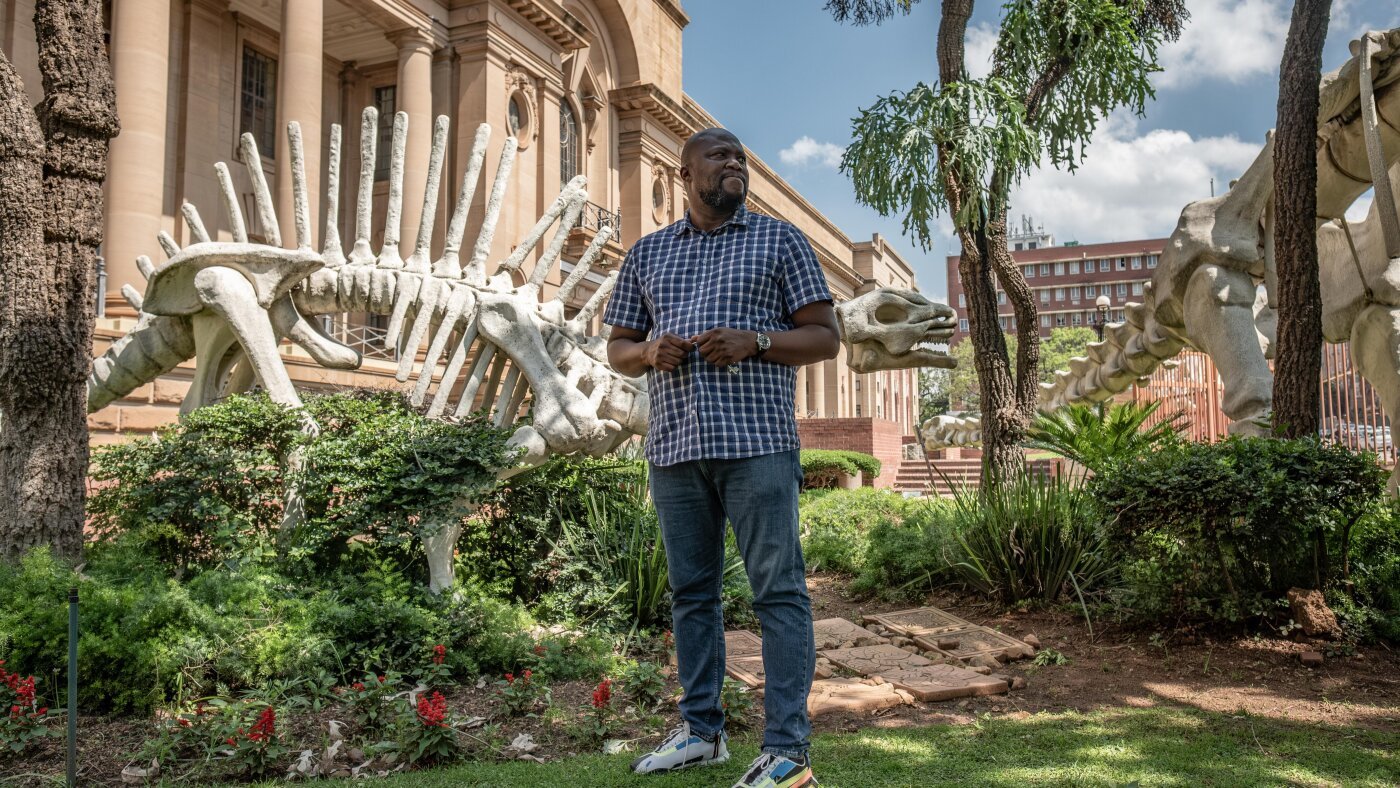
Lazarus Kgasi transformed his life through paleontology. After high school, he sought work to support his family. He found a job as a fossil digger, and his journey began.
Kgasi explores the Cradle of Humankind, a UNESCO World Heritage site near Pretoria, South Africa. This region holds a remarkable collection of early hominid fossils. As Kgasi walks, he reflects on his ancestry. “This is where the story started,” he says, emphasizing the importance of these discoveries.
Initially, Kgasi and many Black laborers worked without recognition. During his early days, he did not understand the significance of what he was digging. He dug under white researchers, who reaped the benefits of his hard work. For a long time, Black contributions to science went unacknowledged, a legacy born from apartheid.
However, Kgasi’s curiosity sparked a turning point. He began asking questions about his work. Researchers recognized his potential and began mentoring him. Kgasi took on greater responsibilities, leading excavations and conducting research.
Today, he excels as a junior curator at the Ditsong National Museum of Natural History. His discoveries include significant fossils, such as bones from extinct animals. One of his most remarkable finds was a giant prehistoric cat, Panthera shawi, whose remains shed light on ancient ecosystems.
Kgasi’s contributions resonate beyond academia. He actively mentors young students, particularly women in science. By speaking to them in Setswana, he makes paleontology more accessible. This approach helps bridge cultural gaps and empowers future generations.
He encourages students like Boitshepo Motsodisa, who values Kgasi as a mentor. Her aspirations reflect a wider hope: that representation matters in science. Kgasi instills confidence in her and many others.
The impact of Kgasi’s work extends to technology development as well. The advanced techniques used in fossil excavation and analysis pave the way for innovations in other scientific fields, such as genetics and conservation biology.
Kgasi’s journey highlights the power of education and mentorship. He emphasizes, “These fossils are not mine. They belong to everybody in South Africa.” Through his work, he not only unearths the past but also inspires a new generation of scientists eager to write their own stories in the field of paleontology.
Stay Ahead with the Latest Tech Trends
Explore the future of technology with our detailed insights on Artificial Intelligence.
Access comprehensive resources on technology by visiting Wikipedia.
SciV1
