

Top Highlights
-
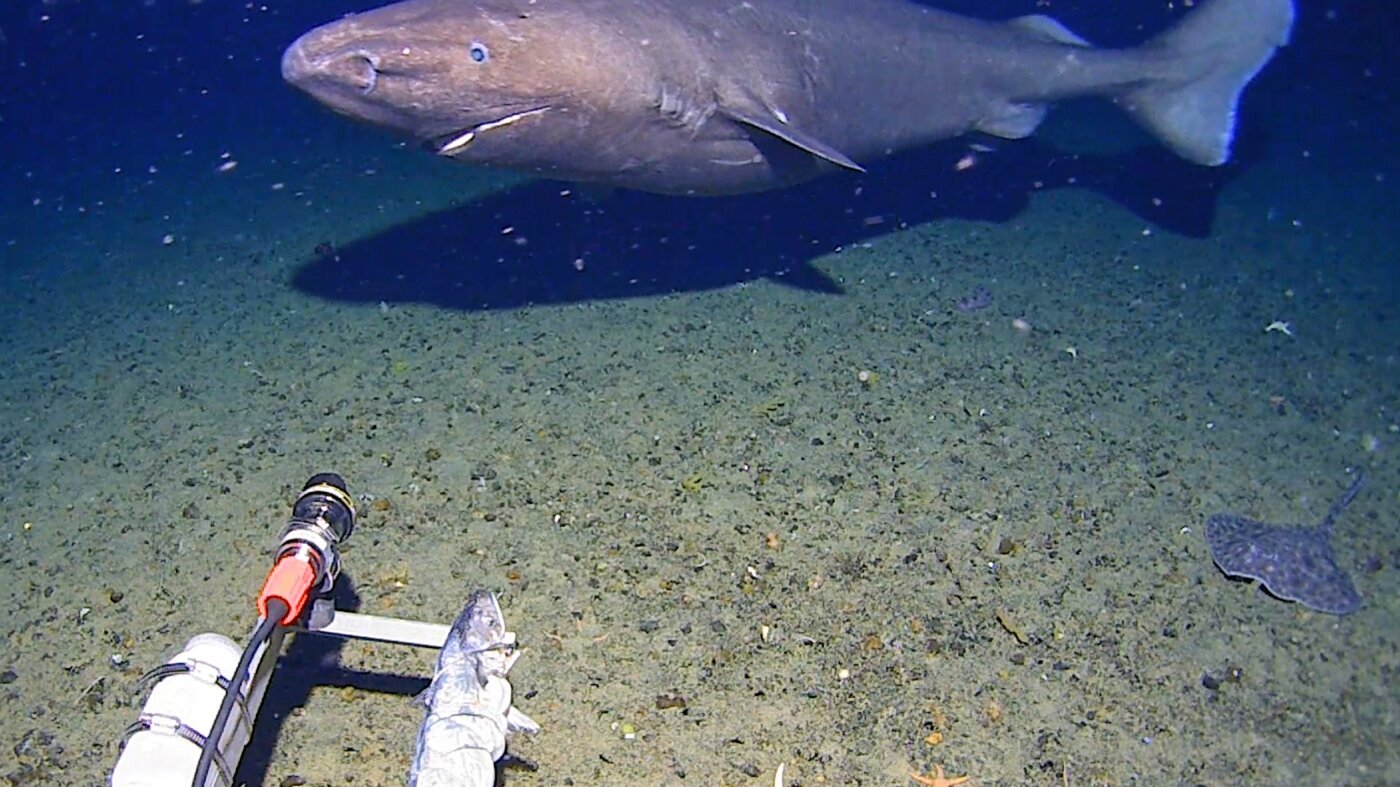
Unexpected Discovery: A sleeper shark, estimated at 3-4 meters long, was filmed in Antarctica’s deep waters, defying previous beliefs that sharks couldn’t exist in such frigid environments.
-
Depth and Conditions: The shark was recorded at 490 meters deep, with a near-freezing temperature of 1.27°C, showcasing the unique stratification of the Antarctic Ocean, where warmer layers exist below colder ones.
-
Significance of the Find: This is likely the first recorded instance of a shark in the Antarctic Ocean, indicating a sparse population potentially affected by climate change and warming ocean temperatures.
-
Limited Research Opportunities: Current research cameras are scarce and only operational during the Southern Hemisphere’s summer, leaving much of the year unexplored for marine life in these extreme depths.
Surprising Discovery: Shark Filmed for the First Time in Antarctica’s Depths
MELBOURNE, Australia — Researchers captured a remarkable sight in Antarctica’s near-freezing waters. For the first time, a sleeper shark appeared on video, challenging previous beliefs about marine life in these harsh conditions.
In January 2025, the shark swam into view near the South Shetland Islands. Filmed at a depth of 490 meters (1,608 feet), the water temperature registered a chilling 1.27 degrees Celsius (34.29 degrees Fahrenheit). Experts had generally thought that sharks could not inhabit such frigid environments.
“This is a substantial specimen,” one researcher noted. The shark measured between 3 and 4 meters (10 to 13 feet), showcasing its impressive size. This unexpected find proves that our understanding of Antarctic marine life needs reevaluation.
Moreover, this discovery highlights the importance of technology in ocean exploration. The camera, part of a deep-sea research initiative, helped unveil secrets of the Southern Ocean. Researchers noted that conditions near the seabed do not mix well, keeping marine life largely undetected.
Additionally, climate change may influence species distribution. As ocean temperatures rise, sharks could inhabit previously unthinkable regions, including Antarctica. However, data remains scarce due to the remoteness of these waters.
This event leads to exciting possibilities. Scientists suspect that more sleeper sharks live at similar depths, feeding on remains of larger marine animals. Yet, few research tools currently explore these depths year-round, limiting our understanding.
Such advancements in technology aid not only scientific research but also enhance our appreciation of ocean ecosystems. Moreover, discoveries like this remind us to protect these delicate environments as they continue to change.
Stay Ahead with the Latest Tech Trends
Learn how the Internet of Things (IoT) is transforming everyday life.
Discover archived knowledge and digital history on the Internet Archive.
SciV1
