

Summary Points
-
Ancient Herbivory Discovery: A 307-million-year-old fossil named Tyrannoroter heberti represents one of the earliest land vertebrates known to have developed the ability to consume plants, marking a significant shift from strict carnivory.
-
Advanced Tooth Structure: CT scanning revealed specialized teeth for crushing and grinding vegetation, indicating that early terrestrial vertebrates were experimenting with herbivory much earlier than previously believed.
-
Paleontological Challenges: The fossil, discovered in challenging conditions on Cape Breton Island, Nova Scotia, showcases the difficulties of fieldwork in this region, highlighting the precarious nature of paleontological excavations.
-
Implications for Climate Adaptation: This discovery not only sheds light on the origins of herbivory but also suggests insights into how plant-eating animals may respond to rapid climate change and habitat shifts, based on the ecological context of the time.
The Dawn of Herbivory
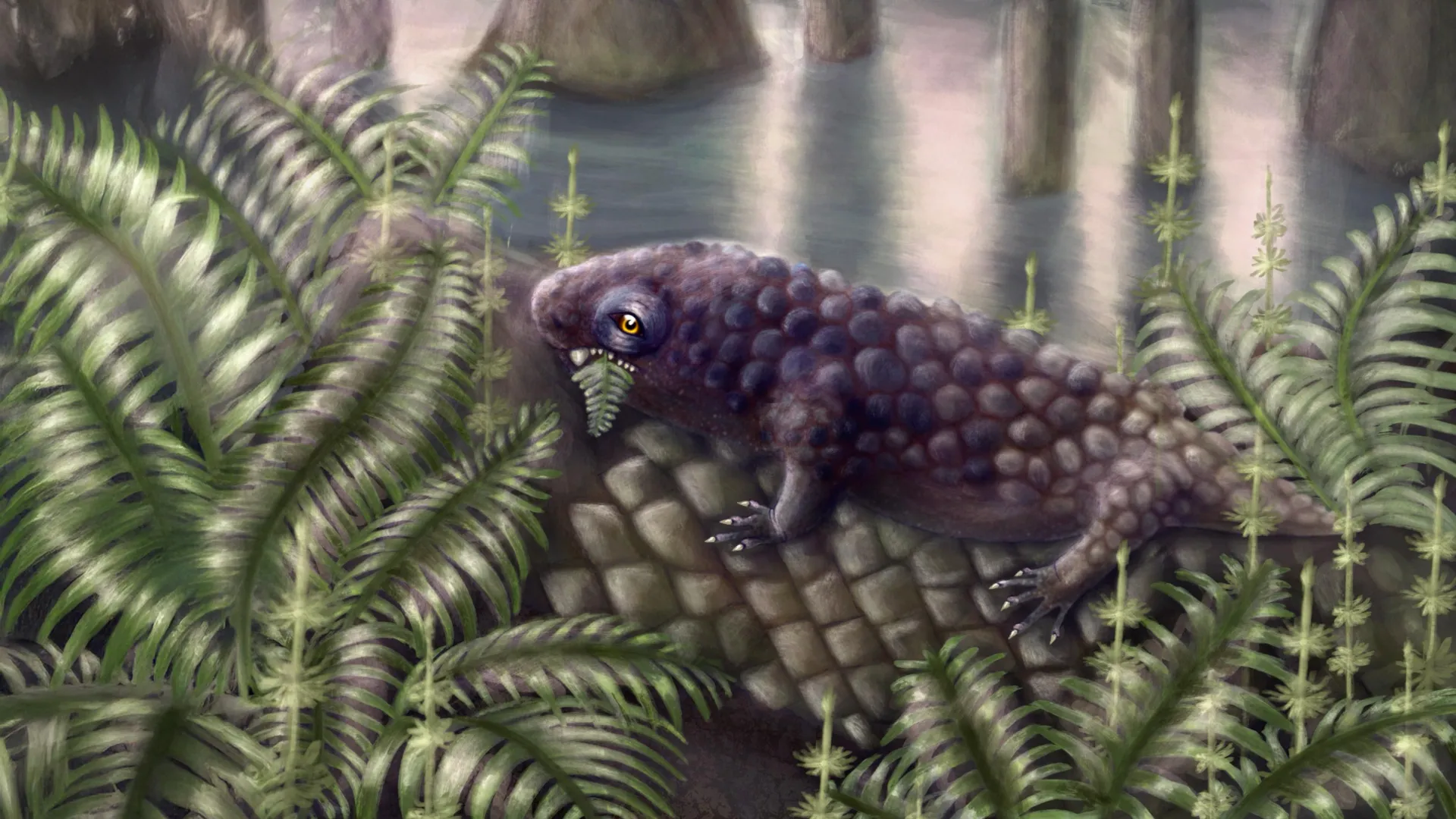
Life began in the sea. Initially, the first creatures remained aquatic. Around 475 million years ago, plants began to emerge on land. Yet, for millions of years, land animals primarily consumed meat. A recent discovery shifts this perspective. Researchers found a 307 million-year-old fossil named Tyrannoroter heberti. This ancient animal stands out as one of the earliest known land vertebrates to embrace herbivory. Advanced imaging techniques revealed its specialized teeth. These adaptations suggest it effectively processed plant material, indicating early experimentation with a plant-based diet.
Paleontologists view this discovery as significant for understanding vertebrate evolution. The finding indicates that stem amniotes were not merely consumers of meat. Instead, they explored diverse diets. This adaptability likely set the stage for future terrestrial herbivores. Tyrannoroter is not just a fossil; it symbolizes deeper evolutionary processes. Its unique characteristics prompt further inquiry into the transition from carnivory to herbivory.
A Lesson for Modern Ecosystems
This fossil discovery also highlights the impact of environmental changes. Tyrannoroter lived during a time of significant climate shifts. The end of the Carboniferous era saw a collapse of rainforest ecosystems. Understanding how ancient herbivores coped with such changes can inform current conservation efforts. Today, plant-eating species face unprecedented challenges due to climate change. The vulnerability of Tyrannoroter suggests that today’s herbivores may struggle under similar stress.
By studying ancient creatures, we gain insights into resilience and adaptation. These lessons reinforce the need for careful ecosystem management. As we face ongoing environmental upheaval, reflecting on our planet’s history can guide our approach. The journey of Tyrannoroter heberti may inspire modern efforts to protect herbivorous species today. By appreciating our past, we can strive for a sustainable future.
Discover More Technology Insights
Dive deeper into the world of Cryptocurrency and its impact on global finance.
Explore past and present digital transformations on the Internet Archive.
TechV1
