

Essential Insights
-
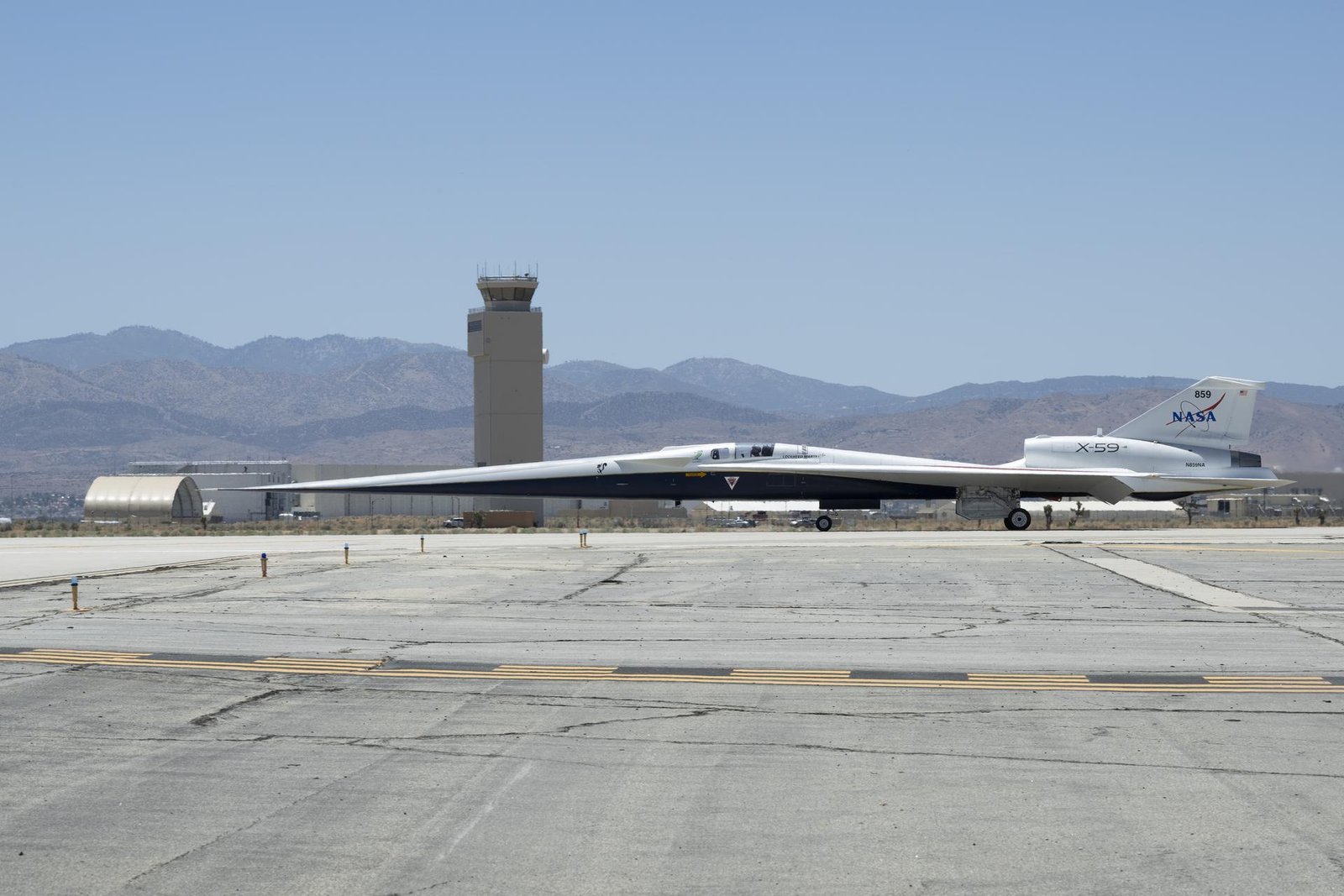
NASA’s X-59 quiet supersonic aircraft has begun taxi tests, marking its first self-powered movement, conducted by test pilot Nils Larson on July 10, 2025.
-
This taxiing phase includes low-speed tests to validate critical systems like steering and braking, ensuring stability and control for future flights.
-
The aircraft will progress to high-speed taxi tests, nearing takeoff speeds, as part of its final ground tests before the inaugural flight.
- The X-59 is central to NASA’s Quesst mission, aiming to demonstrate quieter supersonic flight and provide data for new noise regulations in supersonic commercial aviation.
NASA’s X-59 quiet supersonic research aircraft has officially started taxi tests. This milestone marks the first time the experimental aircraft has moved under its own power. On July 10, 2025, NASA test pilot Nils Larson and the X-59 team executed the first low-speed taxi test at U.S. Air Force Plant 42 in Palmdale, California.
These initial tests set the stage for further ground evaluations before the aircraft’s first flight. Over the next few weeks, the team plans to gradually increase the aircraft’s speed, ultimately preparing for a high-speed taxi test. This event will take the X-59 to the brink of takeoff.
During the low-speed tests, engineers closely monitored how the aircraft handled on the runway. They focused on validating critical systems, including steering and braking. These evaluations ensure stability and control under various conditions. Such preparations give pilots and engineers confidence that all systems are operating as intended.
The X-59 plays a crucial role in NASA’s Quesst mission. This initiative aims to demonstrate quiet supersonic flight by significantly reducing the loud sonic boom to a quieter “thump.” The data collected from the X-59 will inform U.S. and international regulators, helping to establish new, data-driven noise thresholds for supersonic commercial flights over land.
This advancement holds promise for future commercial air travel. By minimizing noise pollution, the X-59 could open up new flight paths over populated areas. As technology progresses, it may enhance travel convenience while improving quality of life for those on the ground. Overall, the implications for aviation are significant, making quiet supersonic travel not just a possibility, but a reality on the horizon.
Continue Your Tech Journey
Dive deeper into the world of Cryptocurrency and its impact on global finance.
Stay inspired by the vast knowledge available on Wikipedia.
SciV1
