

Top Highlights
-
Unprecedented Winter Conditions: This winter has seen the Western U.S. experience minimal snow coverage, with resorts facing challenges as warmer temperatures prevent effective snowmaking, impacting the multi-billion dollar ski industry.
-
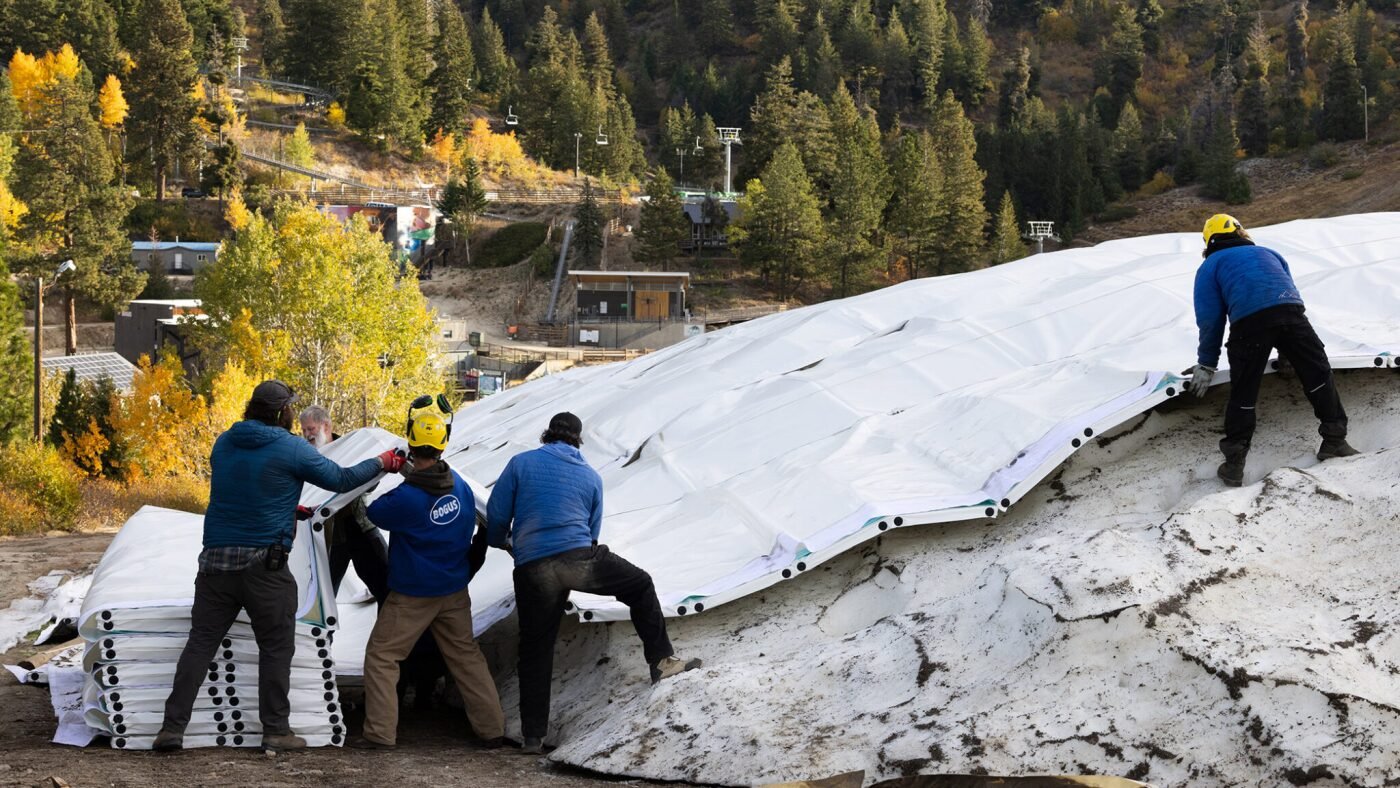
Innovative Snow Preservation: Bogus Basin has implemented “Project X,” where they created a massive snow pile and covered it with polystyrene blankets to prevent melting during summer, successfully retaining 80% of the snow for the ski season.
-
Cost-Effective Solution: The initial investment of about $120,000 for the insulation blankets is significantly cheaper than constructing a new retention pond for water needed for snowmaking, estimated at $6-7 million.
-
Future Expansion Plans: Bogus Basin plans to invest $600,000 in additional blankets to expand snow preservation efforts, aiming to open a full ski trail by Thanksgiving, regardless of natural snowfall.
The Challenge of a Snowless Winter
This winter, many ski resorts in the West face unprecedented challenges. They struggled as warm temperatures kept the snow from accumulating, resulting in barren mountaintops. Traditional snowmaking methods, which have long served to bolster slopes, became ineffective. Resorts had to limit their operations, impacting their finances significantly. Lower elevations closed their doors, while the entire winter sports industry, valued in the billions, felt the strain.
In response, Bogus Basin adopted an innovative approach. Employees implemented “Project X,” a plan to create and preserve snow through the summer. They produced a massive snow pile and covered it with polystyrene panels, designed to insulate against warm air. Remarkably, this method retained 80 percent of the snow when uncovered months later. It allows resorts to open earlier than they could without natural snowfall.
Evaluating Practicality and Future Potential
While using snow blankets marks a significant advancement, it raises questions about practicality and widespread adoption. These blankets come with a hefty price tag, with initial investments reaching around $120,000, which could rise to $600,000 for the next season. Yet, this cost pales compared to establishing water retention systems for artificial snowmaking, which would require millions.
Experts view these blankets as a viable tool rather than a direct replacement for snowmaking. They serve to weatherproof ski seasons and offer a safety net for resorts in an uncertain climate. The success of Bogus Basin might prompt other resorts to consider similar strategies, especially as temperatures continue to rise.
Ultimately, adapting to changing weather patterns will require creativity and investment. Innovations like snow blankets may help sustain the ski industry, ensuring that enthusiasts can enjoy winter sports for years to come. This endeavor reflects a broader human journey: our continuous struggle to create harmony between nature and our recreational desires.
Continue Your Tech Journey
Learn how the Internet of Things (IoT) is transforming everyday life.
Explore past and present digital transformations on the Internet Archive.
TechV1
