

Summary Points
-
InteRecon Program: Developed by MIT’s CSAIL, InteRecon allows users to capture and animate real-world objects digitally, preserving their interactive features in mixed-reality environments.
-
Enhanced Learning and Interaction: The technology can recreate interactivity in various contexts, from educational tools demonstrating physics to life-like museum exhibits, enriching user experiences and understanding.
-
User-Centric Design: The app enables easy 3D modeling and motion selection, allowing users to personalize their digital twins, thus making memories more vivid and retained in virtual settings.
- Future Potential: InteRecon aims to elevate mixed-reality applications in diverse fields such as education, healthcare, and design, with ambitions of integrating advanced simulations and generative models for even more engaging interactions.
MIT Develops InteRecon: A New Way to Bring Personal Items to Mixed Reality
MIT researchers have made significant strides in mixed reality technology with their new program, InteRecon. This innovative tool allows users to create a digital twin of personal items, enhancing how we remember our cherished belongings.
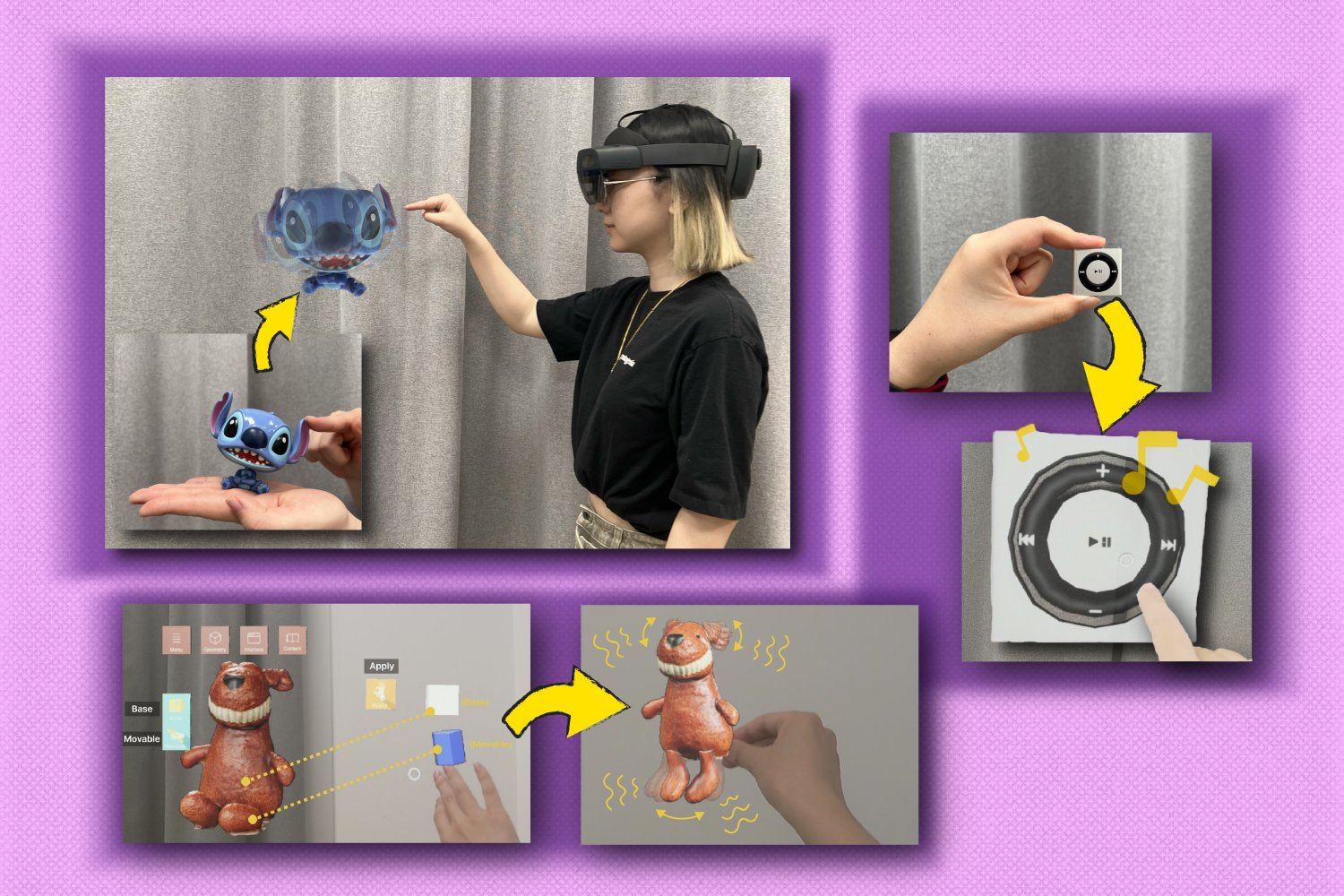
In an age where nostalgia meets technology, InteRecon lets users recapture interactive features of everyday objects. For example, imagine your childhood doll’s head bobbing or a vintage TV playing classic shows. This program does more than just create digital images; it animates them.
CSAIL visiting researcher Zisu Li highlighted the program’s purpose. “While taking a picture or video preserves a memory, those digital copies are static," Li said. InteRecon enriches memories by enabling users to interact with digital versions of their items.
The process begins with an iPhone app. Users scan their physical items multiple times to create a complete 3D model. After that, they can use the mixed reality interface to decide which parts of the model are interactive. Users can choose from various motion options, allowing for creative expressions of movement.
InteRecon can also simulate interfaces for electronic devices. For instance, users can recreate a vintage TV with buttons, a screen, and even embedded old videos. This interactivity breathes new life into once-static memories.
Experts see potential in using InteRecon beyond personal use. In educational settings, it could help explain complex concepts, such as gravity, with interactive demonstrations. Museums could enhance exhibits, animating artwork or historical artifacts. Even medical training could benefit, offering apprentices a chance to practice surgeries in a simulated environment.
Faraz Faruqi, another CSAIL researcher, acknowledges the significance of imperfect items. “InteRecon captures what made a personal item special,” he noted. This authentic representation resonates with users, offering a more profound connection to their memories.
Looking forward, the researchers aim to improve InteRecon’s capabilities further. They plan to refine the physical simulation engine for better accuracy in interactive experiences. Additionally, they envision integrating advanced technologies, like large language models, to recreate lost personal items from descriptions.
InteRecon represents a groundbreaking step in mixed reality. Its ability to merge visual replication with interactivity could revolutionize fields such as education, healthcare, and cultural preservation, enriching our digital interactions with the past.
For further developments, Li and her team will present their findings at the 2025 ACM CHI conference. Excitement builds around the endless possibilities that lie ahead in this new frontier of mixed reality.
Expand Your Tech Knowledge
Stay informed on the revolutionary breakthroughs in Quantum Computing research.
Discover archived knowledge and digital history on the Internet Archive.
QuantumV1
