
Close Menu
    Facebook X (Twitter) Instagram
    Friday, March 20
    Top Stories:
    • Cyberattack Strands Drivers Nationwide: Breathalyzer Company Breached
    • Revealed: A Hidden Giant Beneath Antarctica!
    • Proton’s Hefty Cousin Unearthed at CERN!
    Facebook X (Twitter) Instagram Pinterest Vimeo
    IO Tribune
    • Home
    • AI
    • Tech
      • Gadgets
      • Fashion Tech
    • Crypto
    • Smart Cities
      • IOT
    • Science
      • Space
      • Quantum
    • OPED
    IO Tribune
    Home » Celestial Arachnid: Hubble’s Stunning View of the Tarantula Nebula
    Space

    Celestial Arachnid: Hubble’s Stunning View of the Tarantula Nebula

    Staff ReporterBy Staff ReporterAugust 8, 2025No Comments2 Mins Read
    Share Facebook Twitter Pinterest LinkedIn Tumblr Reddit Telegram Email
    Share
    Facebook Twitter LinkedIn Pinterest Email

    Fast Facts

    1. The Tarantula Nebula, located in the Large Magellanic Cloud 160,000 light-years away, is a vibrant star-forming region and the brightest of its kind in nearby galaxies.

    2. This nebula hosts the universe’s most massive stars, including rare Wolf–Rayet stars, known for their intense heat, luminosity, and powerful stellar winds.

    3. Hubble’s multiwavelength capabilities enable it to capture intricate details of the nebula’s dusty clouds, showcasing the dynamic processes of star formation.

    4. The nebula is a focus of Hubble’s Scylla program, designed to study gas and dust structures, complementing its ULLYSES program which investigates massive young stars.

    Hubble Captures Stunning Image of the Tarantula Nebula

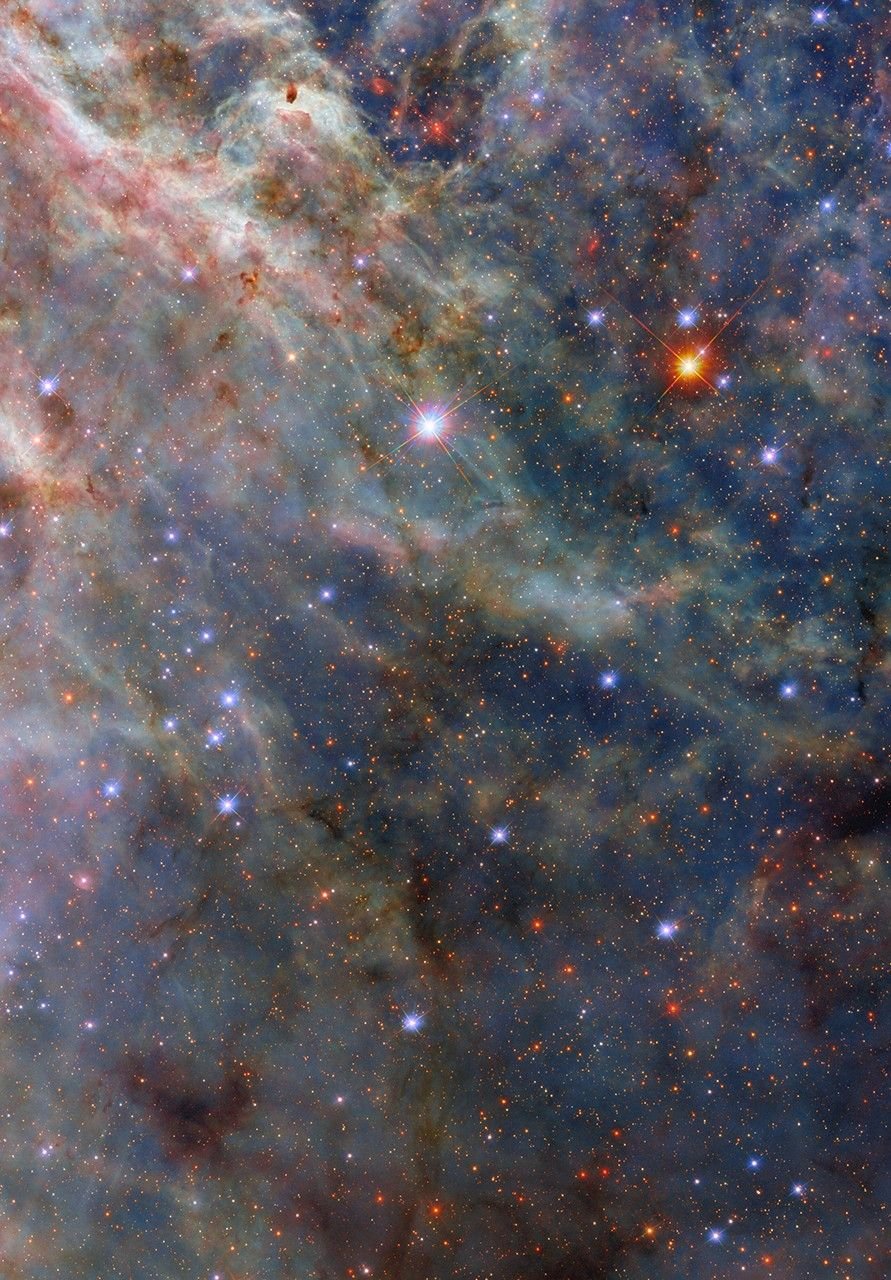
    NASA’s Hubble Space Telescope recently unveiled a breathtaking image of the Tarantula Nebula. This nebula, located in the Large Magellanic Cloud, lies about 160,000 light-years from Earth. Unlike many nebulae that Hubble typically studies within our Milky Way, the Tarantula Nebula stands out in a nearby dwarf galaxy.

    This nebula represents the largest and brightest star-forming region in the entire neighborhood of galaxies, including the Milky Way. Scientists have identified that it hosts some of the most massive stars known, with some reaching roughly 200 times the mass of our Sun. Among these, astronomers find rare Wolf-Rayet stars. These stars, having shed their hydrogen layers, are incredibly hot and luminous, generating powerful stellar winds.

    Hubble’s advanced imaging technology plays a critical role in capturing the intricate details of the Tarantula Nebula’s dusty clouds. The image comes from a specific observing program called Scylla, which aims to study the structures of gas and dust surrounding massive stars. This program works alongside ULLYSES, another initiative that focuses on young stars in the Magellanic Clouds.

    These observations not only enhance our understanding of star formation but also contribute to advancements in technology. The data help refine models of stellar evolution, which can influence various scientific fields, from astrophysics to materials science. As we learn more about the cosmos, we also unlock new technologies that may improve life on Earth.

    Through endeavors like the Scylla program, scientists continue to push boundaries. As Hubble captures stunning celestial phenomena, it fosters a sense of connection to the universe that can inspire future explorations and innovations.

    Discover More Technology Insights

    Explore the future of technology with our detailed insights on Artificial Intelligence.

    Stay inspired by the vast knowledge available on Wikipedia.

    SciV1

    Astrophysics Astrophysics Division Cosmos Emission Nebulae Goddard Space Flight Center Hubble Space Telescope NASA Nebulae Space Star-forming Nebulae The Universe VT1
    Share. Facebook Twitter Pinterest LinkedIn Tumblr Email
    Previous ArticleFuture Cool: The Air Conditioners You’ll Want—But Can’t Have Yet!
    Next Article Openvibe: Your News and Social Hub in One App!
    Avatar photo
    Staff Reporter
    • Website

    John Marcelli is a staff writer for IO Tribune, with a passion for exploring and writing about the ever-evolving world of technology. From emerging trends to in-depth reviews of the latest gadgets, John stays at the forefront of innovation, delivering engaging content that informs and inspires readers. When he's not writing, he enjoys experimenting with new tech tools and diving into the digital landscape.

    Related Posts

    Tech

    Cyberattack Strands Drivers Nationwide: Breathalyzer Company Breached

    March 20, 2026
    Crypto

    Top Cryptos to Watch: ETH, XRP, ADA, BNB & HYPE

    March 20, 2026
    Tech

    Revealed: A Hidden Giant Beneath Antarctica!

    March 20, 2026
    Add A Comment

    Comments are closed.

    Must Read

    Cyberattack Strands Drivers Nationwide: Breathalyzer Company Breached

    March 20, 2026

    Top Cryptos to Watch: ETH, XRP, ADA, BNB & HYPE

    March 20, 2026

    Revealed: A Hidden Giant Beneath Antarctica!

    March 20, 2026

    OpenAI’s Race to Build the Ultimate Automated Researcher

    March 20, 2026

    Proton’s Hefty Cousin Unearthed at CERN!

    March 20, 2026
    Categories
    • AI
    • Crypto
    • Fashion Tech
    • Gadgets
    • IOT
    • OPED
    • Quantum
    • Science
    • Smart Cities
    • Space
    • Tech
    • Technology
    Most Popular

    YouTube Boosts Parental Controls: Block Teens from Watching Shorts

    January 15, 2026

    Why This Support Level Is Crucial

    January 22, 2026

    Meta Partners with XGS Energy for 150 MW Geothermal Power Plant

    June 12, 2025
    Our Picks

    Skip Grad School: A Startup Pioneer’s Bold Advice to Students

    June 17, 2025

    Unlocking Opportunities: The Imperative for VCs at TechCrunch All Stage 2025

    June 10, 2025

    Skyward Bound: Artemis II Crew Takes Flight!

    February 22, 2026
    Categories
    • AI
    • Crypto
    • Fashion Tech
    • Gadgets
    • IOT
    • OPED
    • Quantum
    • Science
    • Smart Cities
    • Space
    • Tech
    • Technology
    • Privacy Policy
    • Disclaimer
    • Terms and Conditions
    • About Us
    • Contact us
    Copyright © 2025 Iotribune.comAll Rights Reserved.

    Type above and press Enter to search. Press Esc to cancel.