

Quick Takeaways
-
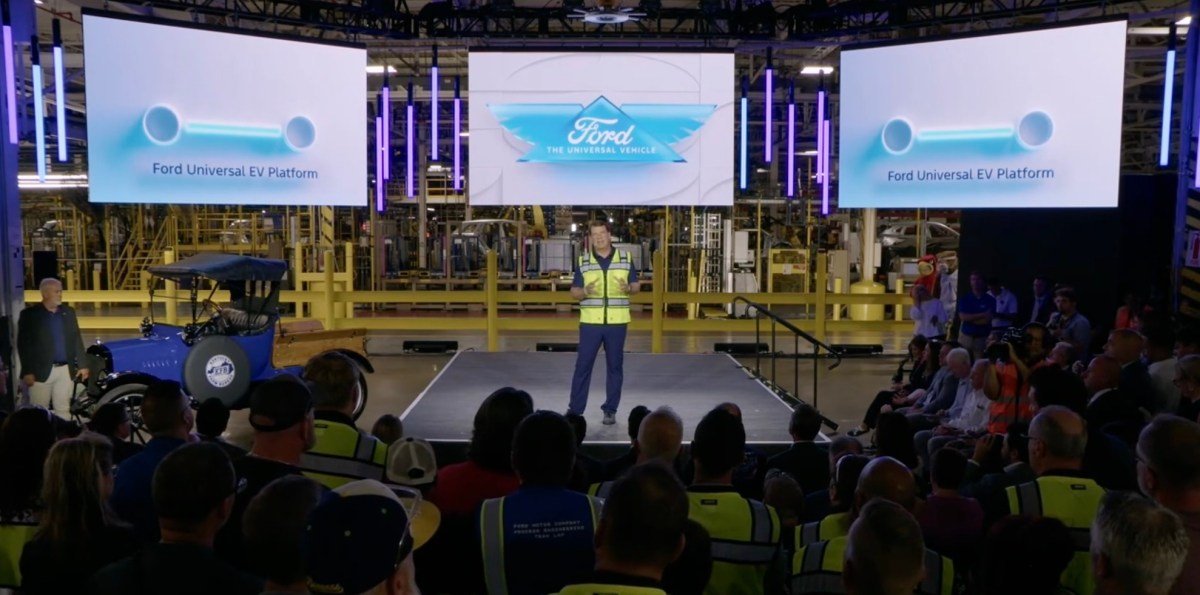
$2 Billion EV Investment: Ford plans to invest $2 billion to convert its Louisville Assembly Plant for a new affordable EV line, starting with a mid-sized pickup priced around $30,000, launching in 2027.
-
Innovative Production Changes: Ford’s “universal production system” replaces the traditional assembly line with a three-branched assembly tree, enabling 20% fewer parts and a 15% faster production rate for EVs.
-
Workforce Reduction and Automation: The transition will reduce the Louisville workforce from 2,808 to 2,200, despite UAW support for the changes, which aim to enhance worker safety and jobs preservation in the U.S.
-
High-Stakes Future: CEO Jim Farley acknowledges the investment is risky but believes it’s necessary to compete in the rapidly evolving EV market, especially against Chinese manufacturers.
A Bold Shift Towards Affordable EVs
Ford’s recent announcement to invest $2 billion in transforming its Louisville Assembly Plant marks a significant change in the automotive landscape. The decision aims to produce a new generation of affordable electric vehicles (EVs), starting with a mid-sized pickup truck priced at $30,000, set to launch in 2027. Yet, this transformation does not merely involve upgrading an existing factory; it represents a departure from the iconic assembly line pioneered by Henry Ford over a century ago.
This innovative approach, known as the “universal production system,” will streamline assembly. By transitioning from a single conveyor line to a three-branched assembly tree, Ford plans to manufacture vehicles more efficiently. This change not only reduces production costs but also enables faster turnaround times. Additionally, the new EV platform will incorporate fewer parts, resulting in a vehicle that is easier to build and maintain. As competition with China intensifies, this revamp positions Ford as a contender in the future of EV production.
Balancing Tradition with Innovation
While the new system may raise eyebrows among traditional manufacturing experts, it reflects Ford’s commitment to evolving with market demands. However, skepticism remains. Cutting jobs might lead to public outcry, especially in a sector where job security is paramount. Ford’s proactive outreach to the United Auto Workers (UAW) highlights an effort to address worker concerns. The collaboration aims to ensure that the new system enhances worker safety and ergonomics, potentially leading to a healthier workforce.
Ultimately, Ford’s gamble also represents an opportunity to preserve American jobs while adapting to technological changes. The balance between automation and employment is fragile, but with transparent communication and re-skilling initiatives, the company can navigate these challenges. As Ford ventures into the future of mobility, it reminds us that innovation must coexist with tradition, striking a balance that benefits both the company and its workers.
Stay Ahead with the Latest Tech Trends
Learn how the Internet of Things (IoT) is transforming everyday life.
Stay inspired by the vast knowledge available on Wikipedia.
TechV1
