

Quick Takeaways
-
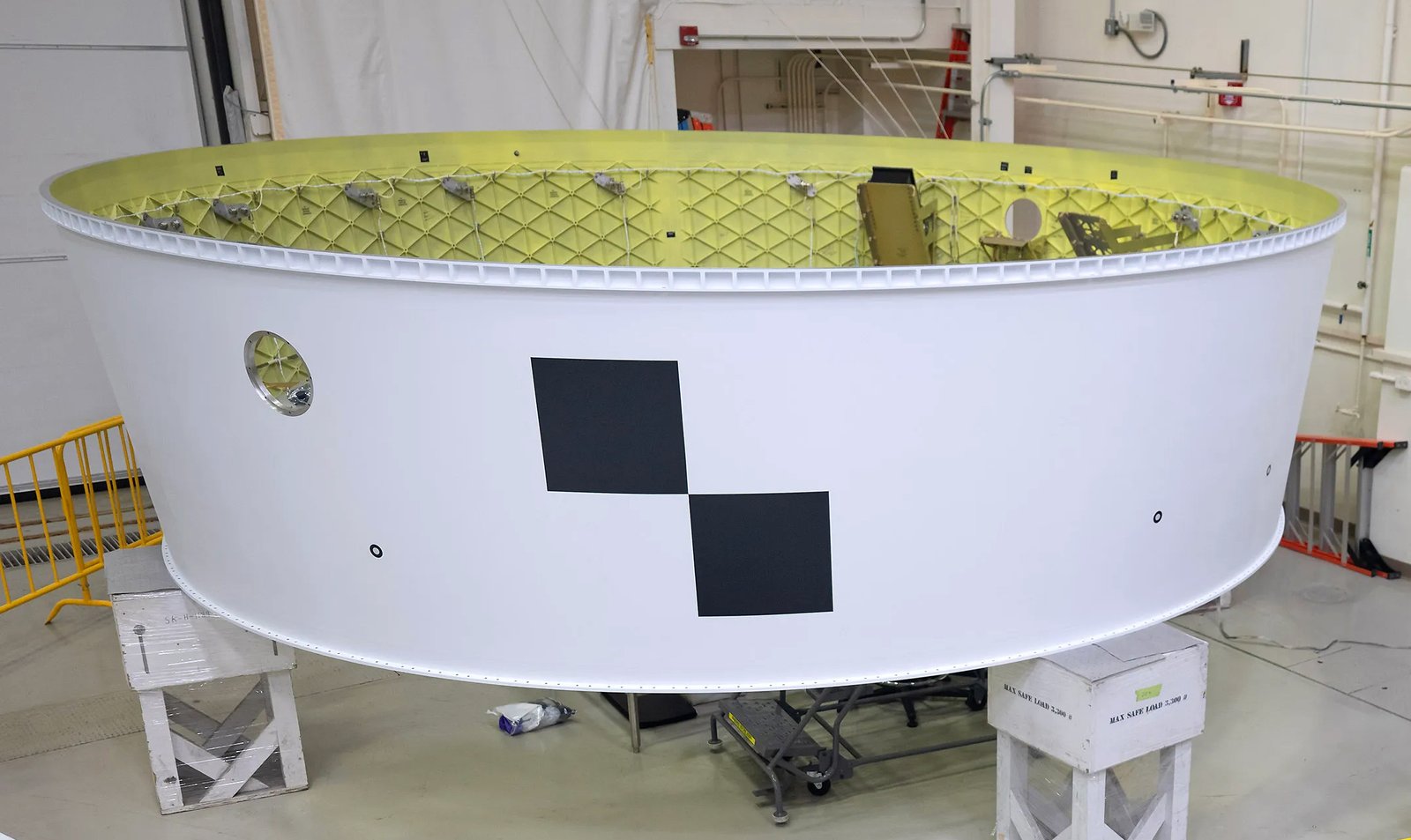
Final Hardware Reveal: Media can view the last piece of the SLS rocket for Artemis II on Aug. 14, with delivery set for NASA’s Kennedy Space Center.
-
Mission Details: Artemis II, scheduled for April 2026, marks NASA’s first crewed mission around the Moon using the SLS and Orion spacecraft.
-
Orion Stage Adapter: The adapter connects the rocket’s propulsion stage to the Orion spacecraft and will also deliver CubeSats to deep space.
-
Media Attendance: U.S. media must RSVP by Aug. 13 to cover the event and will have access to experts and additional Artemis III mission insights.
NASA invites media to view the Orion stage adapter at the Marshall Space Flight Center in Huntsville, Alabama, at 2 p.m. CDT on Thursday, Aug. 14. This event highlights a critical component for Artemis II, marking a significant step in lunar exploration.
The Orion stage adapter connects the SLS rocket’s interim cryogenic propulsion stage to the Orion spacecraft. It is the final piece of hardware before delivery to NASA’s Kennedy Space Center in Florida. Other parts of the SLS rocket are already assembled at the Vehicle Assembly Building.
Artemis II represents NASA’s first crewed mission with the SLS rocket, scheduled for a 10-day journey around the Moon no later than April 2026. This mission aims to enhance scientific discovery while fostering economic opportunities. It will also set the stage for future human missions to Mars.
Media attendees will capture images and video, engaging directly with experts. They will also view the Orion stage adapter for Artemis III, which will support the first lunar landing at the Moon’s South Pole.
This event is open to U.S. media. Seats are limited, so attendees must confirm their presence by 12 p.m. CDT on Wednesday, Aug. 13. Media must arrive at the Redstone Arsenal Joint Visitor Control Center Gate 9 parking lot by 1:30 p.m. on Aug. 14 for escort to the event.
Through projects like Artemis, NASA underscores its commitment to technological advancement and exploration. The agency continues to break barriers in space travel, paving the way for future generations. For more details about the SLS, visit NASA’s official page.
Discover More Technology Insights
Learn how the Internet of Things (IoT) is transforming everyday life.
Access comprehensive resources on technology by visiting Wikipedia.
SciV1
