

Essential Insights
-
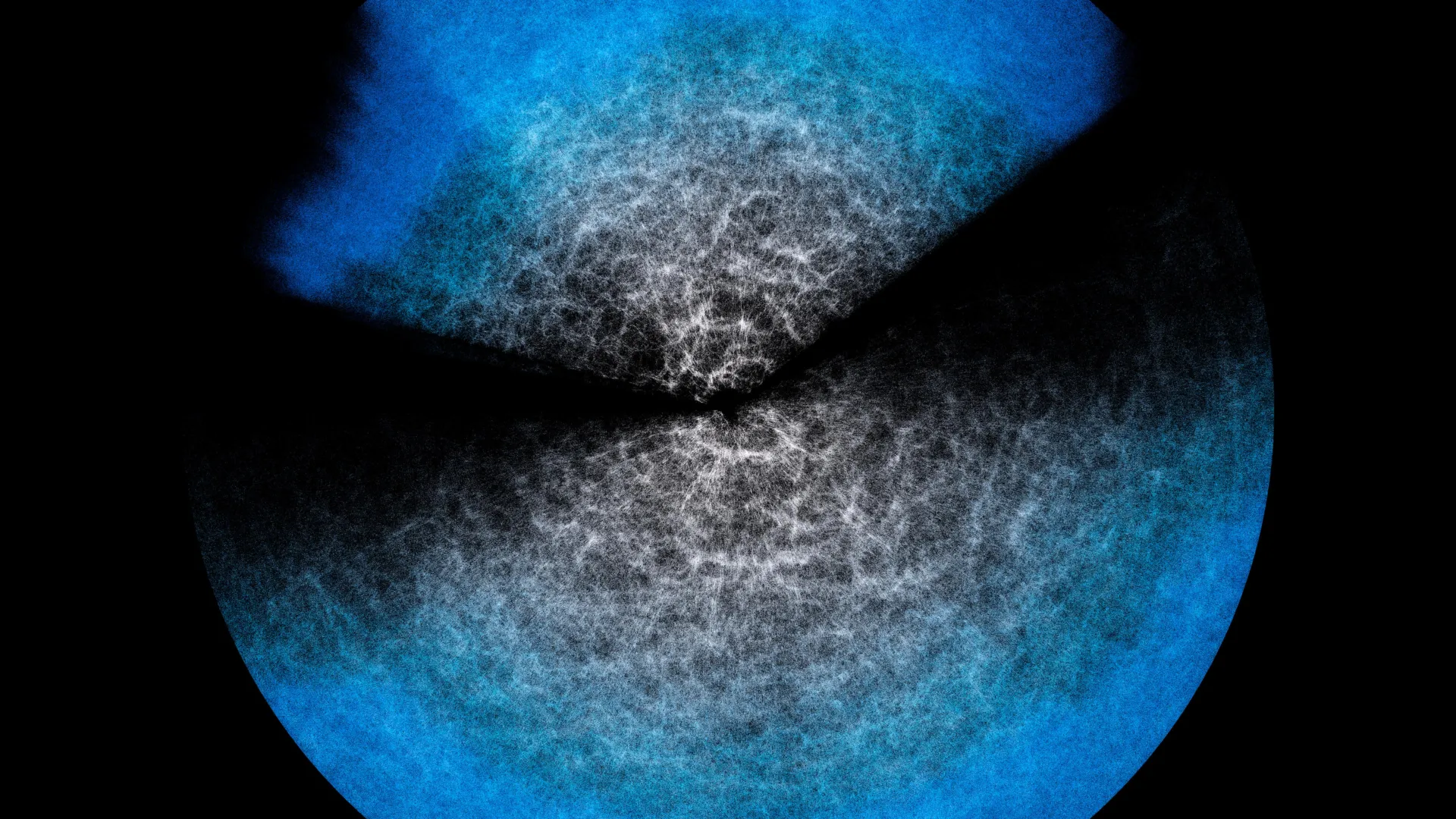
Galactic Perspective: Galaxies are mere “tiny dots” in the vast cosmos; they cluster into superclusters and form a complex “cosmic web” interwoven with voids.
-
Modeling the Universe: The Effective Field Theory of Large-Scale Structure (EFTofLSS) helps scientists model this vastness but demands significant computational resources due to the exponential growth of astronomical datasets.
-
Introducing Emulators: Emulators like Effort.jl accelerate model predictions without sacrificing accuracy, performing complex calculations in minutes on standard laptops by mimicking model responses through neural networks.
-
Validated Performance: A recent study confirms Effort.jl’s high accuracy aligns closely with traditional models, enabling the inclusion of previously omitted analytical details and enhancing the analysis of upcoming astronomical datasets.
Revolutionizing Cosmic Research
In recent years, technology has transformed the landscape of astrophysics. Where once massive supercomputers dominated cosmic simulations, now a standard laptop can handle the task. This shift comes from the development of emulators, tools that replicate complex models like the Effective Field Theory of Large-Scale Structure, or EFTofLSS. These models help scientists visualize the vast “cosmic web” of the universe. Traditionally, processing data from astronomical observations required enormous time and resources. Thanks to advances in machine learning, researchers can now analyze this data swiftly and accurately.
Imagine trying to understand the flow of water at an atomic level. While possible in theory, calculating every microscopic interaction is impractical. Instead, you can use effective field theories to encode essential properties and derive macroscopic behavior. The same logic applies to cosmic simulations. Emulators mimic the sophisticated models, allowing researchers to generate predictions rapidly. This approach not only conserves resources but also generates insights into the universe’s structure, making it accessible for further exploration.
Unlocking New Possibilities
The implications of this technological advancement extend beyond convenience. As more astronomical surveys come online, the data volume will skyrocket. With tools like Effort.jl, scientists can now keep pace with this growth without compromising accuracy. This emulator learns from existing data, streamlining the analysis process. Remarkably, it delivers equivalent results to traditional models and even captures additional details in certain scenarios.
However, potential risks exist. As emulators rely on learned patterns rather than a deep understanding of physics, scientists must validate their outputs thoroughly. Early studies already show strong agreement between the emulator’s predictions and those produced by conventional models. Such findings validate this new approach, paving the way for its broader adoption.
In a world increasingly driven by data, Effort.jl represents a significant leap forward in cosmological research. By making complex simulations more accessible, we open the door to fresh insights about our universe, driving humanity’s quest for knowledge and understanding.
Continue Your Tech Journey
Stay informed on the revolutionary breakthroughs in Quantum Computing research.
Discover archived knowledge and digital history on the Internet Archive.
TechV1
