

Fast Facts
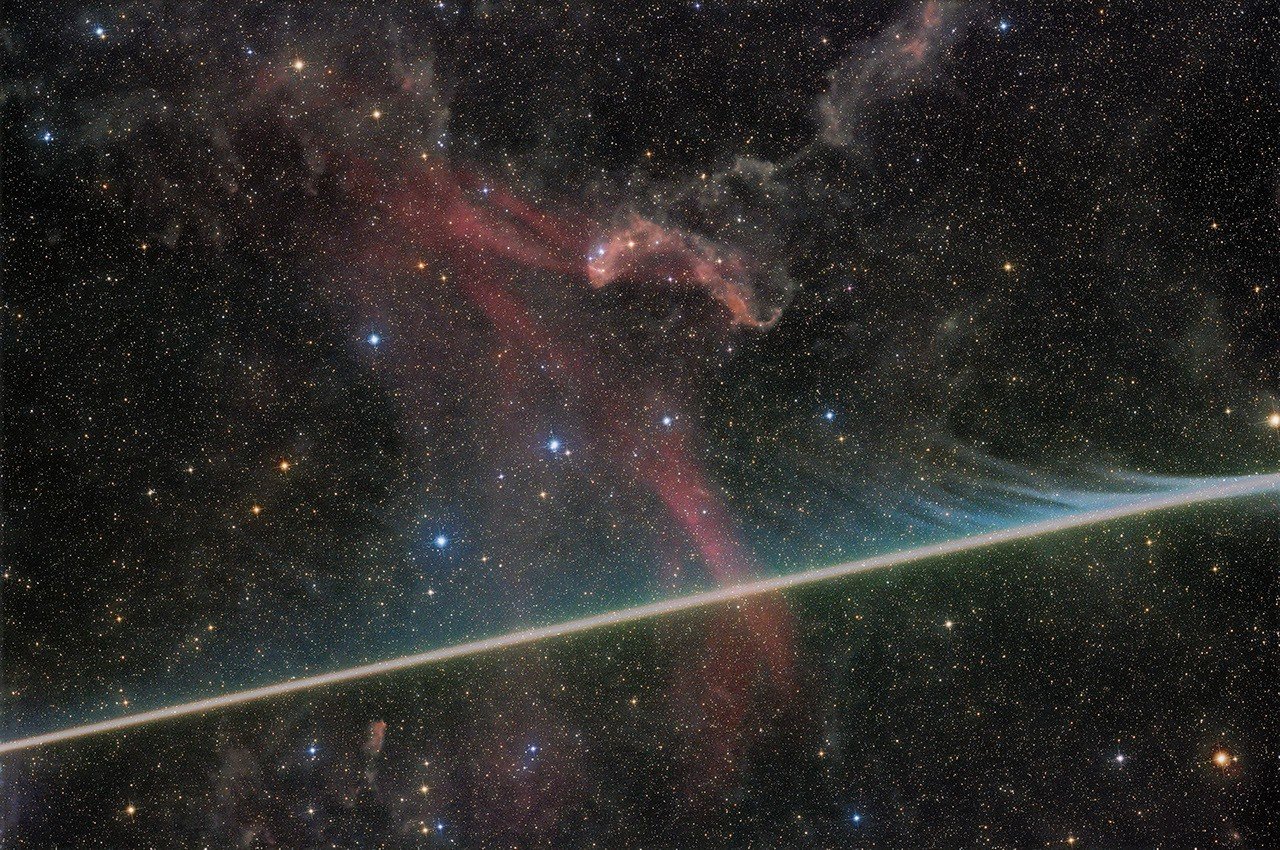
- A bright meteor appeared briefly during a long exposure of the nebula.
- The meteoroid heated the air, creating glowing gases revealing its composition.
- Three meteor showers are currently visible, competing with a bright Moon.
- The Perseids will peak in about 10 days, with optimal viewing conditions.
The Meteor and Its Colors: A Brief Explanation
On August 3, 2026, an impressive photograph captured a vaporizing meteor streaking across the dark sky near the Lacerta Nebula. The image was taken from the Death Valley Observatories in Nevada, showcasing a rare and striking cosmic event. What makes this meteor special is how quickly it appeared and disappeared during a long exposure, creating a glowing trail against the faint backdrop of the nebula.
This meteoroid was likely just a small pebble traveling at high speed through space. When it entered Earth’s atmosphere, it heated up rapidly because of the friction and pressure. This heating causes the meteor to glow and excite the surrounding air, producing the visible streak of light. As the meteoroid vaporized, it released wind-blown gas and dust, which added vibrant colors to the trail. These colors serve as clues to the meteoroid’s composition, revealing insights about the material in space. The bright streak’s quick disappearance indicates it vaporized completely, leaving behind a fleeting but memorable sight.
The captured image not only highlights this fiery event but also shows the faint reddish glow of the Lacerta Nebula nearby. The nebula, a cloud of gas and dust in space, adds context to the meteor’s brief appearance, emphasizing the contrast between cosmic serenity and transient chaos.
Current Meteor Showers and Celestial Events
This month is particularly active for meteor watchers. Several meteor showers are underway, although their visibility is somewhat challenged by the bright glow of a gibbous Moon. The most prominent of these showers is the Perseids, which are known for their bright and fast meteors. The Perseids will reach their peak in about 10 days, providing prime viewing before the Moon’s glow dims.
Interestingly, this year’s Perseid peak aligns nearly with a new Moon, which means darker skies and better chances to see the meteors more clearly. Some viewers will even witness a total solar eclipse at the same time, an extraordinary cosmic coincidence. The eclipse will temporarily block the Sun’s bright light, allowing for more spectacular night sky viewing.
Events like these demonstrate how natural celestial phenomena often overlap, offering unique opportunities for observation and discovery. Whether watching a bright meteor blaze across the sky or witnessing a rare eclipse, these moments remind us of the dynamic and ever-changing universe we inhabit.
Discover More Technology Insights
Explore the future of technology with our detailed insights on Artificial Intelligence.
Discover archived knowledge and digital history on the Internet Archive.
Space
