
Close Menu
    Facebook X (Twitter) Instagram
    Wednesday, March 18
    Top Stories:
    • Apple Expands Creative Arsenal with MotionVFX Acquisition
    • United Against Scammers: Tech Companies Join Forces
    • Samsung Halts Galaxy Z TriFold Sales Just Three Months Post-Launch
    Facebook X (Twitter) Instagram Pinterest Vimeo
    IO Tribune
    • Home
    • AI
    • Tech
      • Gadgets
      • Fashion Tech
    • Crypto
    • Smart Cities
      • IOT
    • Science
      • Space
      • Quantum
    • OPED
    IO Tribune
    Home » Chasing Cosmic Echoes: October’s Stellar Symphony
    Space

    Chasing Cosmic Echoes: October’s Stellar Symphony

    Staff ReporterBy Staff ReporterOctober 2, 2025No Comments3 Mins Read
    Share Facebook Twitter Pinterest LinkedIn Tumblr Reddit Telegram Email
    Share
    Facebook Twitter LinkedIn Pinterest Email

    Summary Points

    1. Milestone in Astronomy: September 2025 marks ten years since the first detection of gravitational waves by LIGO, confirming Einstein’s General Relativity theory.

    2. Detection Mechanism: Gravitational waves are detected when massive objects like black holes merge; LIGO utilizes laser beams split between two tunnels to measure tiny changes caused by these waves.

    3. Waves and Events: Gravitational waves result from violent cosmic events, including merging black holes and supernovae, and have led to the detection of over 300 black hole mergers in a decade.

    4. Public Participation: Individuals can engage in gravitational wave research through projects like Black Hole Hunters and Gravity Spy, contributing to the scientific community without needing advanced equipment.

    October’s Night Sky Notes: Let’s Go, LIGO!

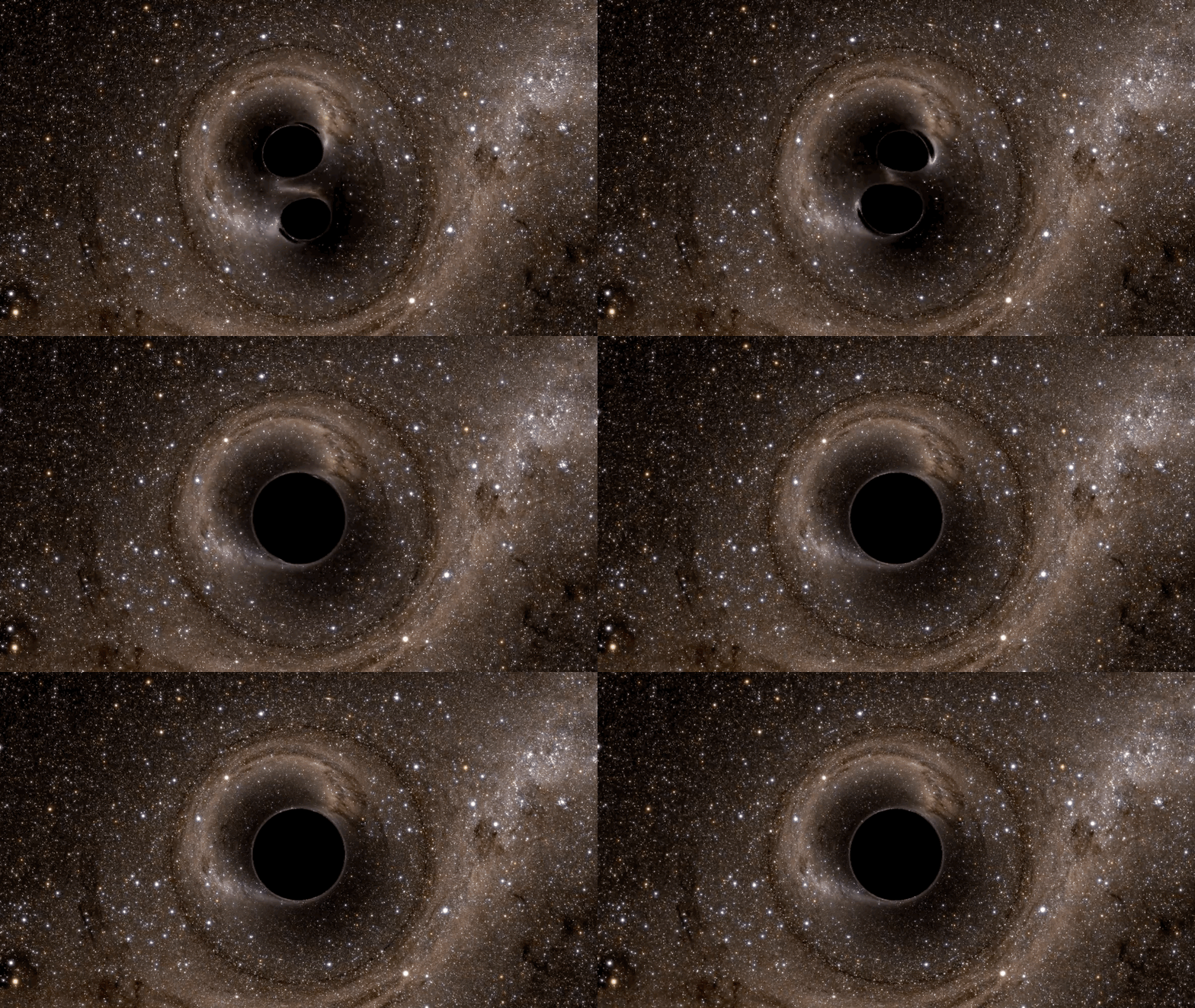
    As we welcome October, a significant anniversary approaches. September 2025 marks the tenth year since scientists first detected gravitational waves. This breakthrough confirmed a key prediction from Albert Einstein’s 1916 theory of General Relativity.

    Gravitational waves are invisible ripples in space produced by massive objects, especially during violent cosmic events. LIGO, the Laser Interferometer Gravitational-Wave Observatory, made the initial detection when two black holes merged. Yet, black holes aren’t the only sources. Supernovae and neutron stars can also generate these waves, impacting our understanding of the universe.

    So, how does LIGO detect these waves? The observatory consists of two long tunnels, each about 2.5 miles. Lasers travel down these tunnels, bouncing off mirrors. Normally, the beams recombine perfectly. However, when a gravitational wave passes, one arm stretches while the other squeezes, causing the beams to diverge. This divergence produces a detectable flicker of light.

    This technology doesn’t just help scientists; it shapes innovative advancements. It fosters collaboration between LIGO, VIRGO, and KAGRA, which together have recorded over 300 black hole mergers in a decade. Each discovery enhances our grasp of cosmic events.

    You don’t need a high-tech facility to join in the excitement. Citizen science initiatives like Black Hole Hunters and Gravity Spy let everyday people participate. For Black Hole Hunters, you’ll analyze data from the TESS satellite to spot gravitational microlensing, indicating massive objects like black holes. With Gravity Spy, your task involves identifying false signals that mimic gravitational waves, refining algorithms for accurate detection.

    For a hands-on experience, try an educational project using simple materials like gelatin and marbles. Activities like these make gravitational waves more relatable, bridging the gap between complex science and everyday life.

    This month, as you gaze at the night sky, remember the remarkable discoveries happening through LIGO and similar projects. Not only do they unravel the mysteries of the universe, but they also drive technological innovation and community engagement, fostering a greater appreciation for science in our lives.

    Continue Your Tech Journey

    Learn how the Internet of Things (IoT) is transforming everyday life.

    Stay inspired by the vast knowledge available on Wikipedia.

    SciV1

    Cosmos Innovation NASA Night Sky Network Research Space VT1
    Share. Facebook Twitter Pinterest LinkedIn Tumblr Email
    Previous ArticleBinance Recovers Hacked X Account After $13K BNB Phishing Scam!
    Next Article Galaxy Watch Sleep Scores: What’s Going On?
    Avatar photo
    Staff Reporter
    • Website

    John Marcelli is a staff writer for IO Tribune, with a passion for exploring and writing about the ever-evolving world of technology. From emerging trends to in-depth reviews of the latest gadgets, John stays at the forefront of innovation, delivering engaging content that informs and inspires readers. When he's not writing, he enjoys experimenting with new tech tools and diving into the digital landscape.

    Related Posts

    AI

    AI’s Energy Use Matches Iceland’s, but Scientists Stay Chill

    March 18, 2026
    Gadgets

    Spotify Launches ‘Bit-Perfect’ Playback in Windows App for Elite Sound Quality

    March 18, 2026
    Tech

    Apple Expands Creative Arsenal with MotionVFX Acquisition

    March 18, 2026
    Add A Comment

    Comments are closed.

    Must Read

    AI’s Energy Use Matches Iceland’s, but Scientists Stay Chill

    March 18, 2026

    Spotify Launches ‘Bit-Perfect’ Playback in Windows App for Elite Sound Quality

    March 18, 2026

    Apple Expands Creative Arsenal with MotionVFX Acquisition

    March 18, 2026

    2 Bullish Signs for XRP Amid Market Correction

    March 18, 2026

    United Against Scammers: Tech Companies Join Forces

    March 18, 2026
    Categories
    • AI
    • Crypto
    • Fashion Tech
    • Gadgets
    • IOT
    • OPED
    • Quantum
    • Science
    • Smart Cities
    • Space
    • Tech
    • Technology
    Most Popular

    Ancient Cataclysm: How a Gigantic Flood Shaped the Mediterranean 5 Million Years Ago

    April 15, 2025

    Breaking Barriers: X-59 Soars into the Future

    November 25, 2025

    Is Your Pixel Over-Vibrating? March Update Under Investigation!

    March 8, 2025
    Our Picks

    Protei Hacked: Data Breach and Website Defaced

    November 17, 2025

    Spot Volume Soars to $375B with $35B ETF Boost!

    November 29, 2025

    Elevate Your Sound: Grab 20% Off the Era 300 Speaker!

    September 6, 2025
    Categories
    • AI
    • Crypto
    • Fashion Tech
    • Gadgets
    • IOT
    • OPED
    • Quantum
    • Science
    • Smart Cities
    • Space
    • Tech
    • Technology
    • Privacy Policy
    • Disclaimer
    • Terms and Conditions
    • About Us
    • Contact us
    Copyright © 2025 Iotribune.comAll Rights Reserved.

    Type above and press Enter to search. Press Esc to cancel.