

Essential Insights
-
Breakthrough in Cooling Technology: Researchers at EPFL developed an efficient device for quantum circuits that operates at ultra-low temperatures, matching the performance of existing room temperature technologies.
-
Innovative Material Combination: The new device utilizes a graphene-indium selenide structure, leveraging its two-dimensional properties to enhance thermoelectric efficiency via the Nernst effect.
-
Solving Heat Management Issues: By effectively converting heat to voltage in quantum systems, this technology addresses the critical challenge of heat disturbance in qubits, crucial for advancing quantum computing.
-
Future Implications: This advancement offers promising potential for integrating efficient cooling solutions into existing low-temperature quantum circuits, paving the way for scalable quantum technologies.
Innovative 2D Device Promises Improved Cooling for Quantum Computers
Researchers at EPFL’s Laboratory of Nanoscale Electronics and Structures (LANES) have made a significant breakthrough in quantum computing. This new 2D device cools quantum circuits effectively, a major hurdle in quantum technology.
To perform quantum calculations, qubits need extreme cold—around -273 degrees Celsius. At these frigid temperatures, atomic movement slows, reducing noise. However, the electronics needed to operate quantum systems generate heat. Managing this heat remains a challenge.
Typically, existing technologies separate quantum circuits from their electronic components. This separation leads to inefficiencies, limiting the scalability of quantum systems outside laboratory settings.
The EPFL team, led by Andras Kis, has developed a device that functions efficiently even at ultra-low temperatures. “We are the first to create a device that matches the conversion efficiency of current technologies but operates at the low magnetic fields required for quantum systems,” said PhD student Gabriele Pasquale.
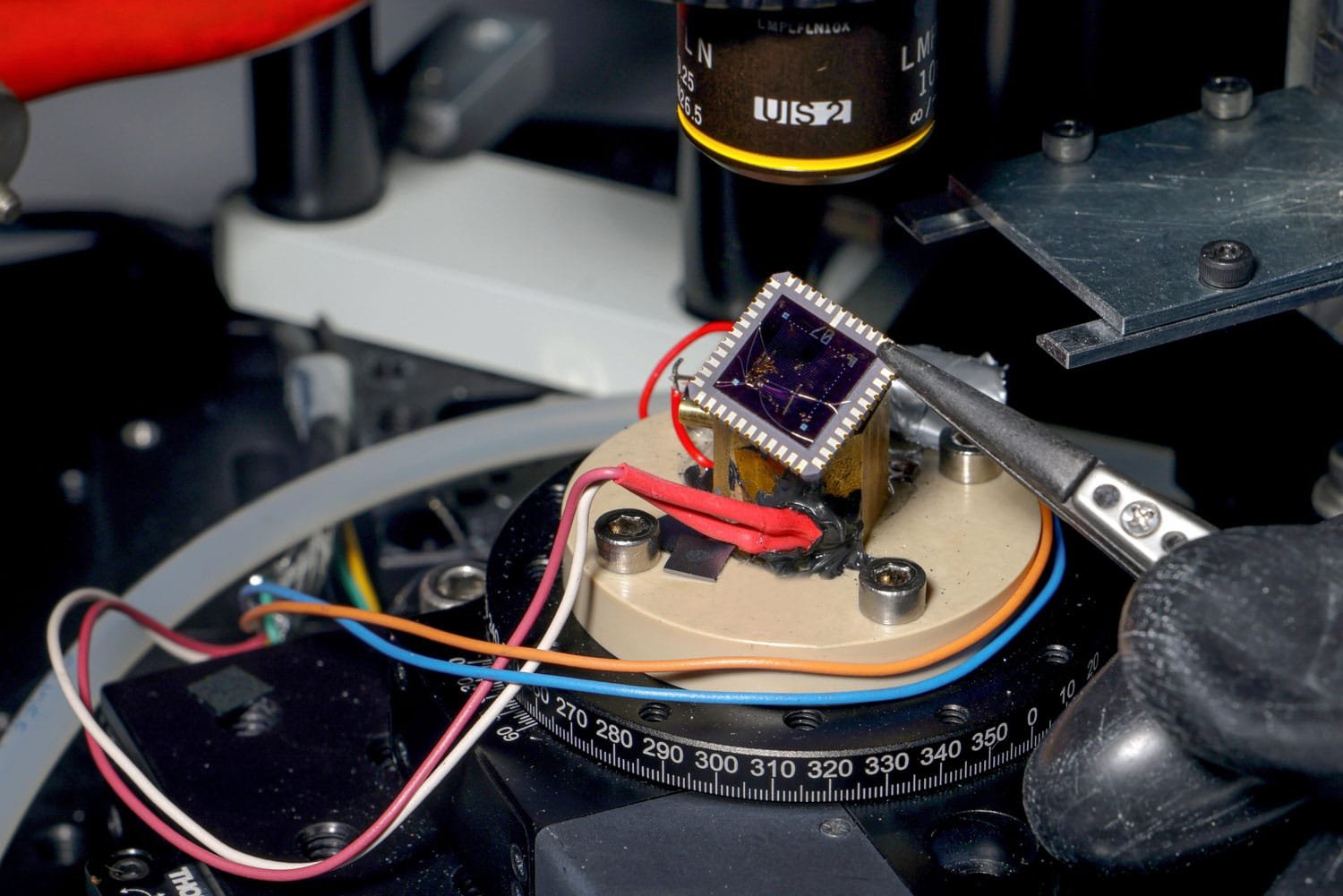
This innovative device combines graphene’s excellent electrical conductivity with the semiconductor properties of indium selenide. Its ultra-thin, two-dimensional structure allows for unprecedented performance. By using the Nernst effect, which generates electrical voltage in varying temperatures under a magnetic field, the device manipulates heat conversion effectively.
Notably, the LANES lab utilizes a specialized dilution refrigerator to achieve temperatures of 100 millikelvin—colder than outer space. “Our device could provide the necessary cooling that current systems lack,” Pasquale explained.
Further, the significance of this research lies in its potential for practical applications. It could seamlessly integrate into existing low-temperature quantum circuits. Researchers emphasize that these advancements could lead to revolutionary cooling systems for future technologies.
As Pasquale notes, “These findings represent a major advancement in nanotechnology and hold promise for developing advanced cooling technologies essential for quantum computing.”
This development stands as a beacon of hope for the future of quantum systems. With increased efficiency, the technology could pave the way for broader adoption of quantum computing in various fields.
Discover More Technology Insights
Explore the future of technology with our detailed insights on Artificial Intelligence.
Explore past and present digital transformations on the Internet Archive.
QuantumV1
