
Close Menu
    Facebook X (Twitter) Instagram
    Friday, May 29
    Top Stories:
    • Unlocking Convenience: What to Know Before Keying Your Car to Your Android
    • Rival Automaker Rolls Out Self-Driving Tech with Full Crash Coverage at a Breakthrough Price!
    • Slate’s Game-Changing Affordable EV Pre-Orders Launch This June!
    Facebook X (Twitter) Instagram Pinterest Vimeo
    IO Tribune
    • Home
    • AI
    • Tech
      • Gadgets
      • Fashion Tech
    • Crypto
    • Smart Cities
      • IOT
    • Science
      • Space
      • Quantum
    • OPED
    IO Tribune
    Home » Chilling Quantum: A 2D Device for Cooler Computers
    Quantum

    Chilling Quantum: A 2D Device for Cooler Computers

    Staff ReporterBy Staff ReporterOctober 6, 2025No Comments3 Mins Read
    Share Facebook Twitter Pinterest LinkedIn Tumblr Reddit Telegram Email
    Share
    Facebook Twitter LinkedIn Pinterest Email

    Essential Insights

    1. Breakthrough in Cooling Technology: Researchers at EPFL developed an efficient device for quantum circuits that operates at ultra-low temperatures, matching the performance of existing room temperature technologies.

    2. Innovative Material Combination: The new device utilizes a graphene-indium selenide structure, leveraging its two-dimensional properties to enhance thermoelectric efficiency via the Nernst effect.

    3. Solving Heat Management Issues: By effectively converting heat to voltage in quantum systems, this technology addresses the critical challenge of heat disturbance in qubits, crucial for advancing quantum computing.

    4. Future Implications: This advancement offers promising potential for integrating efficient cooling solutions into existing low-temperature quantum circuits, paving the way for scalable quantum technologies.

    Innovative 2D Device Promises Improved Cooling for Quantum Computers

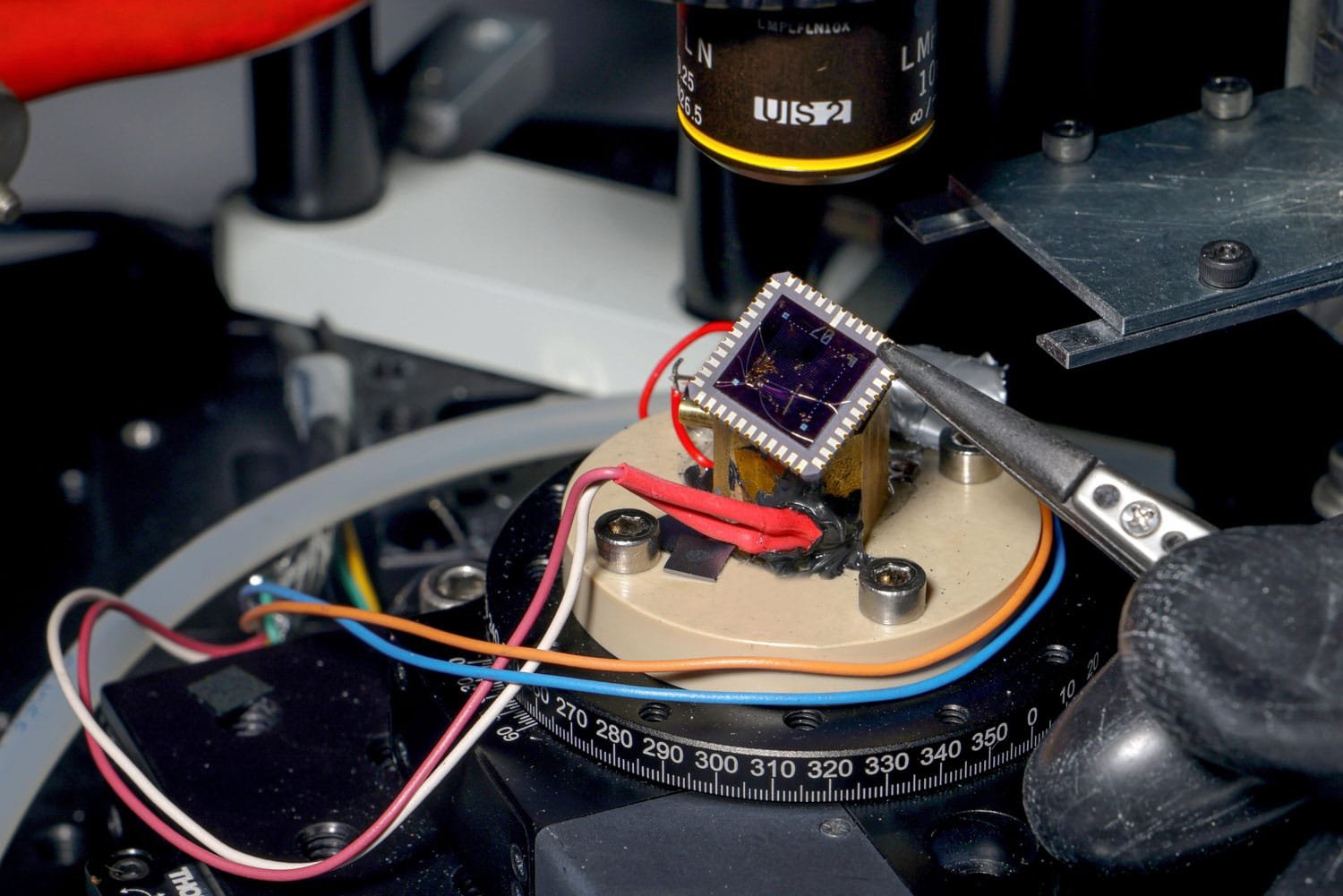
    Researchers at EPFL’s Laboratory of Nanoscale Electronics and Structures (LANES) have made a significant breakthrough in quantum computing. This new 2D device cools quantum circuits effectively, a major hurdle in quantum technology.

    To perform quantum calculations, qubits need extreme cold—around -273 degrees Celsius. At these frigid temperatures, atomic movement slows, reducing noise. However, the electronics needed to operate quantum systems generate heat. Managing this heat remains a challenge.

    Typically, existing technologies separate quantum circuits from their electronic components. This separation leads to inefficiencies, limiting the scalability of quantum systems outside laboratory settings.

    The EPFL team, led by Andras Kis, has developed a device that functions efficiently even at ultra-low temperatures. “We are the first to create a device that matches the conversion efficiency of current technologies but operates at the low magnetic fields required for quantum systems,” said PhD student Gabriele Pasquale.

    This innovative device combines graphene’s excellent electrical conductivity with the semiconductor properties of indium selenide. Its ultra-thin, two-dimensional structure allows for unprecedented performance. By using the Nernst effect, which generates electrical voltage in varying temperatures under a magnetic field, the device manipulates heat conversion effectively.

    Notably, the LANES lab utilizes a specialized dilution refrigerator to achieve temperatures of 100 millikelvin—colder than outer space. “Our device could provide the necessary cooling that current systems lack,” Pasquale explained.

    Further, the significance of this research lies in its potential for practical applications. It could seamlessly integrate into existing low-temperature quantum circuits. Researchers emphasize that these advancements could lead to revolutionary cooling systems for future technologies.

    As Pasquale notes, “These findings represent a major advancement in nanotechnology and hold promise for developing advanced cooling technologies essential for quantum computing.”

    This development stands as a beacon of hope for the future of quantum systems. With increased efficiency, the technology could pave the way for broader adoption of quantum computing in various fields.

    Discover More Technology Insights

    Explore the future of technology with our detailed insights on Artificial Intelligence.

    Explore past and present digital transformations on the Internet Archive.

    QuantumV1

    Cooling HPC Innovation Quantum Quantum Systems VT1
    Share. Facebook Twitter Pinterest LinkedIn Tumblr Email
    Previous ArticleGriffin AI Relaunches GAIN Token on Major Exchanges!
    Next Article Breakthrough in Peripheral Immune Tolerance Wins Nobel Prize
    Avatar photo
    Staff Reporter
    • Website

    John Marcelli is a staff writer for IO Tribune, with a passion for exploring and writing about the ever-evolving world of technology. From emerging trends to in-depth reviews of the latest gadgets, John stays at the forefront of innovation, delivering engaging content that informs and inspires readers. When he's not writing, he enjoys experimenting with new tech tools and diving into the digital landscape.

    Related Posts

    Tech

    Unlocking Convenience: What to Know Before Keying Your Car to Your Android

    May 29, 2026
    AI

    Pope’s Magnifica Humanitas Inspires AI-Ready Humanity

    May 29, 2026
    Crypto

    Crypto Slide: ETF Outflows and Macro Risks

    May 29, 2026
    Add A Comment

    Comments are closed.

    Must Read

    Unlocking Convenience: What to Know Before Keying Your Car to Your Android

    May 29, 2026

    Pope’s Magnifica Humanitas Inspires AI-Ready Humanity

    May 29, 2026

    Crypto Slide: ETF Outflows and Macro Risks

    May 29, 2026

    Rival Automaker Rolls Out Self-Driving Tech with Full Crash Coverage at a Breakthrough Price!

    May 29, 2026

    Fault in Türkiye may produce CO₂ during earthquakes

    May 29, 2026
    Categories
    • AI
    • Crypto
    • Fashion Tech
    • Gadgets
    • IOT
    • OPED
    • Quantum
    • Science
    • Smart Cities
    • Space
    • Tech
    • Technology
    Most Popular

    Urban Nature: The Hidden Challenge in Climate Resilience

    November 29, 2025

    Apple Watch Series 11 vs. Samsung Galaxy Watch 8: Key Highlights Explained!

    September 30, 2025

    Goats & Soda: The World Beyond Borders

    August 12, 2025
    Our Picks

    Sunlight & Your Vitamin D: Avoid These Common Mistakes to Boost Absorption

    April 6, 2026

    Disney-YouTube TV Blackout: Cord Cutters Facing the Same Frustrations

    October 31, 2025

    Google’s New AI Audio Breakthrough

    March 26, 2026
    Categories
    • AI
    • Crypto
    • Fashion Tech
    • Gadgets
    • IOT
    • OPED
    • Quantum
    • Science
    • Smart Cities
    • Space
    • Tech
    • Technology
    • Privacy Policy
    • Disclaimer
    • Terms and Conditions
    • About Us
    • Contact us
    Copyright © 2025 Iotribune.comAll Rights Reserved.

    Type above and press Enter to search. Press Esc to cancel.