

Summary Points
-
CITADEL Adaptation: The team will modify the CITADEL testing chamber to evaluate spacesuit elbow joints and fabrics’ longevity for lunar missions, incorporating abrasion testing and lunar regolith simulants.
-
Artemis III Mission Focus: Astronauts will explore the Moon’s South Pole, where extreme temperatures and potential ice deposits present challenges for sustained human presence.
-
Extreme Cold Conditions: The CITADEL chamber simulates the Moon’s coldest regions, reaching temperatures as low as -414°F (-248°C), critical for understanding astronaut risks.
-
Essential Gear Testing: CITADEL’s research emphasizes the importance of gloves and boots, as they are vital for astronaut safety during prolonged exposure to icy surfaces and tools in shadowed lunar regions.
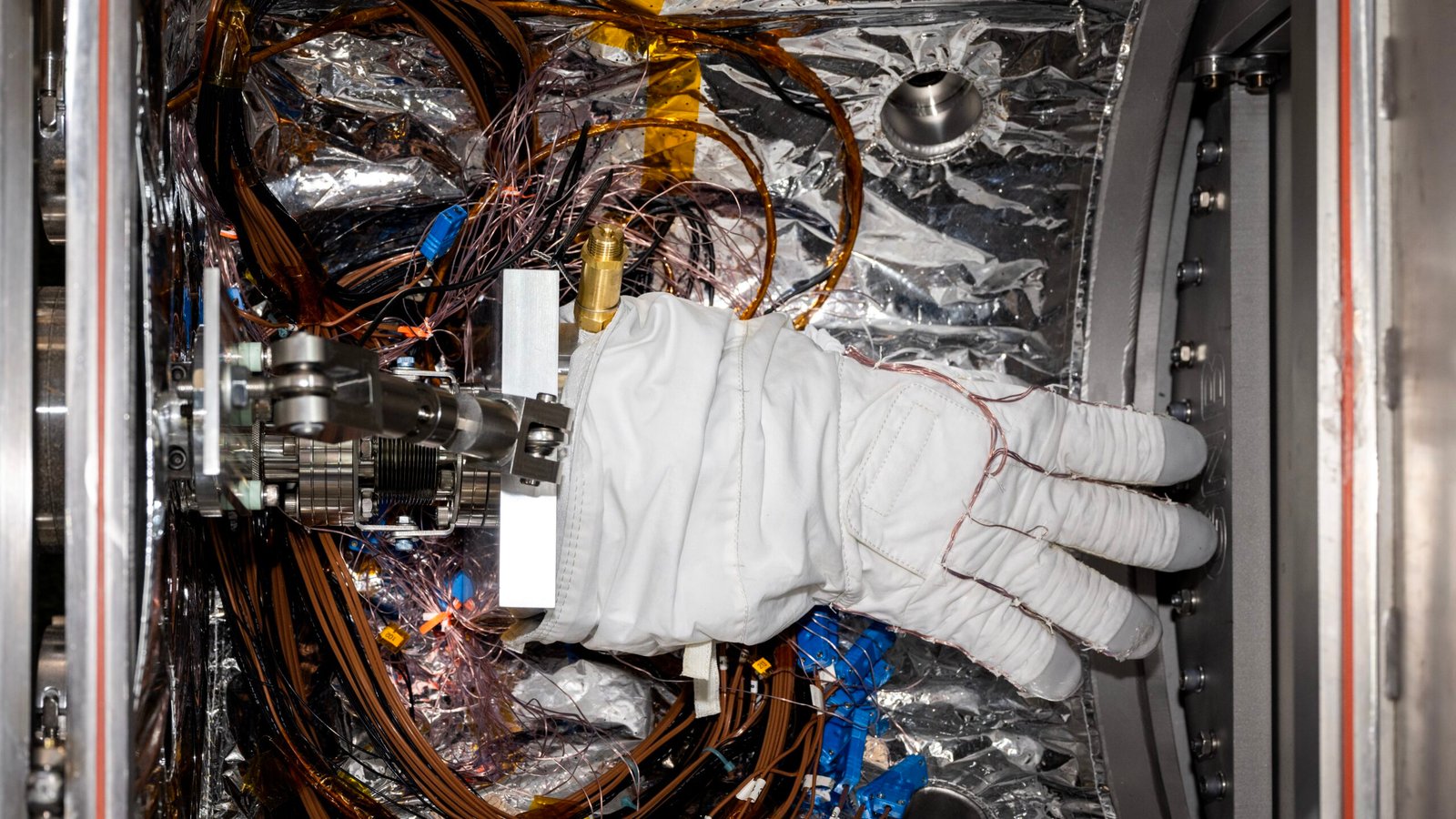
NASA is pushing the boundaries of spacesuit technology inside a new facility known as CITADEL. This Icy Chamber simulates the extreme conditions astronauts will face on the Moon. In coming months, the team will adapt CITADEL to test spacesuit elbow joints. They aim to evaluate suit fabrics for their longevity on the lunar surface.
Additionally, scientists will incorporate abrasion testing. For the first time, they will introduce a simulant for lunar regolith, the loose material that covers the Moon. These tests will provide critical insights into how materials perform in harsh environments.
One engineer noted that NASA has built robots that have traveled across the solar system. Now, these same facilities will support the next lunar missions. Astronauts on Artemis III will explore the Moon’s South Pole, a region unlike any visited during the Apollo missions. The South Pole features permanently shadowed areas that can reach temperatures as low as minus 414 degrees Fahrenheit.
These extreme conditions raise concerns about astronaut safety. Engineers emphasize that gloves and boots play a crucial role in keeping astronauts safe. They must endure prolonged contact with frigid surfaces and tools.
Understanding these risks is vital for ensuring a successful mission. Each test in CITADEL enhances NASA’s capability to protect astronauts. As technology advances, the goal is to support long-term human presence on the Moon. This work not only paves the way for future exploration but may also inspire innovations that benefit life here on Earth.
Continue Your Tech Journey
Learn how the Internet of Things (IoT) is transforming everyday life.
Explore past and present digital transformations on the Internet Archive.
SciV1
