

Top Highlights
-
Revolutionary Neurotechnology: Northwestern University scientists developed a wireless, light-based device that directly communicates with the brain, bypassing traditional sensory pathways for targeted neuron activation.
-
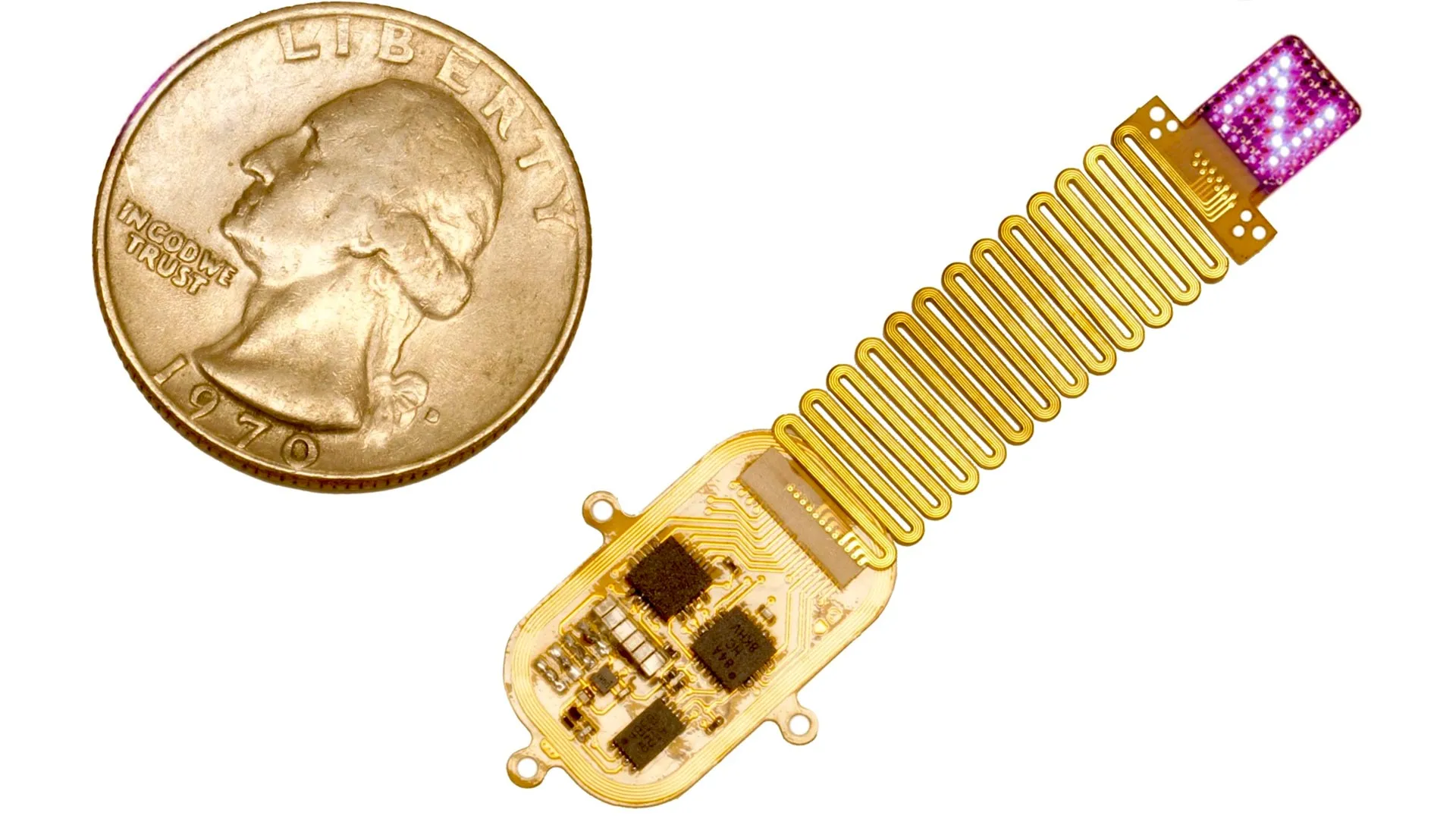
Innovative Design: The device is soft, flexible, and fits beneath the scalp, utilizing an array of 64 micro-LEDs to deliver real-time, customizable light patterns that mimic natural brain activity during sensory experiences.
-
Behavioral Insights: In tests with genetically modified mice, targeted light stimulation enabled accurate decision-making based on learned light patterns, illustrating the brain’s ability to interpret synthetic signals as meaningful information.
-
Future Applications: This technology holds potential for various medical advancements, such as enhancing prosthetic sensory feedback, rehabilitating after injuries, and modifying pain perception, marking a significant leap in neurobiology and bioelectronics.
Revolutionizing Communication with the Brain
In a remarkable leap for neuroscience and bioelectronics, researchers at Northwestern University have unveiled a tiny wireless implant that transmits information directly to the brain using light. This innovative device bypasses traditional sensory routes, delivering signals straight to neurons, which is revolutionary. The implant sits comfortably beneath the scalp, directing controlled light patterns through the skull to target specific cortical neurons.
During preliminary tests, scientists used short bursts of light to stimulate specially modified neurons in mouse models. Impressively, these mice learned to interpret unique light patterns as meaningful cues. They demonstrated the ability to make accurate decisions based solely on incoming light signals. This advancement could open doors to various medical applications, including restoring sensory functions, enhancing prosthetic limb feedback, and improving rehabilitation strategies. By tapping directly into the brain’s signaling processes, this technology offers a glimpse into the future of neuroscience.
The Path Ahead for Widespread Adoption
Despite its promise, practical challenges remain. The device, while advanced, must gain approval for human application. Researchers will need to conduct extensive testing to understand how effectively humans can learn from these artificial signals. Furthermore, there is the question of integration into daily life. How will society adapt to devices that communicate with the brain? Will they enhance our existence or create new ethical dilemmas?
As scientists continue to refine this technology, they also anticipate broader uses. Future versions of the implant may feature more micro-LEDs, creating even more complex signals for the brain. This flexibility could lead to transformative changes in treating neurological conditions or enhancing cognitive functions. Ultimately, the path of this small implant reveals both the limitless potential and the cautious steps necessary in our ongoing human journey with technology. As we venture deeper into this territory, we must balance innovation with responsibility to ensure that these advancements benefit society as a whole.
Continue Your Tech Journey
Explore the future of technology with our detailed insights on Artificial Intelligence.
Access comprehensive resources on technology by visiting Wikipedia.
TechV1
