

Top Highlights
-
Cosmic Structure Mapping: The observable universe contains an estimated two trillion galaxies, organized across vast cosmic “bubbles,” while regions with minimal galaxies are termed cosmic voids.
-
Role of the James Webb Telescope: NASA’s Nancy Grace Roman Space Telescope will revolutionize the study of cosmic voids, enabling precise measurements that reveal the universe’s expansion history.
-
Understanding Dark Components: Cosmic voids are primarily influenced by dark energy; studying these regions helps constrain our understanding of dark energy and its evolution over time.
-
Precision in Void Detection: The Roman High-Latitude Wide-Area Survey aims to detect thousands of cosmic voids, enhancing our knowledge of cosmic parameters by observing faint and distant galaxies within these voids.
NASA’s Roman Telescope Will Observe Thousands of Newfound Cosmic Voids
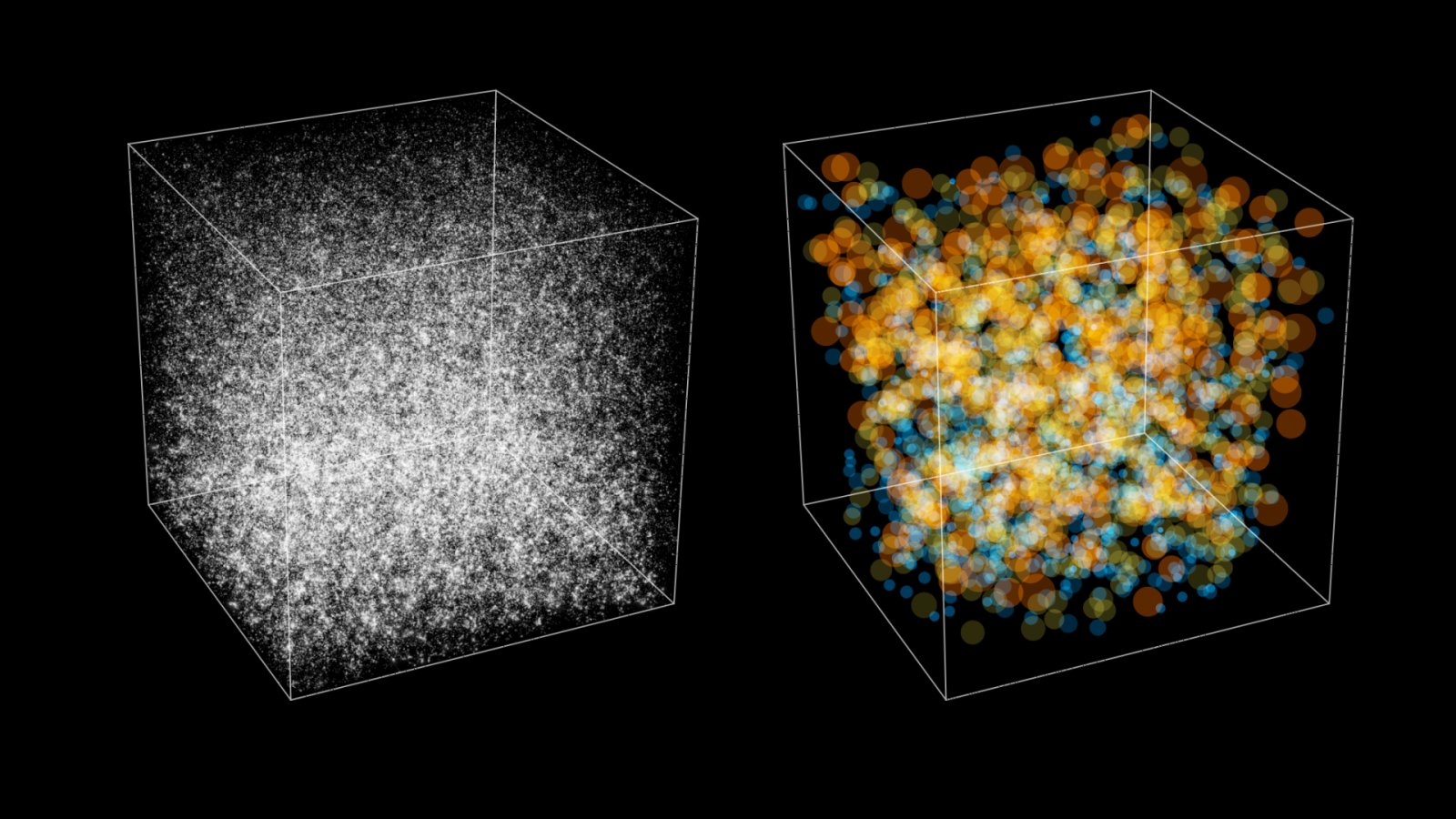
NASA’s Nancy Grace Roman Space Telescope is set to transform our understanding of the universe. This groundbreaking telescope will focus on cosmic voids—vast regions of space with very few galaxies. Researchers estimate that as many as two trillion galaxies exist in the observable universe, yet these galaxies cluster in bubbles, leaving significant space empty.
According to scientists, cosmic voids are crucial for understanding dark energy and dark matter. Dark energy drives the expansion of the universe, while dark matter pulls against it. By studying these voids, scientists can learn more about their composition and the overall expansion of the cosmos.
The Roman Telescope will enable a detailed survey of the sky. Specifically, it will conduct the High-Latitude Wide-Area Survey, examining areas away from our galaxy’s plane. This initiative aims to identify tens of thousands of voids, some as small as 20 million light-years across.
With this data, astronomers will be able to deduce the 3D shapes of voids. They will analyze galaxy positions and use redshift data to determine distances. This process is akin to figuring out a cake recipe by observing the final dessert. Adjustments in observed shapes will indicate how closely they match our galaxy’s cosmic ingredients.
The data will cover 2,400 square degrees of the sky, capturing faint galaxies more effectively than previous missions. This enhanced visibility is essential, as voids are defined by their scarcity of galaxies. Improved observations of these sparse regions will lead to deeper insights into the universe’s structure.
Not only does this research advance our understanding of fundamental cosmic components, but it also promises to refine technology related to space exploration. The Roman Telescope draws collaboration from various institutions, showcasing the power of collective scientific effort.
As we look to the future, the discoveries from the Roman Telescope will likely reshape our perceptions of space and time. This mission embodies a significant leap forward in cosmic research, fueling both technological and scientific progress.
Lee esta nota de prensa en español aquí.
Stay Ahead with the Latest Tech Trends
Dive deeper into the world of Cryptocurrency and its impact on global finance.
Access comprehensive resources on technology by visiting Wikipedia.
SciV1
