

Fast Facts
-
Future Wing Design: Upcoming airliners may feature longer, thinner wings that enhance fuel efficiency and provide smoother rides, but their flexibility poses engineering challenges.
-
Collaboration and Testing: NASA and Boeing’s Integrated Adaptive Wing Technology Maturation collaboration has successfully conducted wind tunnel tests on a higher aspect ratio wing model to address these challenges.
-
Flutter Mitigation: Researchers aim to manage instabilities like wing flutter, which can cause catastrophic failure, by using advanced control surfaces to reduce vibrations and improve aircraft performance.
-
Data Analysis and Future Application: Initial tests have shown significant performance improvements, with findings set to inform the next generation of commercial aircraft designs, benefiting airlines and manufacturers alike.
The airliner you board in the future could look different from today’s, featuring longer, thinner wings. These innovative wings promise a smoother ride and improved fuel efficiency. However, designing them poses challenges. NASA and Boeing are currently addressing these issues through collaboration.
Longer wings can reduce drag, enhancing lift efficiency. Yet, flexibility during flight could lead to problems. Jennifer Pinkerton, a NASA aerospace engineer, states that flexible wings may react more dramatically to gusts and maneuvers. Thus, balancing efficiency and stability remains crucial.
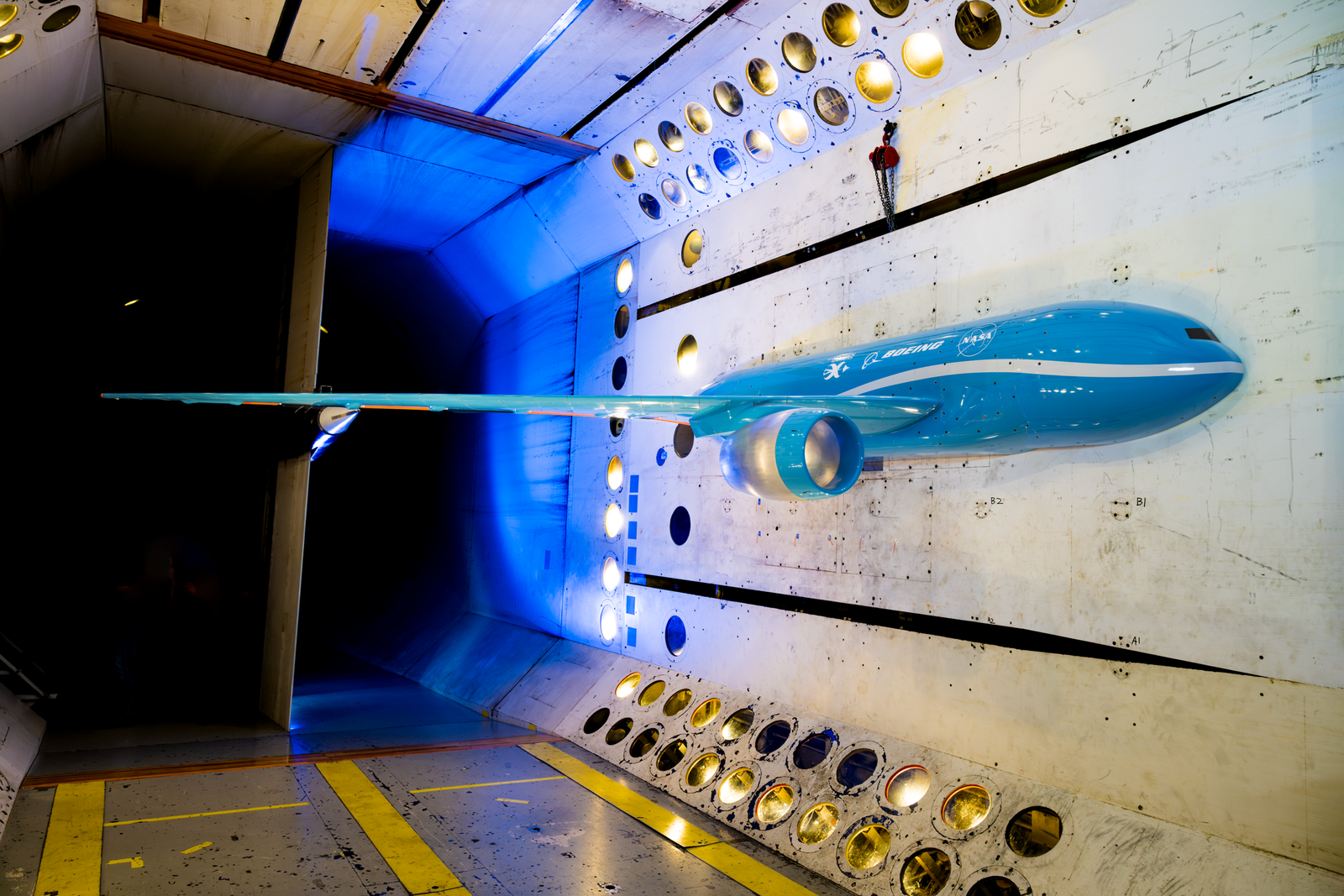
Recently, NASA and Boeing completed wind tunnel tests with a new higher aspect ratio wing model. These tests aimed to maximize efficiency while minimizing risks associated with flexible wings. Excessive movement can cause dangerous vibrations, known as wing flutter, which can lead to catastrophic failure.
Experts aim to reduce the impacts of wind gusts and improve control during turns. Successfully managing these factors significantly enhances aircraft performance, fuel efficiency, and passenger comfort.
Conducting these tests with a full-sized airliner is impractical. Instead, researchers used NASA Langley’s Transonic Dynamics Tunnel, which accommodates large-scale models. To create a scaled-down version, they partnered with NextGen Aeronautics to design a complex 13-foot wing model.
Researchers mounted this model in the wind tunnel, outfitting it with ten adjustable control surfaces to manage airflows and vibrations. This setup marks a notable advancement from earlier testing phases, which utilized fewer control surfaces.
Preliminary tests in 2024 established baseline data, while further configurations in 2025 explored enhanced control measures. Researchers noticed a substantial reduction in wing vibrations during gust tests, showcasing the model’s potential benefits.
With testing complete, experts are analyzing data to share findings with the aviation community. Manufacturers and airlines stand to gain valuable insights for the next generation of aircraft.
Initial analyses indicate that the controllers developed during testing have yielded significant performance improvements. As this project progresses, it aims to reshape the future of air travel, offering advancements that could enhance safety, efficiency, and comfort for all passengers. NASA’s continued focus on innovative aircraft technology signals a promising shift in aviation’s technological landscape.
Discover More Technology Insights
Learn how the Internet of Things (IoT) is transforming everyday life.
Stay inspired by the vast knowledge available on Wikipedia.
SciV1
