
Close Menu
    Facebook X (Twitter) Instagram
    Monday, September 14
    Top Stories:
    • Foldable iPhone Launch: What Chinese Buyers Need to Know
    • Unveiling How the Brain Shapes Our Sense of Beauty
    • US and China Race to Develop Self-Improving AI: High Stakes Ahead
    Facebook X (Twitter) Instagram Pinterest Vimeo
    IO Tribune
    • Home
    • AI
    • Tech
      • Gadgets
      • Fashion Tech
    • Crypto
    • Smart Cities
      • IOT
    • Science
      • Space
      • Quantum
    • OPED
    IO Tribune
    Home » Revolutionizing Flight: The Future of Aircraft Wings
    Space

    Revolutionizing Flight: The Future of Aircraft Wings

    Staff ReporterBy Staff ReporterDecember 19, 2025No Comments3 Mins Read
    Share Facebook Twitter Pinterest LinkedIn Tumblr Reddit Telegram Email
    Share
    Facebook Twitter LinkedIn Pinterest Email

    Fast Facts

    1. Future Wing Design: Upcoming airliners may feature longer, thinner wings that enhance fuel efficiency and provide smoother rides, but their flexibility poses engineering challenges.

    2. Collaboration and Testing: NASA and Boeing’s Integrated Adaptive Wing Technology Maturation collaboration has successfully conducted wind tunnel tests on a higher aspect ratio wing model to address these challenges.

    3. Flutter Mitigation: Researchers aim to manage instabilities like wing flutter, which can cause catastrophic failure, by using advanced control surfaces to reduce vibrations and improve aircraft performance.

    4. Data Analysis and Future Application: Initial tests have shown significant performance improvements, with findings set to inform the next generation of commercial aircraft designs, benefiting airlines and manufacturers alike.

    The airliner you board in the future could look different from today’s, featuring longer, thinner wings. These innovative wings promise a smoother ride and improved fuel efficiency. However, designing them poses challenges. NASA and Boeing are currently addressing these issues through collaboration.

    Longer wings can reduce drag, enhancing lift efficiency. Yet, flexibility during flight could lead to problems. Jennifer Pinkerton, a NASA aerospace engineer, states that flexible wings may react more dramatically to gusts and maneuvers. Thus, balancing efficiency and stability remains crucial.

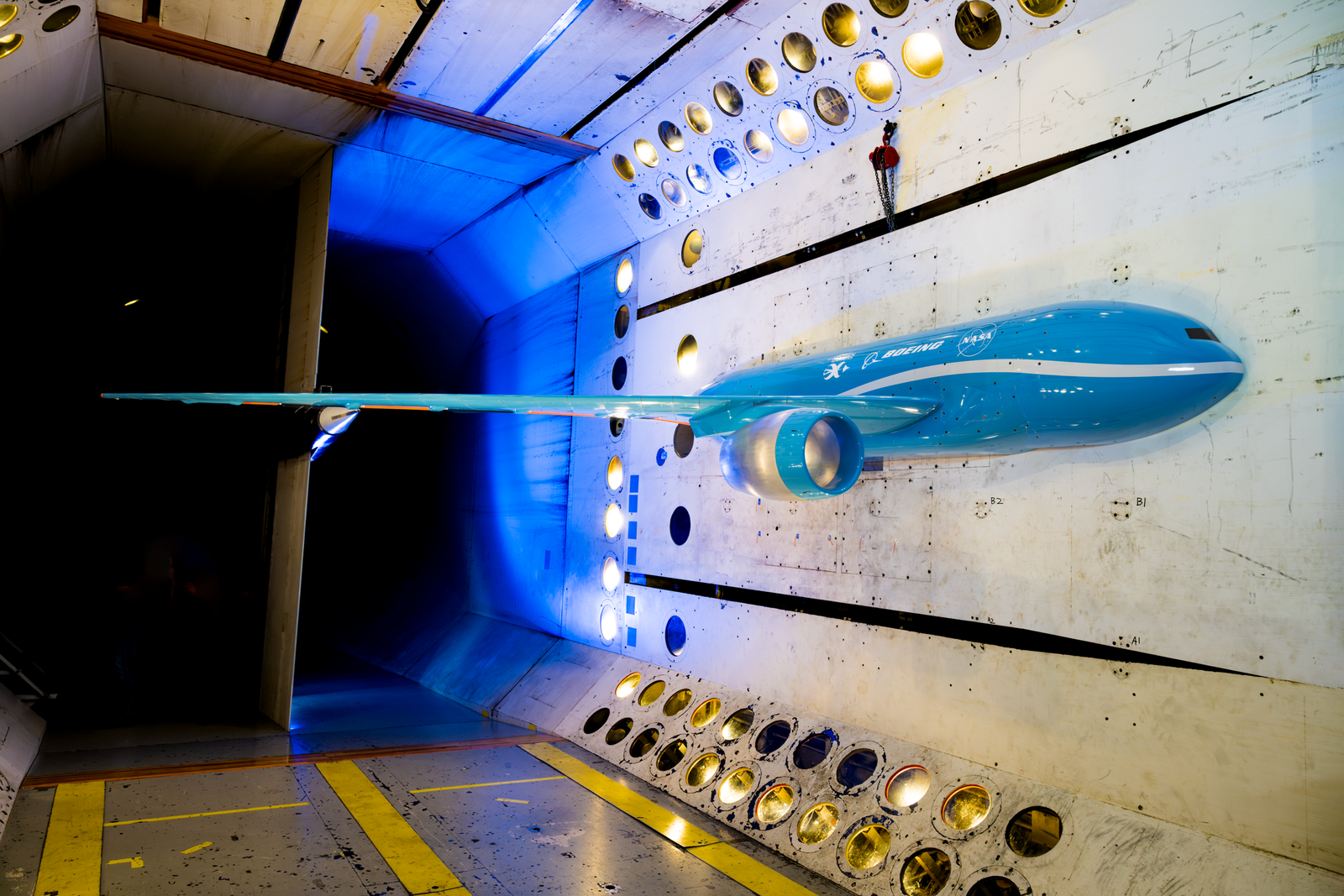
    Recently, NASA and Boeing completed wind tunnel tests with a new higher aspect ratio wing model. These tests aimed to maximize efficiency while minimizing risks associated with flexible wings. Excessive movement can cause dangerous vibrations, known as wing flutter, which can lead to catastrophic failure.

    Experts aim to reduce the impacts of wind gusts and improve control during turns. Successfully managing these factors significantly enhances aircraft performance, fuel efficiency, and passenger comfort.

    Conducting these tests with a full-sized airliner is impractical. Instead, researchers used NASA Langley’s Transonic Dynamics Tunnel, which accommodates large-scale models. To create a scaled-down version, they partnered with NextGen Aeronautics to design a complex 13-foot wing model.

    Researchers mounted this model in the wind tunnel, outfitting it with ten adjustable control surfaces to manage airflows and vibrations. This setup marks a notable advancement from earlier testing phases, which utilized fewer control surfaces.

    Preliminary tests in 2024 established baseline data, while further configurations in 2025 explored enhanced control measures. Researchers noticed a substantial reduction in wing vibrations during gust tests, showcasing the model’s potential benefits.

    With testing complete, experts are analyzing data to share findings with the aviation community. Manufacturers and airlines stand to gain valuable insights for the next generation of aircraft.

    Initial analyses indicate that the controllers developed during testing have yielded significant performance improvements. As this project progresses, it aims to reshape the future of air travel, offering advancements that could enhance safety, efficiency, and comfort for all passengers. NASA’s continued focus on innovative aircraft technology signals a promising shift in aviation’s technological landscape.

    Discover More Technology Insights

    Learn how the Internet of Things (IoT) is transforming everyday life.

    Stay inspired by the vast knowledge available on Wikipedia.

    SciV1

    Advanced Air Transport Technology Advanced Air Vehicles Program Aeronautics Aeronautics Research Mission Directorate Cosmos Langley Research Center NASA Space Ultra-Efficient Aviation VT1
    Share. Facebook Twitter Pinterest LinkedIn Tumblr Email
    Previous ArticleWorld Liberty Financial Suggests 5% Treasury Allocation for $1 Growth
    Next Article Crunch Time: Small Businesses Face Rising Healthcare Costs
    Avatar photo
    Staff Reporter
    • Website

    John Marcelli is a staff writer for IO Tribune, with a passion for exploring and writing about the ever-evolving world of technology. From emerging trends to in-depth reviews of the latest gadgets, John stays at the forefront of innovation, delivering engaging content that informs and inspires readers. When he's not writing, he enjoys experimenting with new tech tools and diving into the digital landscape.

    Related Posts

    Space

    Origins of Everything: Tracing Your Elemental Roots

    September 14, 2026
    AI

    ShipAI: Revolutionizing Data Science on the Horizon

    September 14, 2026
    Quantum

    Thinner Material Conducts Electricity Better

    September 14, 2026
    Add A Comment

    Comments are closed.

    Must Read

    Origins of Everything: Tracing Your Elemental Roots

    September 14, 2026

    ShipAI: Revolutionizing Data Science on the Horizon

    September 14, 2026

    Thinner Material Conducts Electricity Better

    September 14, 2026

    Apple Watch Series 12 vs. SE 3: Which to Choose?

    September 14, 2026

    Fix iMessage “Not Delivered” Error on iPhones Easily

    September 14, 2026
    Categories
    • AI
    • Crypto
    • Fashion Tech
    • Gadgets
    • IOT
    • OPED
    • Quantum
    • Science
    • Smart Cities
    • Space
    • Tech
    Most Popular

    Qwen Family Dominates Over Half of Global Open-Source Downloads

    April 10, 2026

    Future Leaders: The 2026 Rhodes Scholars on Housing and Sustainability

    November 18, 2025

    Top Internet Providers in Boise

    June 21, 2025
    Our Picks

    XRP Rejoins Top 100 as Bitcoin Faces Silver Rivalry!

    September 14, 2025

    Unlocking the Pixel Tablet Pen’s Secret Note-Taking Feature!

    August 12, 2025

    Qi2 25W Wireless Charging: Coming Soon to iPhones and Major Androids!

    July 24, 2025
    Categories
    • AI
    • Crypto
    • Fashion Tech
    • Gadgets
    • IOT
    • OPED
    • Quantum
    • Science
    • Smart Cities
    • Space
    • Tech
    • Privacy Policy
    • Disclaimer
    • Terms and Conditions
    • About Us
    • Contact us
    Copyright © 2025 Iotribune.comAll Rights Reserved.

    Type above and press Enter to search. Press Esc to cancel.