

Fast Facts
-
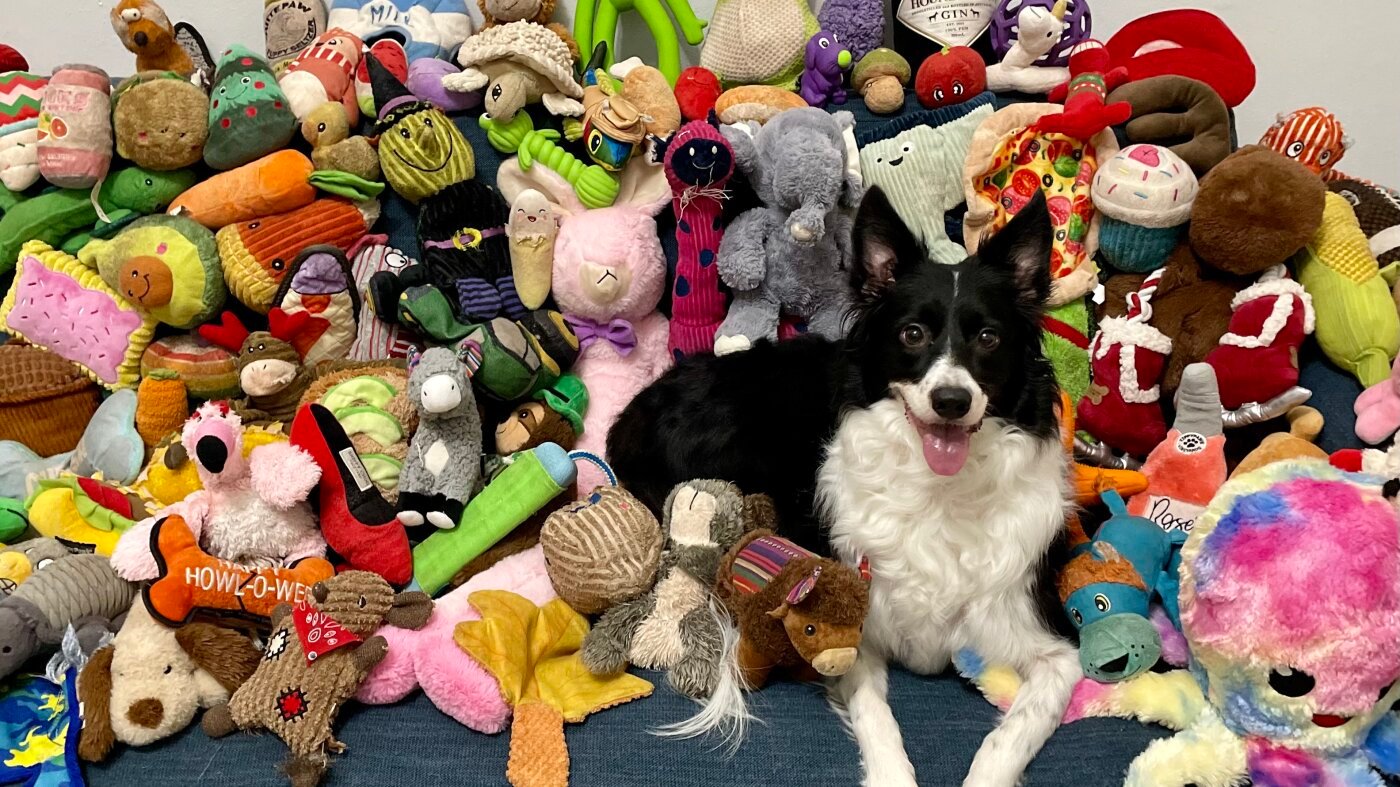
Advanced Learning Abilities: Some dogs, like a Border collie named Basket, can learn over 200 toy names and acquire new words just by overhearing conversations, similar to human toddlers.
-
Social Cues Utilization: Dogs can understand new toy names even when they can’t see the toy, using social cues from their owner’s gaze, showcasing their ability to use social communication effectively.
-
Gifted Canines Identified: The study identifies a small group of “gifted” dogs, including various breeds, capable of differentiating and learning specific object names, leading to ongoing searches for such remarkable canines.
-
Implications for Human Language Evolution: Research on dogs’ language abilities may provide insights into the origins and evolution of human language skills, reflecting the deep bond shared between dogs and humans.
Dogs Eavesdrop to Learn New Words, Study Finds
Recent research reveals that some dogs, like Basket, a 7-year-old Border collie, can learn new words simply by overhearing conversations. This remarkable ability mirrors how human toddlers absorb language.
Typically, dog owners understand the need to spell out words like “walk” or “treat” around their pets. However, certain intelligent dogs can pick up unfamiliar terms from nearby discussions. They often comprehend the name of a new toy by listening to brief interactions, even when the object remains out of sight. Cognitive scientist Shany Dror states that these dogs rely on social cues to grasp vocabulary.
This discovery opens new doors for understanding how dogs process language. It emphasizes that social communication may predate verbal language in human evolution. Researchers noticed a difference in dogs’ learning capabilities, especially when some could distinguish between commands like “fetch the ball” versus “fetch the frisbee.” Only a small group of dogs manages this differentiation, suggesting that innate ability plays a role in language comprehension.
Dror and her colleagues conducted a compelling study with dogs present during conversations about new toys. Remarkably, the dogs could later identify the toys by name, indicating impressive cognitive flexibility. Even when the name was mentioned after the toy was hidden, many of these gifted dogs still completed the task successfully.
While the study shows extraordinary capabilities in these selective dogs, it also highlights that not all dogs possess this learning ability. Regular pet dogs did not demonstrate similar results in previous analyses, indicating that this phenomenon may not be widespread.
Moreover, researchers seek to understand why certain objects receive different names in a dog’s mind. For instance, size and function may influence their perception, differentiating a tennis ball from a larger ball.
Understanding how dogs acquire language-related skills could lead to advancements in technology. For example, this research may inspire methods to enhance interactive pet toys or smart devices that facilitate better communication between pets and owners. By studying these unique canine abilities, researchers hope to shed light on human language development and cognitive evolution.
Continue Your Tech Journey
Learn how the Internet of Things (IoT) is transforming everyday life.
Explore past and present digital transformations on the Internet Archive.
SciV1
