

Essential Insights
-
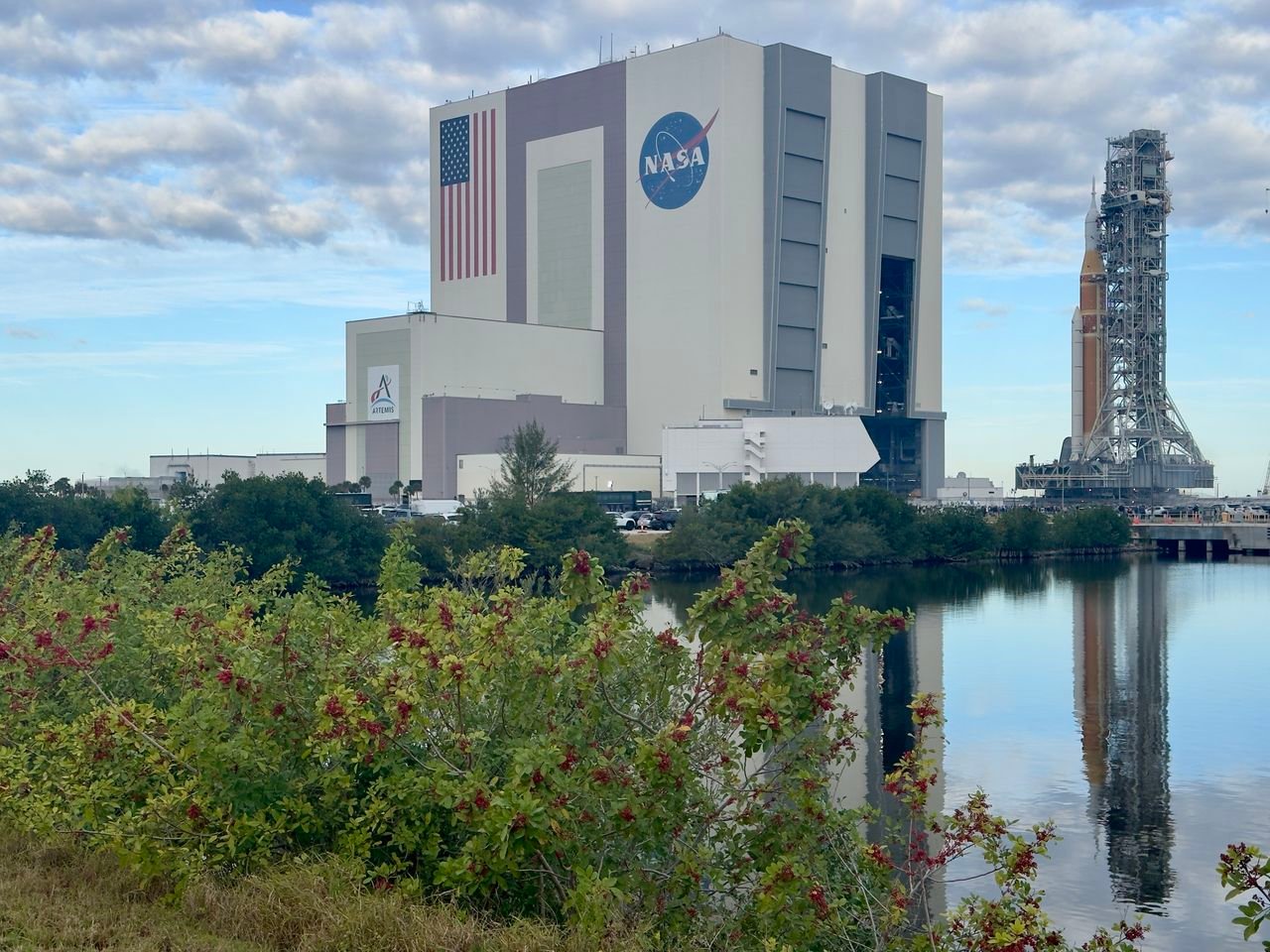
Historic Launch Prep: NASA’s Space Launch System (SLS) rocket begins its journey to Launch Complex-39B, poised for the Artemis 2 mission that will send astronauts to the moon.
-
Massive Specifications: Standing 322 feet tall and weighing 2,870 tons, the SLS is powered by solid rocket boosters and RS-25 engines, delivering 8.8 million pounds of thrust.
-
Key Dates: A wet dress rehearsal is targeted for February 2, with the earliest launch date on February 6, depending on system checks post-rollout.
-
Mission Overview: Artemis 2 will test the Orion spacecraft on a free-return trajectory around the moon, ensuring crew safety while paving the way for future lunar landings.
NASA Rolls Artemis 2 Rocket to the Pad Ahead of Historic Moon Launch
CAPE CANAVERAL, Fla. — NASA’s Space Launch System (SLS) rocket is rolling to the pad for a historic mission. This marks a significant step towards launching astronauts back to the moon, possibly in just a few weeks.
The SLS left the Vehicle Assembly Building (VAB) this morning, beginning a 4-mile trek to Launch Complex 39B. Engineers spent the last year and a half stacking the rocket, which is now a fully assembled launch vehicle. It began its journey at 7:04 a.m. EST, slowly moving on its Mobile Launch Platform.
At 322 feet tall and weighing about 2,870 tons when fueled, this massive rocket combines power and advanced technology. Two solid rocket boosters and four RS-25 engines produce an impressive 8.8 million pounds of thrust at liftoff. This capability positions NASA to conduct complex missions in space.
The slow journey to the launch pad will take approximately 8 to 10 hours. After arrival, NASA will perform systems checks and prepare for a wet dress rehearsal, targeting February 2 for this milestone. The earliest launch date for Artemis 2 is February 6.
Artemis 2 will carry astronauts on a 10-day mission around the moon. Although the crew will not land on the lunar surface, they will test systems and ensure safe return paths. The mission utilizes a “free-return trajectory,” which allows for a safe trip home even if issues arise.
This initiative serves as a crucial stepping stone in NASA’s goal to establish a sustainable presence on the moon. Following Artemis 2, Artemis 3 will target a lunar landing, contingent on Artemis 2’s success.
The advanced technologies tested in Artemis 2 will have far-reaching impacts. They will not only inform future lunar missions but also enhance capabilities for exploring Mars and beyond. The Artemis program emphasizes safety, innovation, and the potential for long-term space exploration, effectively improving the quality of life through advancements in technology.
As NASA gears up for this next chapter, public interest and investment in space exploration remain strong. The developments of the Artemis program highlight human ingenuity and the relentless pursuit of knowledge.
With training sessions already underway for the crew, excitement surrounds the journey ahead. Artemis 2 symbolizes a unified vision for the future of space travel and exploration.
Discover More Technology Insights
Stay informed on the revolutionary breakthroughs in Quantum Computing research.
Access comprehensive resources on technology by visiting Wikipedia.
SciV1
