

Top Highlights
-
Successful Test Milestone: NASA completed a high-speed taxi test of a scale model of the Crossflow Attenuated Natural Laminar Flow (CATNLF) wing design, achieving approximately 144 mph.
-
Fuel Efficiency Goal: The CATNLF design aims to enhance laminar flow and reduce drag, potentially saving up to 10% in annual fuel costs for large aircraft like the Boeing 777, equating to millions of dollars per aircraft.
-
Flight Testing Advantages: Using NASA’s F-15B testbed aircraft allows for effective laminar flow testing in real flight conditions, providing insights beyond wind tunnel results.
-
Future Implications: As passenger aviation grows, CATNLF technology could lead to significant improvements in fuel efficiency for commercial aircraft and may eventually be adapted for supersonic travel.
NASA Tests Technology Offering Potential Fuel Savings for Commercial Aviation
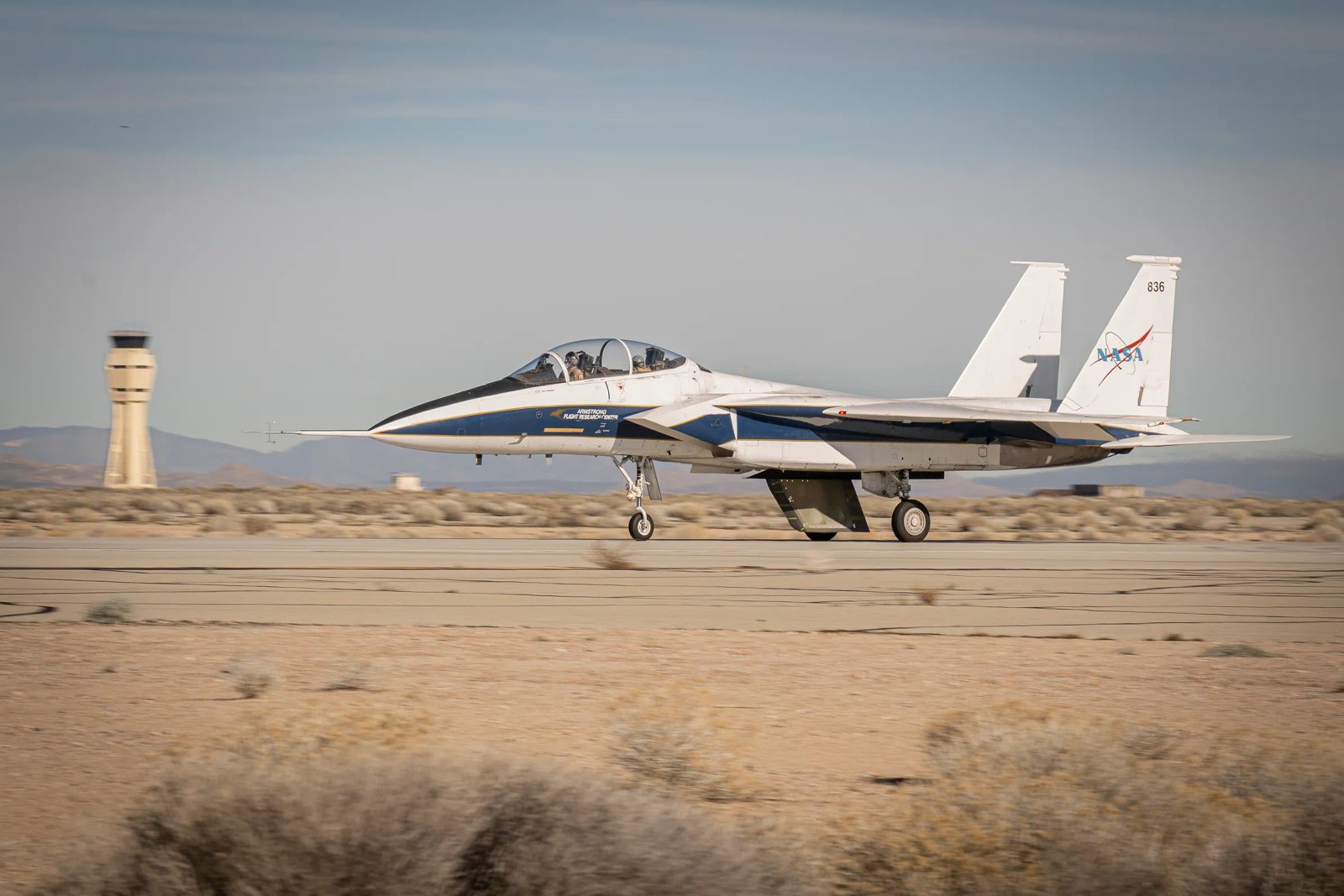
NASA researchers recently completed a high-speed taxi test of a scale model that could enhance aircraft efficiency. This design, known as the Crossflow Attenuated Natural Laminar Flow (CATNLF), focuses on improving airflow over a wing’s surface. As a result, it promises significant fuel savings and cost reductions for airlines.
On January 12, the CATNLF test model reached speeds of approximately 144 mph. This milestone marks a crucial step for NASA’s research program. The 3-foot-tall model resembles a fin mounted beneath one of NASA’s F-15B jets, allowing for effective flight-testing without building a new aircraft.
The CATNLF concept aims to enhance laminar flow, which refers to smooth air movement, thus reducing wind resistance or drag. A prior computational study predicted that equipping a large aircraft, like the Boeing 777, with CATNLF wings could lead to annual fuel savings of up to 10%. While exact savings may vary, the impact could total millions of dollars per aircraft every year.
“Even small improvements in efficiency can add up to significant reductions in fuel burn and emissions,” said a principal investigator for the project. Reducing drag plays a crucial role in improving fuel efficiency. Mid-air, a thin layer of air called the boundary layer develops close to the aircraft’s surface. This area often experiences increased friction, leading to turbulence and higher fuel consumption. By enhancing laminar flow, CATNLF aims to decrease drag and, consequently, fuel usage.
This testing falls under NASA’s Flight Demonstrations and Capabilities project, part of their Integrated Aviation Systems Program. The concept originated from NASA’s Advanced Air Transport Technology project, with initial model development taking place before refinement at NASA’s Langley Research Center.
Historically, laminar flow technology has faced limitations. Crossflow, an aerodynamic issue observed on angled surfaces, can disrupt laminar flow. Researchers confirmed in 2018 that the CATNLF design effectively achieved prolonged laminar flow during wind tunnel tests. Following these positive results, NASA advanced to flight testing.
Flight tests provide a less turbulent environment than wind tunnels, critical for accurately studying laminar flow. The F-15B testbed aircraft offers an ideal setting for this research while keeping costs manageable.
With global passenger numbers on the rise, commercial aviation has become increasingly vital. The International Civil Aviation Organization projects that the number of travelers may double in the next 20 years. “Most of us fly subsonic, so that’s where this technology would have the greatest impact right now,” the principal investigator noted.
In upcoming weeks, CATNLF will make its first flight, beginning a series of tests to evaluate its performance. NASA’s ongoing work with CATNLF may pave the way for more efficient commercial air travel and even extend similar technologies to supersonic flight. By continuously improving fuel efficiency, NASA aims to enhance the future of air travel, making it both greener and more cost-effective.
Continue Your Tech Journey
Stay informed on the revolutionary breakthroughs in Quantum Computing research.
Stay inspired by the vast knowledge available on Wikipedia.
SciV1
