

Top Highlights
-
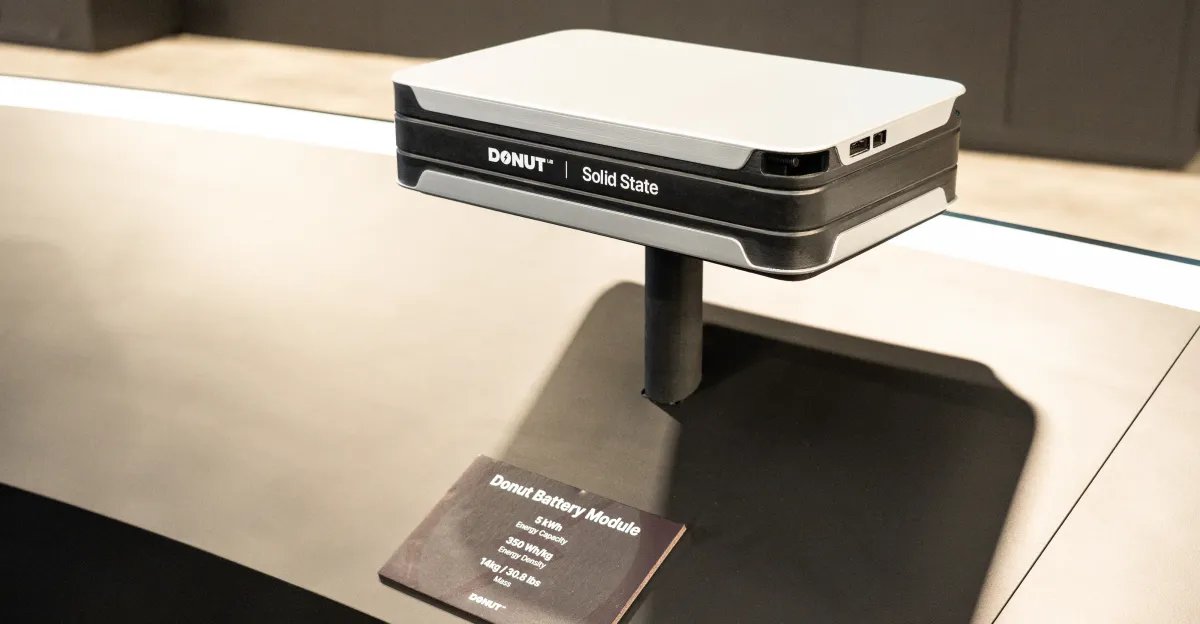
Breakthrough Performance: Donut Lab’s solid-state battery charges from 0-80% in approximately 9.5 minutes, outperforming traditional lithium-ion batteries and retaining up to 100% capacity.
-
Safety and Efficiency: Unlike typical lithium-ion batteries requiring complex cooling systems, Donut Lab’s battery uses a passive cooling method, simplifying design and reducing costs.
-
High Energy Density: The battery boasts a remarkable energy density of 400 Wh/kg, significantly higher than most lithium-ion batteries, which range between 200-300 Wh/kg.
-
Ongoing Concerns: Despite impressive test results, critical questions remain about the battery’s chemistry and potential issues like dendrite formation, which could impact its long-term viability.
Rapid Advancements in Battery Technology
Finnish startup Donut Lab recently announced promising results for its solid-state battery. After much skepticism, the company released independent testing data that showcases its battery’s ability to charge significantly faster than traditional lithium-ion batteries. In one trial, the battery charged from 0 to 80 percent in just 9.5 minutes while retaining nearly all its capacity. Another trial showed an astonishing 4.5-minute charge for the same capacity. This sheer speed could revolutionize electric vehicle (EV) charging, transforming a frustrating 30- to 40-minute wait into a mere five-minute pit stop.
Solid-state batteries have long been heralded as the “holy grail” of energy storage. They use dry conductive materials instead of liquid electrolytes, which reduces safety concerns and charge time. In contrast, conventional lithium-ion batteries often suffer from issues like overheating and slow charging. The independent tests also indicated that Donut Lab’s battery could maintain performance without the bulky active cooling systems typically required for high-speed charging. This robustness signifies a significant step forward, making electric vehicles more user-friendly and practical.
Challenges Ahead for Widespread Adoption
Despite these optimistic results, some challenges remain. The testing did not delve into critical aspects like the battery’s chemical composition or address persistent issues related to dendrites, which can lead to electrical shorts. These factors could impact the battery’s long-term reliability and safety. As Donut Lab promises further independent tests, stakeholders will eagerly await more information.
Additionally, while initial results are encouraging, mass production remains a hurdle. Scaling up this technology without losing efficiency or safety poses a substantial challenge for Donut Lab. Still, if successful, this innovation could redefine energy storage, not just for electric vehicles but for various applications, including renewable energy sources and portable devices.
As the world transitions towards sustainable energy solutions, the potential contributions of Donut Lab’s breakthrough may play a significant role in this journey. With practical challenges ahead, the landscape of energy storage could shift dramatically if solid-state batteries become mainstream. The promise is there; we now wait to see if the reality can match it.
Discover More Technology Insights
Dive deeper into the world of Cryptocurrency and its impact on global finance.
Stay inspired by the vast knowledge available on Wikipedia.
TechV1
