

Top Highlights
Wild mustangs are gathered by helicopters in Colorado’s wild ranges.
Many horses face captivity in controversial long-term holding facilities.
Advocates mourn the separation of family groups during roundups.
Some believe captivity is humane, citing better care than the wild.
The Federal Roundup of Wild Horses in Colorado
Recent reports detail the federal government’s efforts to reduce the number of wild horses across Colorado’s rangelands. The Bureau of Land Management (BLM), part of the U.S. Interior Department, frequently conducts large-scale roundups in the West. On August 5, in Rio Blanco County, Colorado, a helicopter corralled about a thousand wild mustangs. Scenes like this are common, where helicopters herd horses into pens for removal or relocation. The goal is to control populations on federal lands, which often face environmental degradation due to overgrazing and habitat damage.
During the roundup, horses galloped freely through the desert, their silhouettes against the bright sky. As a helicopter swooped overhead, horses sprinted towards capture pens, including a foal trying to stay close to its mother. Once captured, the horses are separated. Many end up in long-term holding facilities, which critics say resemble prisons and are costly for taxpayers—about $60 million annually to house approximately 60,000 horses. The BLM states these roundups help maintain land health and prevent overpopulation, which can lead to environmental harm.
Supporters like Rio Blanco County Commissioner Callie Scritchfield argue that captivity is more humane than letting horses starve or suffer in the wild. She recalls seeing horses stuck in mud or trying to drink from depleted water sources, illustrating the hardships wild horses face. Wildlife experts note that both wild horses and domesticated cattle heavily graze the land, leading to land degradation. While there are more than 85,000 wild horses on federal lands nationwide, cattle numbers far exceed them—millions across the West. Both animals’ diets and impacts challenge the sustainability of the land, prompting the BLM’s population management efforts.
Efforts to Find New Homes for Wild Horses
Some wild horses are adopted by individuals or taken to foster homes. Last year, about 8,000 horses found new homes through sales or adoptions. Horse advocates, like Cindy Day, play a vital role in caring for these animals post-roundup. Day adopted a horse she named Moses after the 2019 roundup. She describes their bond as special. Moses was very wild at first, but through patience and training, he has become calmer. Day works daily with Moses, teaching him to trust and prepare for riding. She hopes to eventually take him on trail rides and share adventures.
Day volunteers with nonprofit groups that support the BLM’s efforts. They help administer birth control to manage wild horse populations and assist with adoptions. She recognizes that roundups are sad but necessary. She believes that having some wild horses in captivity or in carefully managed herds helps keep populations in check and prevents environmental damage. Many advocates hope more people will adopt wild horses and give them a second chance to thrive outside the wild.
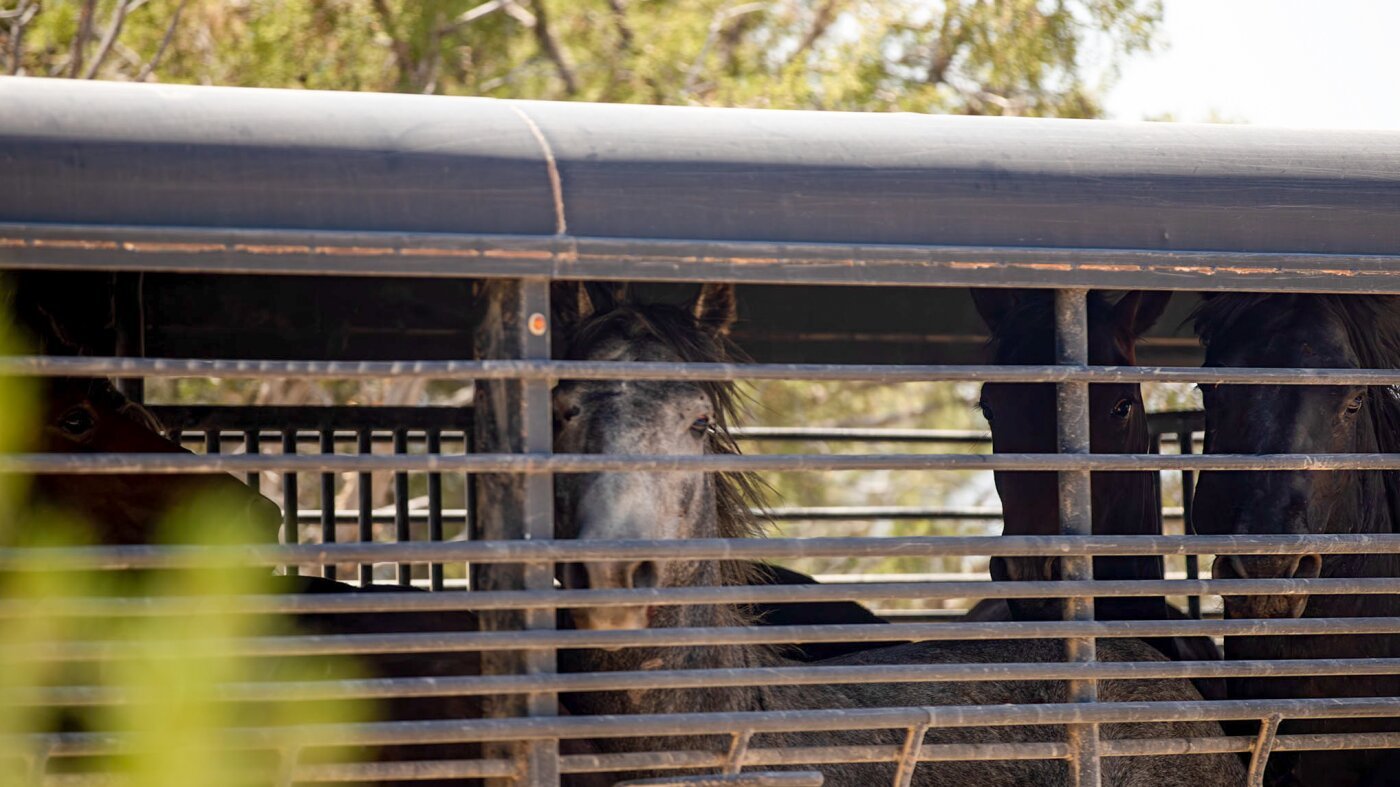
As the day ends, trailers move away from the roundup area, carrying newly captured horses. Some horses resist and try to escape into the open range, showing their wild spirit. Supporters of the horses see them as symbols of the Wild West. Despite disagreements over land use and population control, everyone agrees that wild horses hold a special place in the American landscape and culture.
Expand Your Tech Knowledge
Learn how the Internet of Things (IoT) is transforming everyday life.
Discover archived knowledge and digital history on the Internet Archive.
Space
