

Quick Takeaways
-
Discovery of Granite Mass: Scientists unearthed a massive granite formation beneath Pine Island Glacier in West Antarctica, measuring nearly 100 km wide and 7 km thick, indicating significant geological history.
-
Jurassic Origins: The granite boulders, dated to approximately 175 million years ago during the Jurassic period, connect surface observations to geological processes shaped by past ice actions.
-
Airborne Surveys Reveal History: Gravity measurements from aerial surveys helped identify the buried granite, illuminating how Pine Island Glacier once moved and its potential future responses to climate change.
-
Implications for Sea Level Rise: This research enhances understanding of subglacial geology and its influence on ice dynamics, crucial for predicting future sea level rise and its impacts on coastal communities worldwide.
Uncovering the Secrets of Pink Granite
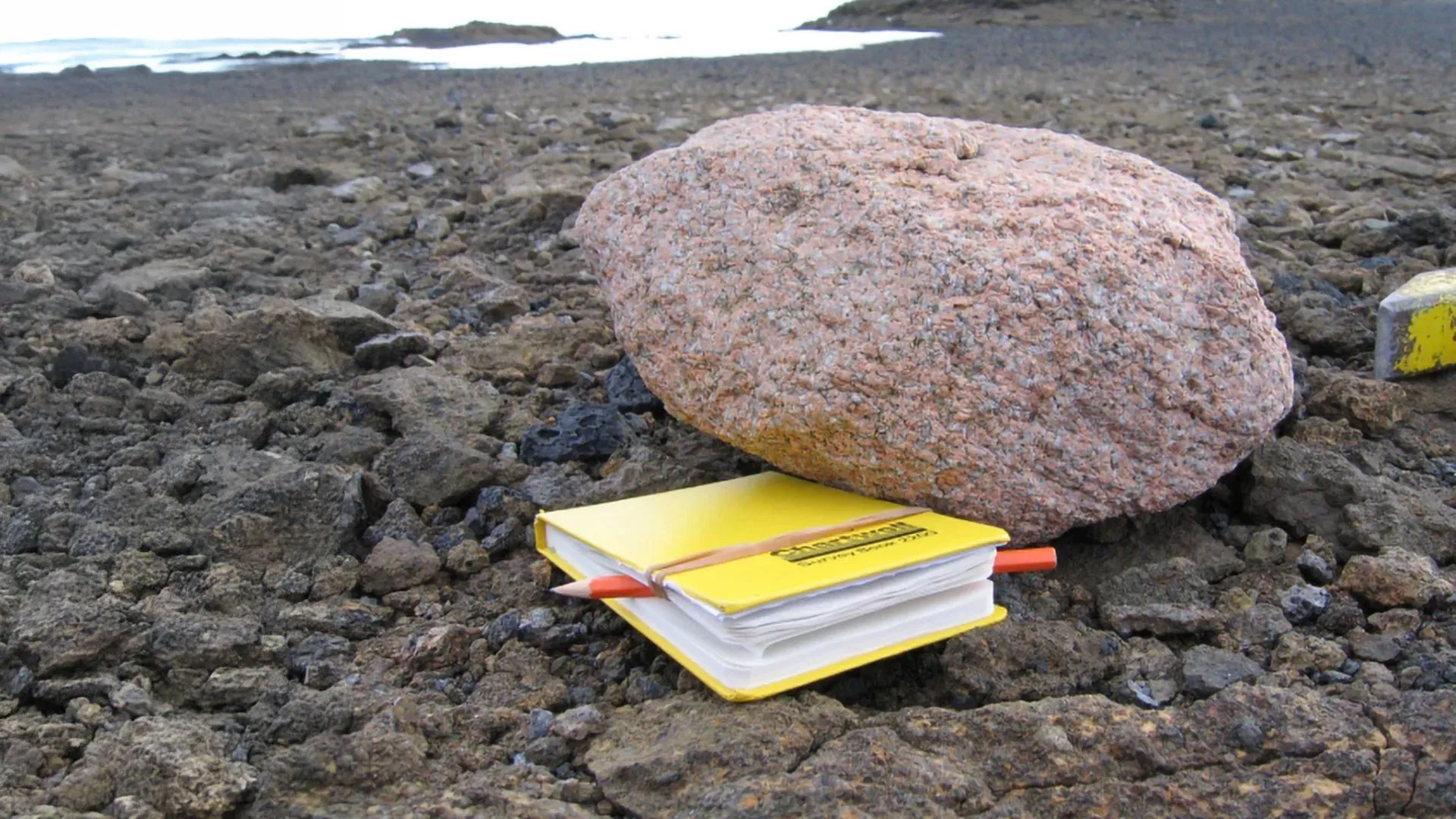
Bright pink granite boulders scattered throughout the Hudson Mountains of West Antarctica have intrigued scientists for decades. These rocks, perched high on volcanic peaks, offer critical insights into the region’s geological history. Recent research reveals an astounding discovery beneath Pine Island Glacier: an enormous buried granite mass nearly 100 kilometers wide and 7 kilometers thick. This formation is roughly half the size of Wales, making it a significant geological feature.
Researchers determined that these rocks formed around 175 million years ago during the Jurassic period. However, their journey to their current location remained a mystery. New airborne surveys provided valuable data, utilizing gravity measurements to uncover the hidden structure beneath the ice. This connection between surface boulders and deep geological formations solves a long-standing puzzle while shedding light on the glacier’s past behavior.
Implications for Climate and Sea Level Rise
The findings are vital for understanding ice sheet dynamics and potential sea level rise. Pine Island Glacier has experienced rapid ice loss in recent decades, highlighting the urgency of this research. The type of rock beneath the glacier affects how ice slides and how meltwater moves, influencing current conditions. By studying past ice thickness and movement patterns, scientists can refine computer models that predict the future of Antarctica’s ice sheets and their impact on global sea levels.
Rocks serve as records of Earth’s history, detailing how landscapes change over time. The revelation of this hidden granite body allows researchers to piece together the glacier’s evolution, providing essential clues about future changes. Thus, understanding the geology beneath Antarctica becomes imperative for coastal populations worldwide. This intersection of geology and geophysics not only enriches our knowledge of the planet but also aids in planning for anticipated environmental shifts.
Stay Ahead with the Latest Tech Trends
Dive deeper into the world of Cryptocurrency and its impact on global finance.
Stay inspired by the vast knowledge available on Wikipedia.
TechV1
