

Fast Facts
-
Fuel Efficiency Challenge: Longer space missions require more fuel, which adds weight and increases overall fuel needs, complicating launch from Earth.
-
CryoFILL Innovation: NASA’s CryoFILL project aims to produce and liquefy oxygen on the Moon or Mars, reducing the need for propellant launched from Earth and potentially lowering mission costs.
-
Resource Utilization: The program plans to extract oxygen from lunar water ice to create rocket fuel, supporting sustained lunar exploration and paving the way for future Mars missions.
-
Testing and Scaling: NASA engineers are conducting critical tests on oxygen liquefaction to validate technology and develop scalable solutions for in-situ refueling on planetary surfaces, informing future mission designs.
NASA is pioneering a radical approach to space exploration with its testing of refueling technology for landers. This initiative aims to enhance missions to distant planets, tackling a significant challenge in rocketry: the weight of fuel.
The farther the destination, the more fuel a rocket needs. Meanwhile, more fuel means a heavier spacecraft, which, in turn, requires even more fuel to launch. The solution may lie in the CryoFILL project, designed to produce liquid oxygen from lunar or Martian resources.
Experts at NASA’s Glenn Research Center believe this innovation could reduce launch costs and expand the operational time of equipment on planetary surfaces. “If we can liquefy oxygen on the Moon or Mars, we can substantially cut the amount of fuel needed to launch from Earth,” said a project manager.
Through the Artemis program, NASA plans to send astronauts back to the Moon to gather scientific knowledge and prepare for future crewed missions to Mars. To establish a long-term presence on the Moon, NASA intends to leverage its resources, such as extracting oxygen from water ice locked in the Moon’s shadowed regions.
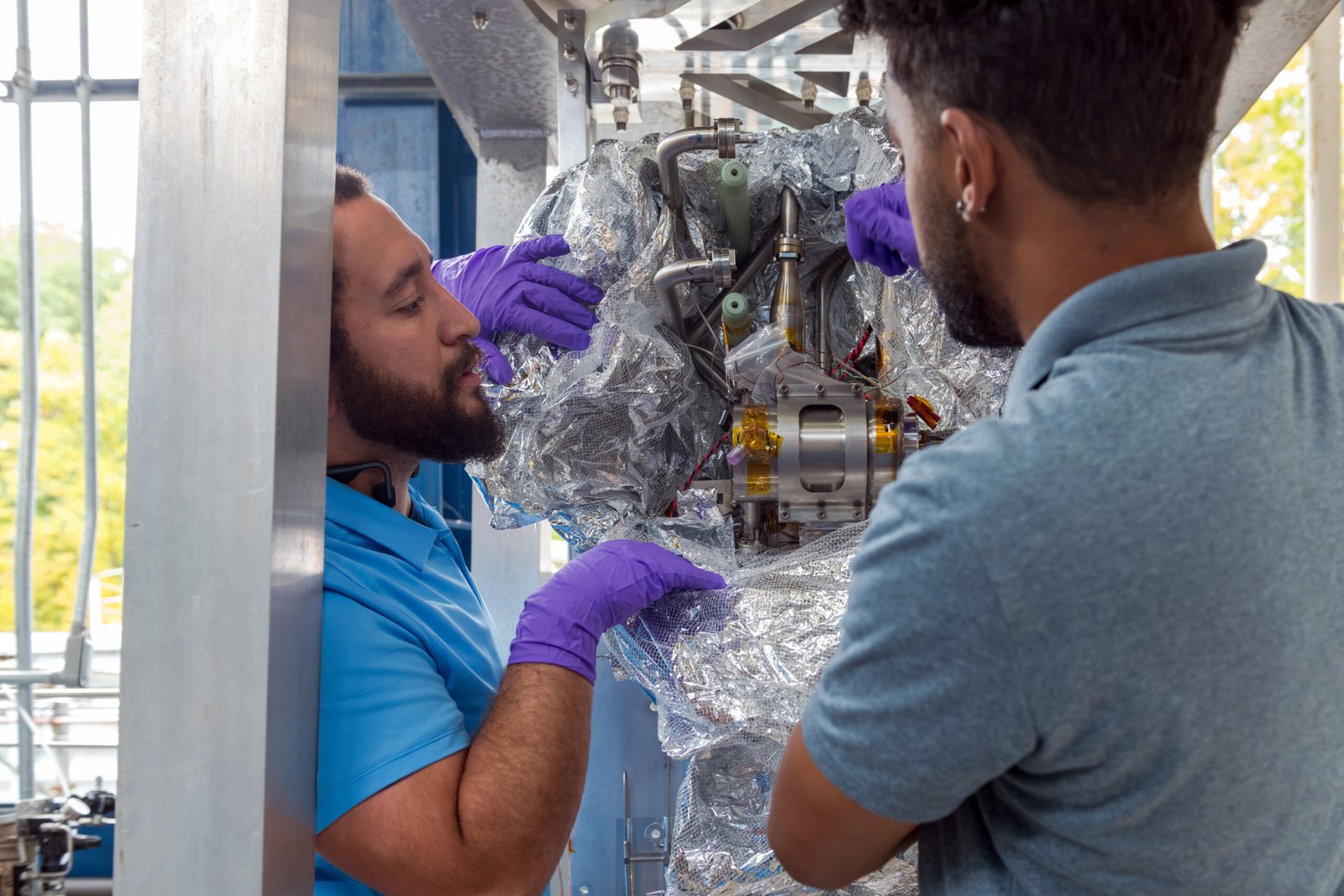
This oxygen is initially found as a gas. However, to become usable rocket fuel, it must be cooled into a liquid state. NASA engineers at Glenn are testing a flight-like cryocooler, developed by a small business through NASA’s innovation program. This technology removes heat during the oxygen extraction process, allowing the gas to condense at extremely low temperatures.
As one lead engineer noted, the team is conducting tests to observe how oxygen liquefies and to analyze the system’s performance under different conditions. This data will be essential for scaling up and automating refueling processes for future missions.
Over the upcoming months, NASA engineers will gather data on how oxygen condenses. This information will help validate computer models and will inform designs for use on the Moon, Mars, or other planetary environments.
The Cryogenic Fluid Management Portfolio Project reflects a collaboration between NASA Glenn and NASA’s Marshall Space Flight Center. This project consists of over 20 technology development initiatives aimed at revolutionizing space travel. By advancing this technology, NASA hopes to enhance the feasibility and sustainability of missions beyond Earth.
Continue Your Tech Journey
Stay informed on the revolutionary breakthroughs in Quantum Computing research.
Explore past and present digital transformations on the Internet Archive.
SciV1
