

Essential Insights
- MIT scientists used the LHC to study “near-miss” photon interactions, turning the collider into a microscopic tool to probe nuclear matter.
- They detected rare D0 mesons containing charm quarks produced when photons grazed nuclei, revealing insights into gluon behavior.
- Their findings suggest gluons behave differently when nuclear matter is compressed, improving understanding of the strong nuclear force.
- This breakthrough demonstrates the potential of photonuclear interactions as a high-precision method to explore the fundamental forces holding matter together.
Recent research from MIT highlights a new way to explore the universe’s smallest building blocks. Scientists used the Large Hadron Collider (LHC) in Switzerland to study “near-misses” between particles. Instead of waiting for particles to smash directly, researchers focused on the tiny signals when particles just barely pass by each other.
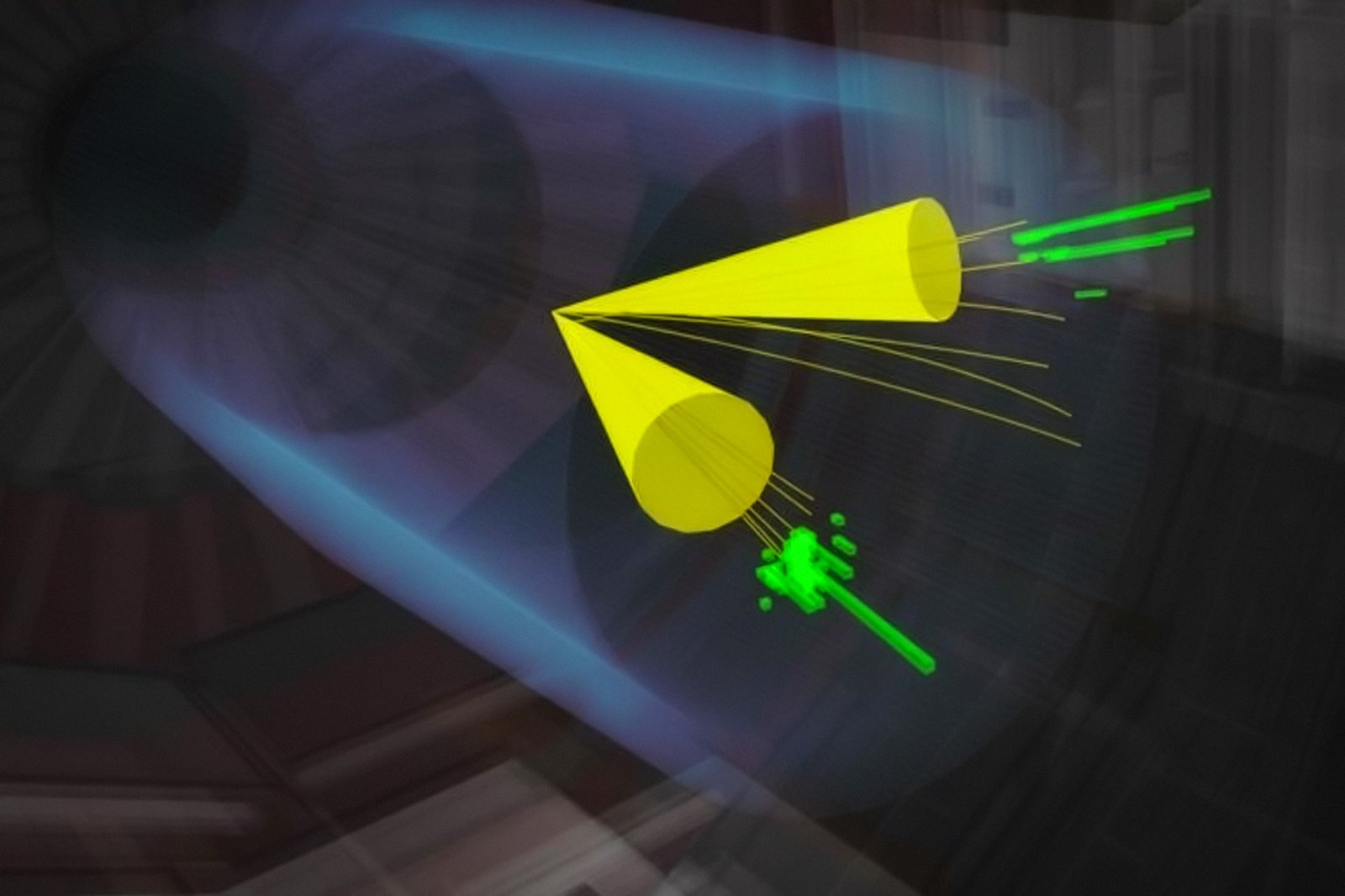
These near-misses produce high-energy photons, which act like tiny, powerful flashlights. When these photons hit a particle, they can produce unique particles called D0 mesons. These particles contain a charm quark, a rare type of quark that helps scientists understand the forces inside atoms.
Studying these rare events helps researchers learn how tightly gluons — the particles that hold quarks together — behave in extreme conditions. The findings suggest that when nuclear matter is squeezed, gluons might act in unexpected ways. This discovery could change how we understand the strong force, one of nature’s fundamental forces.
By focusing on these “background” events, scientists turn what was once ignored into a valuable new tool. This approach effectively transforms the particle accelerator into a super-high-resolution microscope for the atomic world. It opens doors for more precise research on the matter that makes up everything around us.
The advancement also shows how technology built for big experiments can be adapted for new discoveries. As researchers improve their techniques, this work could lead to better materials, richer data analysis methods, and even new ways to develop quantum technologies. In this way, studying near-misses at the subatomic level could lead to advancements that reach beyond physics and influence future tech innovations.
Discover More Technology Insights
Dive deeper into the world of Cryptocurrency and its impact on global finance.
Discover archived knowledge and digital history on the Internet Archive.
QuantumV1
