
Close Menu
    Facebook X (Twitter) Instagram
    Wednesday, May 13
    Top Stories:
    • Visionaries Unite in $4 Billion Quest for Self-Improving A.I.
    • Revitalizing Time: Scientists Rejuvenate Old Blood Stem Cells
    • Unlocking Nature’s Secret: A Breakthrough in Cancer-Fighting Plant Compounds
    Facebook X (Twitter) Instagram Pinterest Vimeo
    IO Tribune
    • Home
    • AI
    • Tech
      • Gadgets
      • Fashion Tech
    • Crypto
    • Smart Cities
      • IOT
    • Science
      • Space
      • Quantum
    • OPED
    IO Tribune
    Home » Near-Misses in Particle Accelerators May Reveal New Physics
    Quantum

    Near-Misses in Particle Accelerators May Reveal New Physics

    Staff ReporterBy Staff ReporterMarch 27, 2026No Comments2 Mins Read
    Share Facebook Twitter Pinterest LinkedIn Tumblr Reddit Telegram Email
    Share
    Facebook Twitter LinkedIn Pinterest Email

    Essential Insights

    1. MIT scientists used the LHC to study “near-miss” photon interactions, turning the collider into a microscopic tool to probe nuclear matter.
    2. They detected rare D0 mesons containing charm quarks produced when photons grazed nuclei, revealing insights into gluon behavior.
    3. Their findings suggest gluons behave differently when nuclear matter is compressed, improving understanding of the strong nuclear force.
    4. This breakthrough demonstrates the potential of photonuclear interactions as a high-precision method to explore the fundamental forces holding matter together.

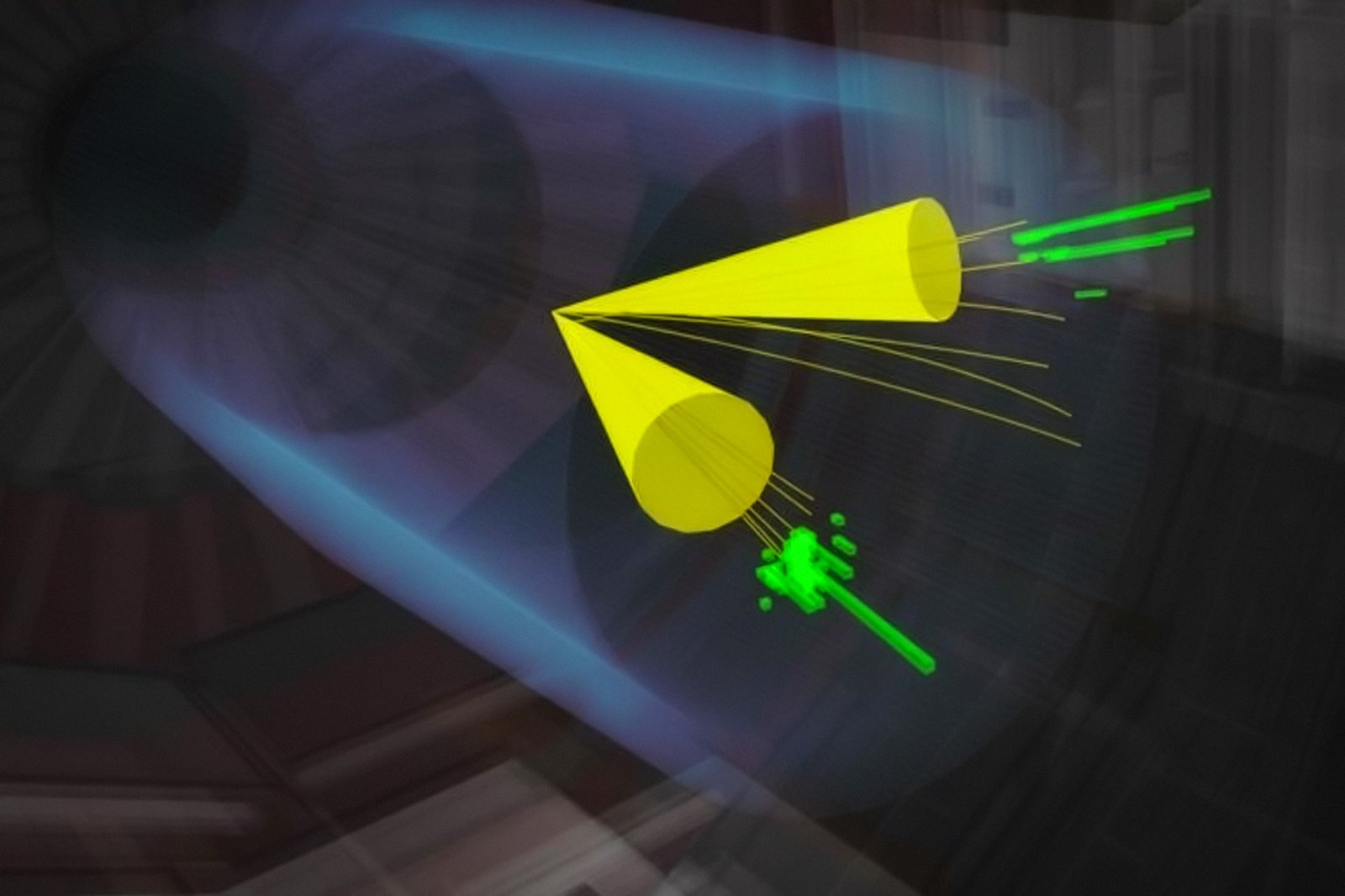
    Recent research from MIT highlights a new way to explore the universe’s smallest building blocks. Scientists used the Large Hadron Collider (LHC) in Switzerland to study “near-misses” between particles. Instead of waiting for particles to smash directly, researchers focused on the tiny signals when particles just barely pass by each other.

    These near-misses produce high-energy photons, which act like tiny, powerful flashlights. When these photons hit a particle, they can produce unique particles called D0 mesons. These particles contain a charm quark, a rare type of quark that helps scientists understand the forces inside atoms.

    Studying these rare events helps researchers learn how tightly gluons — the particles that hold quarks together — behave in extreme conditions. The findings suggest that when nuclear matter is squeezed, gluons might act in unexpected ways. This discovery could change how we understand the strong force, one of nature’s fundamental forces.

    By focusing on these “background” events, scientists turn what was once ignored into a valuable new tool. This approach effectively transforms the particle accelerator into a super-high-resolution microscope for the atomic world. It opens doors for more precise research on the matter that makes up everything around us.

    The advancement also shows how technology built for big experiments can be adapted for new discoveries. As researchers improve their techniques, this work could lead to better materials, richer data analysis methods, and even new ways to develop quantum technologies. In this way, studying near-misses at the subatomic level could lead to advancements that reach beyond physics and influence future tech innovations.

    Discover More Technology Insights

    Dive deeper into the world of Cryptocurrency and its impact on global finance.

    Discover archived knowledge and digital history on the Internet Archive.

    QuantumV1

    CMS Collaboration Gian Innocenti HPC Innovation Laboratory for Nuclear Science Large Hadron Collider LHC particle accelerator MIT Physics particle near misses particle physics photonuclear collisions Quantum quarks and gluons Research Sustainability VT1
    Share. Facebook Twitter Pinterest LinkedIn Tumblr Email
    Previous ArticleBoost Your AI App’s Speed & Interactivity with Response Streaming!
    Next Article Deadly Body Combo Could Spike Your Death Risk by 83%
    Avatar photo
    Staff Reporter
    • Website

    John Marcelli is a staff writer for IO Tribune, with a passion for exploring and writing about the ever-evolving world of technology. From emerging trends to in-depth reviews of the latest gadgets, John stays at the forefront of innovation, delivering engaging content that informs and inspires readers. When he's not writing, he enjoys experimenting with new tech tools and diving into the digital landscape.

    Related Posts

    Crypto

    Bitcoin, Ethereum Launch at Charles Schwab

    May 13, 2026
    AI

    Your Questions: How AI Is Changing Your Job

    May 13, 2026
    Tech

    Visionaries Unite in $4 Billion Quest for Self-Improving A.I.

    May 13, 2026
    Add A Comment

    Comments are closed.

    Must Read

    Bitcoin, Ethereum Launch at Charles Schwab

    May 13, 2026

    Your Questions: How AI Is Changing Your Job

    May 13, 2026

    Visionaries Unite in $4 Billion Quest for Self-Improving A.I.

    May 13, 2026

    Infant’s Eyes Change Color After COVID Treatment

    May 13, 2026

    Python Reproduction of Word Vectors for Sentiment Analysis

    May 13, 2026
    Categories
    • AI
    • Crypto
    • Fashion Tech
    • Gadgets
    • IOT
    • OPED
    • Quantum
    • Science
    • Smart Cities
    • Space
    • Tech
    • Technology
    Most Popular

    Step into the Future: Nike’s Game-Changing Powered Footwear

    October 23, 2025

    Tech Leaders Unplugged: The New Meeting Grounds

    January 24, 2026

    3 Trends: Transportation Transformation – Connected World

    February 10, 2025
    Our Picks

    Unlocking the Future: A CRISPR Conversation on Genetic Engineering

    November 26, 2025

    Disable Google’s Gemini in Chrome: A How-To Guide

    May 7, 2026

    Celestial Dance: Hubble Reveals a Cosmic Duo

    May 31, 2025
    Categories
    • AI
    • Crypto
    • Fashion Tech
    • Gadgets
    • IOT
    • OPED
    • Quantum
    • Science
    • Smart Cities
    • Space
    • Tech
    • Technology
    • Privacy Policy
    • Disclaimer
    • Terms and Conditions
    • About Us
    • Contact us
    Copyright © 2025 Iotribune.comAll Rights Reserved.

    Type above and press Enter to search. Press Esc to cancel.