

Fast Facts
-
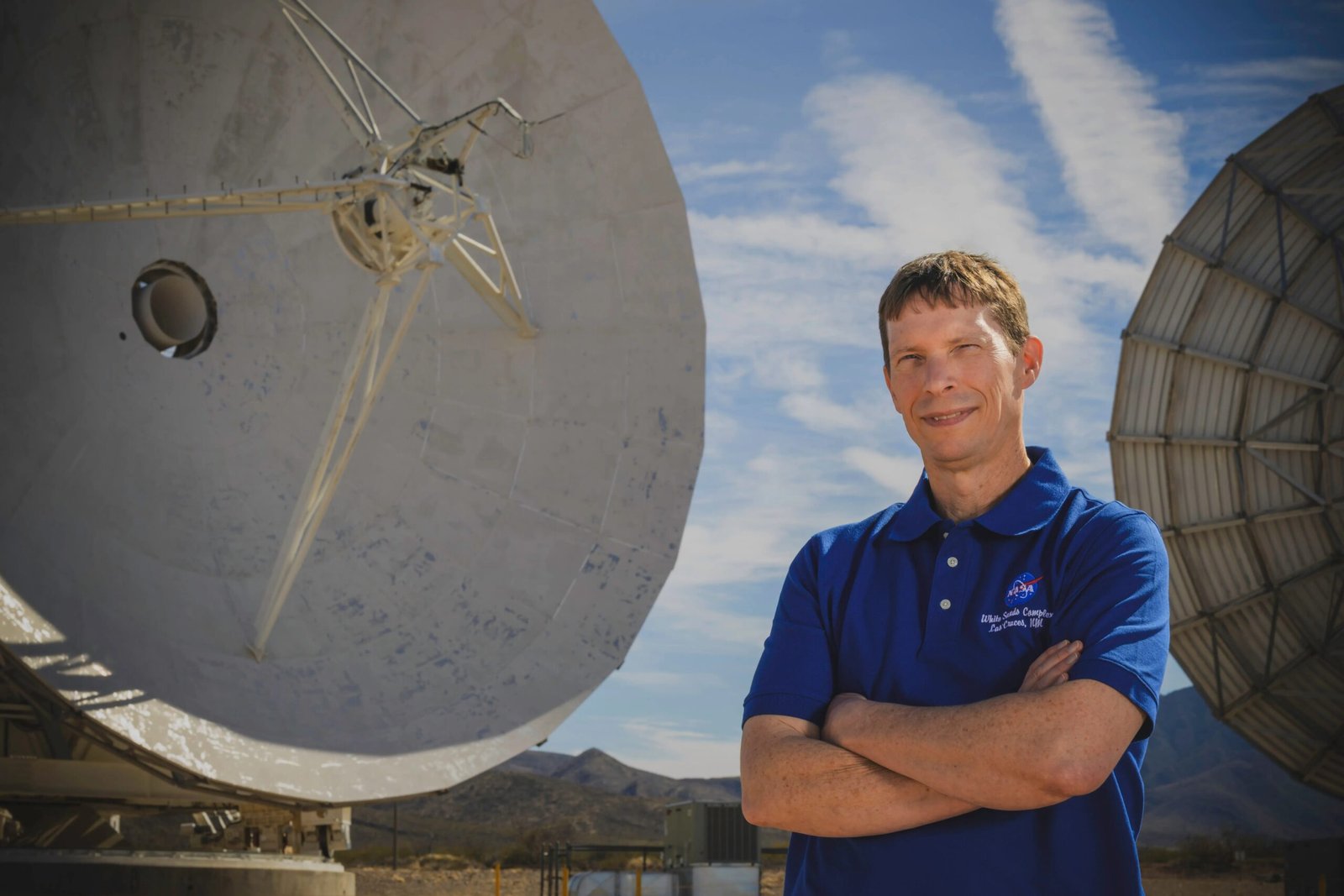
Career Culmination: Erik Richards, NASA’s Near Space Network Mission Manager, views his role in supporting NASA’s first crewed Artemis mission to the Moon as the pinnacle of his career in spacecraft communication.
-
Critical Connectivity: He ensures the Orion spacecraft and Artemis II crew maintain communication with Earth through an extensive network of relay satellites and over 40 ground stations, essential for mission success.
-
Operational Coordination: Richards is responsible for synchronizing communications across multiple missions and coordinating real-time data, voice communications, and navigation, comparing the network’s effectiveness to an invisible telephone system.
-
Future Vision: His work will not only support Artemis II but also pave the way for Artemis III, aimed at establishing a sustainable human presence on the Moon, fulfilling Richards’ lifelong dream of contributing to space exploration.
Mission Manager Connects Old Dreams to New Frontiers
NASA’s Artemis mission heralds a new era of space exploration, and Erik Richards plays a vital role. As the Near Space Network Mission Manager, he ensures seamless communication between astronauts and mission control, especially during Artemis II, the first crewed mission to the Moon.
Richards’ journey began like that of many space enthusiasts. Growing up during the Space Shuttle Program, he dreamed of spaceflight. His career has taken him from Antarctica to Maryland and now to New Mexico’s White Sands Complex. This diverse experience shapes his approach to mission challenges.
The Near Space Network consists of relay satellites and over 40 ground stations worldwide. This infrastructure facilitates communication during crucial mission phases: liftoff, orbit, and splashdown. Richards likens the system to a telephone network on Earth. When it works, it remains invisible. However, when issues arise, its importance becomes clear.
Active communication is essential for Artemis II. The mission will last about ten days, and constant contact ensures safety and navigation. Richards leads a team that synchronizes efforts across multiple missions. Engaging with the Deep Space Network, they ensure real-time voice communication and data transfer.
In the lead-up to launch, Richards focuses on rigorous testing and operational readiness. He aims to prepare for every possible situation. During the mission, he will monitor data flow and coordinate support globally. His commitment ensures the success of Artemis II and future missions, including Artemis III, which aims for a sustained human presence on the Moon.
Richards finds excitement in being part of a larger endeavor. He emphasizes that contributing to human exploration extends beyond astronaut duties. “You don’t have to be an astronaut to contribute to the future of human exploration,” he says. This mission not only links technology development with human adventure but also inspires future generations to dream big.
Stay Ahead with the Latest Tech Trends
Learn how the Internet of Things (IoT) is transforming everyday life.
Access comprehensive resources on technology by visiting Wikipedia.
SciV1
