

Summary Points
- Artemis II marked humanity’s first crewed lunar mission since Apollo’s era.
- Orion spacecraft demonstrated key systems and operational capabilities during the mission.
- Global teamwork was essential, involving NASA, ESA, and industry partners.
- Upcoming Artemis missions aim for lunar landings and preparations for Mars exploration.
Orion’s Achievements and Future Missions
NASA’s Artemis II mission marked a pivotal step in humanity’s journey back to the Moon and beyond. The Orion spacecraft, carrying four astronauts, successfully completed its crewed mission around the Moon, demonstrating key technologies for future exploration. Artemis II launched on April 1, featuring NASA astronauts Reid Wiseman, Victor Glover, Christina Koch, and Canadian astronaut Jeremy Hansen from the CSA. This mission was the first crewed lunar flight since Apollo, marking a significant milestone for NASA.
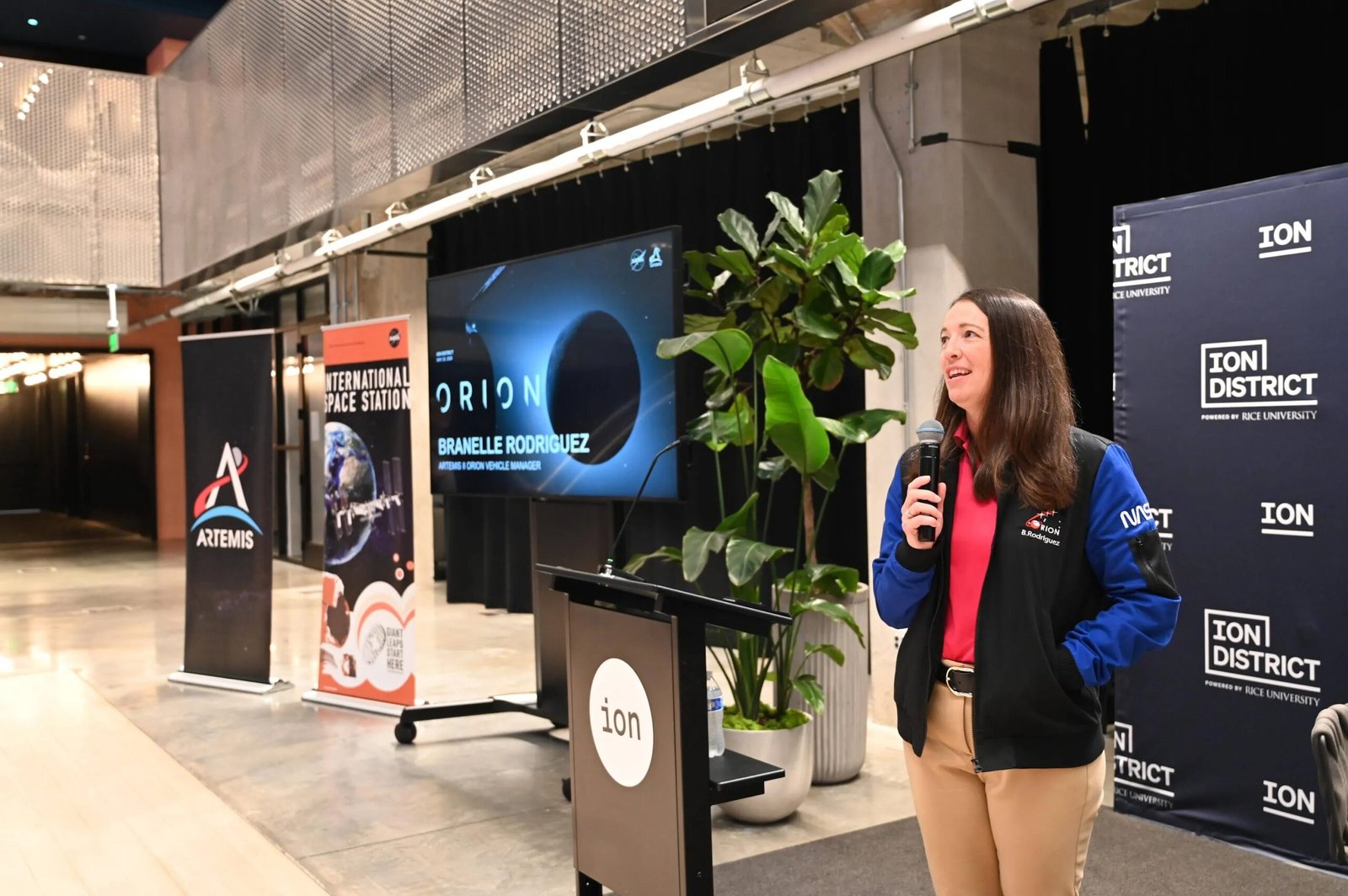
Branelle Rodriguez, the Orion Vehicle Manager for Artemis II, shared insights into the mission’s success at a recent event in Houston. She noted that the mission provided crucial data, testing the spacecraft’s life support systems, navigation capabilities, and re-entry processes. The crew conducted a manual piloting demonstration that will inform upcoming rendezvous and docking activities. Each of these elements plays a vital role in establishing safe and effective missions to the Moon and eventually Mars.
Artemis II also showcased impressive visuals. Rodriguez displayed images captured during the journey, including an Earthrise and a captivating solar eclipse observed from deep space. More than 300 people were involved in monitoring the mission’s systems from NASA’s Johnson Space Center, highlighting the collaborative effort essential for success.
Global Collaboration and Future Prospects
The success of Artemis II is a testament to global teamwork. Rodriguez emphasized cooperation between NASA centers, industry partners, and international agencies. The European Service Module, provided by the ESA, was essential for Orion’s operations, supplying power, propulsion, and life-support resources. This international collaboration underscores the importance of shared goals in advancing space exploration.
Looking ahead, preparations for future Artemis missions are already underway. Artemis III aims to advance capabilities for rendezvous and docking with landing systems in low Earth orbit, paving the way for human landings on the Moon. The Artemis III crew has been announced, and hardware for forthcoming missions is in production at NASA’s Kennedy Space Center.
Rodriguez noted that the journey to a sustained lunar presence and future human missions to Mars will require time and effort. Yet the progress achieved by Artemis II serves as a powerful reminder of what is possible when diverse teams unite to achieve common goals. The efforts undertaken in this mission will shape not only NASA’s lunar endeavors but also the broader vision of humanity’s exploration of the cosmos.
Continue Your Tech Journey
Dive deeper into the world of Cryptocurrency and its impact on global finance.
Discover archived knowledge and digital history on the Internet Archive.
Space
